Open source is not just about lowering costs. It's about staying in control of your own data. For governments, it is important to specify open file formats for storing public data. Eric Kriss, Massachussets' secretary of administration and finance asks an important question about long-term archiving of public documents created with Microsoft Office. "Will those documents still be legible 10 years from now, or in 50?" The state of Massachusetts has given some thought to that question and is taking action.



Open source is not just about lowering costs. It's about staying in control of your own data. For governments, it is important to specify open file formats for storing public data. Eric Kriss, Massachussets' secretary of administration and finance asks an important question about long-term archiving of public documents created with Microsoft Office. "Will those documents still be legible 10 years from now, or in 50?" The state of Massachusetts has given some thought to that question and is taking action.
"Truly, the world is addicted to Microsoft Office. But beginning January 2007, the state of Massachusetts plans to kick the habit. That's the deadline after which all documents used by Massachusetts state government agencies must be stored in open formats, according to broad technology plans issued by the state earlier this month. Currently, approved formats include PDF and OpenDocument, a free, XML-based office document standard used by several alternative office suites."
"The move comes in response to long-standing criticism of the native Office file formats. Through the years, Microsoft has repeatedly manipulated the way Office saves documents, making sure customers always need the latest version of the suite to stay compatible.
Source: Kicking the Microsoft Office Habit, Computerworld.
Microsoft and any other proprietary software company is welcome to develop tools to work with open file formats. This makes it possible for proprietary software and OSS to compete on a level playing field.
The open source productivity suite OpenOffice.org uses the OpenDocument format. Is it any good? A recent review of OpenOffice 2.0 -- not in some tech journal, but in the Chicago Sun-Times -- concludes that OpenOffice is great alternative to Microsoft:
"...you won't use it because you hate Microsoft or because you don't like tying your whole office's (or your government's) ability to function to the proprietary whims of one single company. Maybe you won't even use it just because it'll cost you $0 to Microsoft Office's $365. OpenOffice 2.0 is an attractive and compelling suite of office apps in its own right
...let's not gloss over Open-Office's choice of native file format, either. OpenDocument is itself an open standard, meaning that it's 100 percent non-proprietary and any developer (including Microsoft) can write apps that support the format.
The Commonwealth of Massachusetts feels so strongly about this sort of freedom and accessibility that it's chosen OpenDocument as its official office format for both internal use and for public documents."
It's not a new idea. Peruvian Congressman Dr. Edgar David Villanueva talked about the importance of open file formats years ago. Now we have a state in the U.S. doing something about it.


Planetizen Federal Action Tracker
A weekly monitor of how Trump’s orders and actions are impacting planners and planning in America.

Colorado’s Largest Data Center Could Rise Next to Homes — Without a Public Hearing
The proposed campus would consume 11 times the power of Denver International Airport; as it has across the country, opposition mounts.

US to reduce Colorado River water deliveries to Mexico
A new Colorado Treaty amendment reduces Mexico’s Colorado River water allocation by 250,000 acre feet.

'This is going to be painful:’ Virginia stares down $1.7 billion funding gap for highway maintenance
The state may address the deficit by shifting $290 million from its construction budget to maintenance projects.
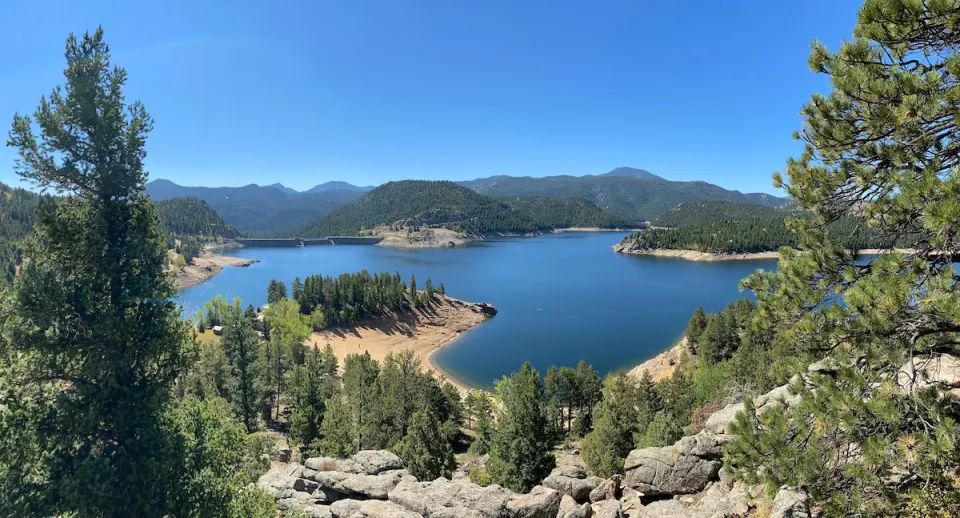
Judges permit Denver to divert 77,000 acre feet from the Colorado River for reservoir expansion
Overuse and climate change have caused the Colorado River’s water levels to plummet.

Amtrak, CN end decades-long dispute with eight-year agreement
The new operating agreement establishes an updated framework for the companies to work together, including processes to resolve disputes.

FREE Course: Walkable City 1: Why Walkability?
After describing his path towards focusing on walkability as the essence of good planning, Jeff Speck marches through his five principal reasons for making more walkable places.
Reinventing Malls: Planning Alchemy—Turning Gray Fields Into Gold
The course focuses on the opportunities and imperatives that shape reinvention of mall sites.

KFH Group Inc.
Greater Baltimore Committee
Eagle County Government
The Architects Foundation
University of Cincinnati Online
The Pocatello Development Authority
The Urban Renewal Agency of the City of Pocatello

