I've been talking about Democratic margins in cities, but check out this exit poll analysis from CJR Campaign Desk: [T]he category in which Bush showed the most significant gains over the year 2000 was urban voters (who made up 30 percent of all voters), among whom Bush polled 9 percentage points better than in 2000. Bush did even better among voters in the largest cities, picking up 12 points on his 2000 performance. On the other hand, the New York Times has a bunch of maps on the back page of its special Election section today (which I can't find a link to; sorry) says that Kerry's margins in cities were actually much larger than Bush's margins in rural areas.


I've been talking about Democratic margins in cities, but check out this exit poll analysis from CJR Campaign Desk:
[T]he category in which Bush showed the most significant gains over the year 2000 was urban voters (who made up 30 percent of all voters), among whom Bush polled 9 percentage points better than in 2000. Bush did even better among voters in the largest cities, picking up 12 points on his 2000 performance.
On the other hand, the New York Times has a bunch of maps on the back page of its special Election section today (which I can't find a link to; sorry) says that Kerry's margins in cities were actually much larger than Bush's margins in rural areas. But they seem to be comparing the size of the vote-counts instead of the percentages -- that is, the Times gives the total number of votes by which the candidates won, but not the total number of votes overall. Trying to figure this out as the day goes on.


Planetizen Federal Action Tracker
A weekly monitor of how Trump’s orders and actions are impacting planners and planning in America.

The state-sanctioned urbicide of Austin
People don’t kill cities. Freeways do.
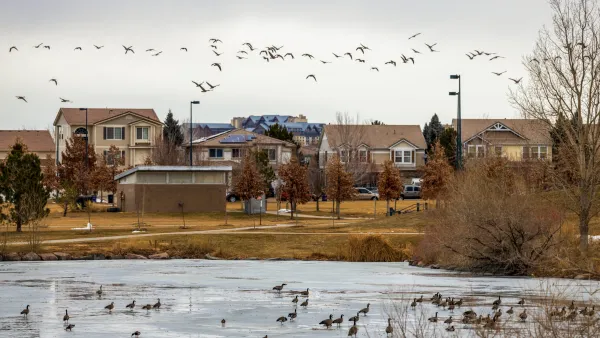
Colorado’s Largest Data Center Could Rise Next to Homes — Without a Public Hearing
The proposed campus would consume 11 times the power of Denver International Airport; as it has across the country, opposition mounts.
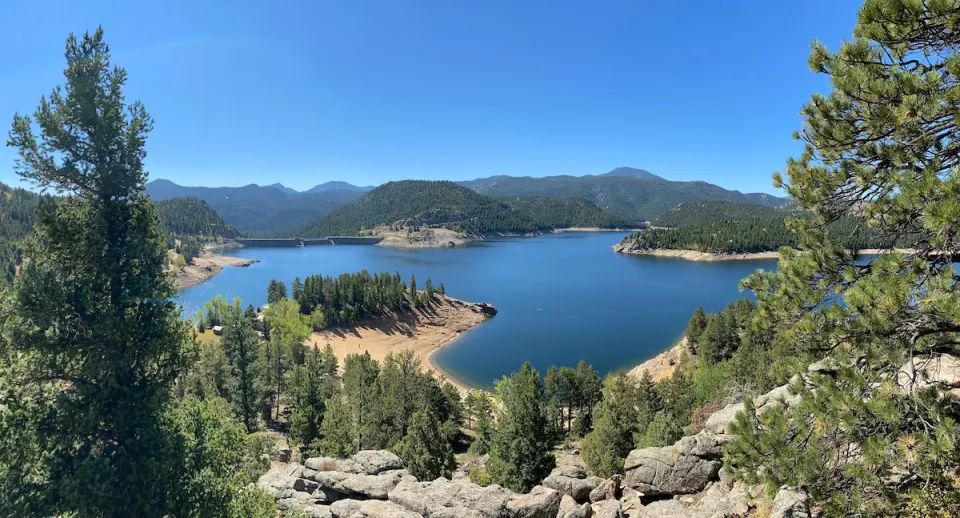
Judges permit Denver to divert 77,000 acre feet from the Colorado River for reservoir expansion
Overuse and climate change have caused the Colorado River’s water levels to plummet.

Amtrak, CN end decades-long dispute with eight-year agreement
The new operating agreement establishes an updated framework for the companies to work together, including processes to resolve disputes.
Raised interest rates may kill financially vulnerable construction projects
The chief economist at ConstructConnect warns that if construction project owners are negatively impacted by the raised rates, it could result in delayed payments to contractors.

FREE Course: Walkable City 1: Why Walkability?
After describing his path towards focusing on walkability as the essence of good planning, Jeff Speck marches through his five principal reasons for making more walkable places.
Reinventing Malls: Planning Alchemy—Turning Gray Fields Into Gold
The course focuses on the opportunities and imperatives that shape reinvention of mall sites.

KFH Group Inc.
Greater Baltimore Committee
Eagle County Government
The Architects Foundation
University of Cincinnati Online
The Pocatello Development Authority
The Urban Renewal Agency of the City of Pocatello

