Libertarian economist Randal O'Toole has become notorious for defending sprawl in recent years. This article from The Toronto Star wonders if he might have a valid point.


"For years now, most informed observers – doctors, as well as planners – say it's the suburbs that are making us sick, mentally and physically. They have led to epidemics of obesity and diabetes, and created feelings of isolation and loss of community."
"Not so, counters American libertarian economist Randal O'Toole. He believes the exact opposite. Sprawl, he argues, is good for us. It's not just what we need, it's what we want. And as for that daily commute, as long as it's not too long, he says, we enjoy it, even look forward to it."
"O'Toole, who's connected with two U.S. think-tanks, the Thoreau and Cato Institutes, has waged a lonely battle to make suburbia respectable. He claims the suburbs are popular because they respond to deep-seated human needs, including the desire for safety, privacy and a place of one's own."
"Though O'Toole's defence of sprawl is largely specious, the numbers are on his side; most North Americans do choose suburb over city. Of course, that doesn't mean they're healthy or desirable, let alone sustainable."
"According to a document released by the Ontario College of Family Physicians, 'Research shows that high impedance commuting has adverse affects on blood pressure, mood, frustration, tolerance, illness occasions, work absences, job stability and overall life satisfaction.'"
FULL STORY: The Apostle of Sprawl


Nearly a third of US housing is in the wildland-urban interface — and at growing risk of wildfire
As suburbs increasingly mingle with undeveloped land, homes face a higher risk from destructive fires.
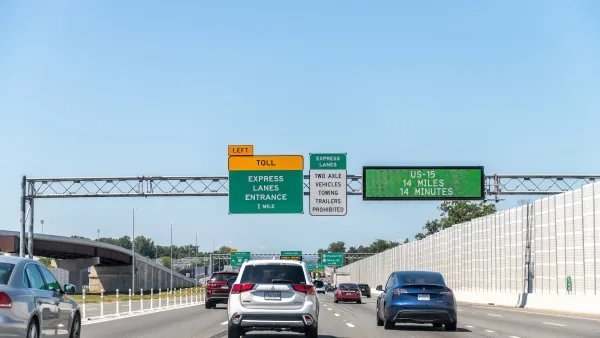
Congestion Costing Reality Check, Part 2: A congestion costing critique
There are good reasons to be skeptical of highway industry claims that traffic congestion is a growing problem. Their analysis is often incomplete and biased. Let’s pull back the curtain on some major congestion cost studies.
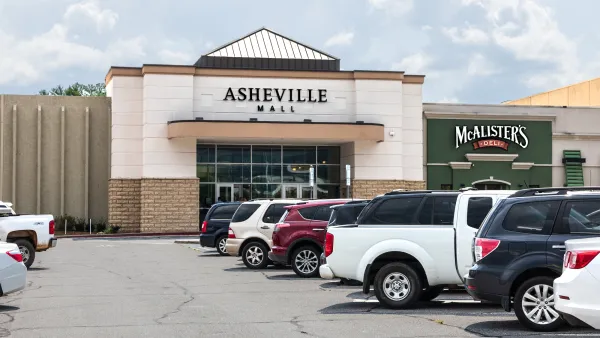
Asheville reconsiders parking minimums as surface parking eats up over a third of downtown real estate
Housing advocates say parking requirements are unnecessary and induce sprawl.

Planetizen Federal Action Tracker
A weekly monitor of how Trump’s orders and actions are impacting planners and planning in America.

The state-sanctioned urbicide of Austin
People don’t kill cities. Freeways do.

US to reduce Colorado River water deliveries to Mexico
A new Colorado Treaty amendment reduces Mexico’s Colorado River water allocation by 250,000 acre feet.

5 New England states march closer to 800 megawatt wind energy project
Securing federal approval for the project may be complicated under the Trump administration, which has historically been hostile towards domestic wind power.

Baltimore to break ground on $50 million Transit Priority Project
The project will bring faster bus trips, safer streets and better bike connections to Baltimore.

Airbnb launches $250 million 'last-dollar financing' housing accelerator, makes first investment in Austin
The company will put $6.4 million towards affordable housing development in Texas’ capital.

FREE Course: Walkable City 1: Why Walkability?
After describing his path towards focusing on walkability as the essence of good planning, Jeff Speck marches through his five principal reasons for making more walkable places.
Reinventing Malls: Planning Alchemy—Turning Gray Fields Into Gold
The course focuses on the opportunities and imperatives that shape reinvention of mall sites.

Eagle County Government
Harvard University Graduate School of Design
Nashville Planning Department
The Architects Foundation
University of Cincinnati Online
The Pocatello Development Authority
The Urban Renewal Agency of the City of Pocatello
Journal of the American Planning Association