Photos, videos, and characteristics of truly cyclist-friendly cities.


"Good bicycling infrastructure...doesn't mean a 'bike route' sign and a white stripe along the arterial. It doesn't mean a meandering trail shared with joggers, strollers, and skaters.
Bike friendly means a complete, continuous, interconnected network of named bicycle roads...It means a parallel network interlaced with the other urban grids: the transit grid on road or rail; the street grid for cars, trucks, and taxis; and the sidewalk grid for pedestrians. It means separation from those grids...
Picture a street more than half of which is reserved for people on foot, bikes, buses, or rail; on which traffic signals and signs, street design, and landscaping all conspire to treat bicycles as the equals of automobiles...
Moreover, the quality of biking infrastructure matters as much as the quantity. Slapping a 'bike route' sign on a road may qualify it for a city's registry but doesn't help cyclists much. Conversely, traffic calming on residential streets may make entire neighborhoods bike friendly without adding a mile to the bikeway count."
FULL STORY: What "bike friendly" looks like

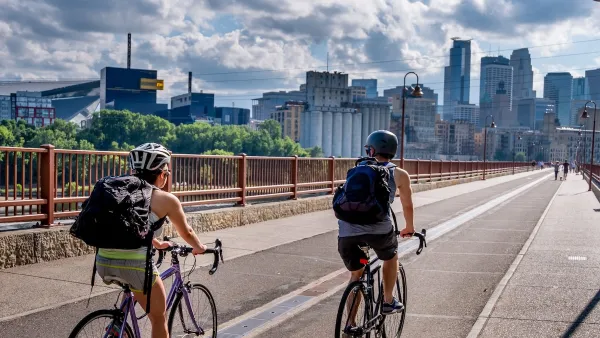
How Bike-Friendly Is Your City?
PeopleForBikes just released its annual rankings.
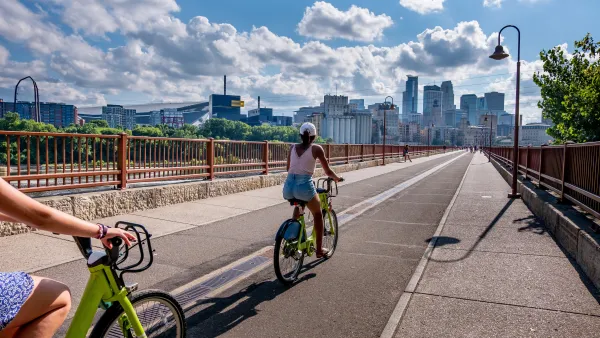
11 Most-Improved Bike Networks in the US
PeopleForBikes has evaluated bike networks in thousands of cities across the United States and identified several that have achieved “incredible increases” in just a few years.
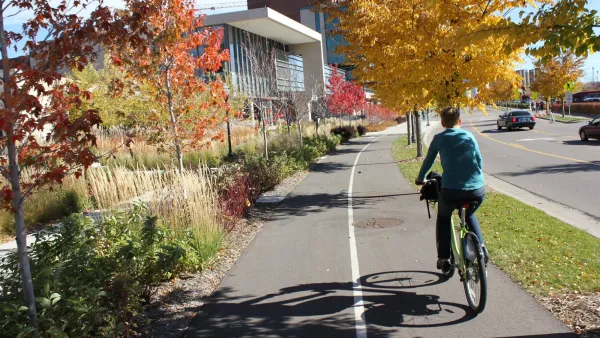
Touring One of the U.S.’s Best Biking Cities: Minneapolis
The latest Streetfilms release offers an in-person, on-bike tour of Minneapolis.

Planetizen Federal Action Tracker
A weekly monitor of how Trump’s orders and actions are impacting planners and planning in America.

The state-sanctioned urbicide of Austin
People don’t kill cities. Freeways do.

US to reduce Colorado River water deliveries to Mexico
A new Colorado Treaty amendment reduces Mexico’s Colorado River water allocation by 250,000 acre feet.

5 New England states march closer to 800 megawatt wind energy project
Securing federal approval for the project may be complicated under the Trump administration, which has historically been hostile towards domestic wind power.

Baltimore to break ground on $50 million Transit Priority Project
The project will bring faster bus trips, safer streets and better bike connections to Baltimore.

Airbnb launches $250 million 'last-dollar financing' housing accelerator, makes first investment in Austin
The company will put $6.4 million towards affordable housing development in Texas’ capital.

FREE Course: Walkable City 1: Why Walkability?
After describing his path towards focusing on walkability as the essence of good planning, Jeff Speck marches through his five principal reasons for making more walkable places.
Reinventing Malls: Planning Alchemy—Turning Gray Fields Into Gold
The course focuses on the opportunities and imperatives that shape reinvention of mall sites.

Eagle County Government
Harvard University Graduate School of Design
Nashville Planning Department
The Architects Foundation
University of Cincinnati Online
The Pocatello Development Authority
The Urban Renewal Agency of the City of Pocatello
Journal of the American Planning Association