Politicians in Scotland are trying to gather support for a plan to build a high-speed magnetic levitation train between the country's two biggest cities, Glasgow and Edinburgh. But opponents worry the proposal would hinder other rail development.


"It would cost an estimated £1.8bn to build a maglev link in Scotland as the trains are unable to use the existing rail network. Shanghai in China is the only other city in the world that currently uses the system."
"Labour Finance Minister Tom McCabe said he believed work on a maglev link could begin during the term of the next parliament, using the Scottish Executive's powers under recently overhauled planning laws to push through projects of national importance."
"Tavish Scott of the Liberal Democrats said there were several other rail projects already in the pipeline for Scotland which should be completed before maglev was pursued, such as the Borders rail link and new links to both Glasgow and Edinburgh airports."
Read the full story: Controversy over maglev proposals


Planetizen Federal Action Tracker
A weekly monitor of how Trump’s orders and actions are impacting planners and planning in America.

Data reveals that NYC’s bet on congestion pricing has paid off
After almost two years of the program, reports show positive impacts on traffic and air quality and no disruptions to parking.
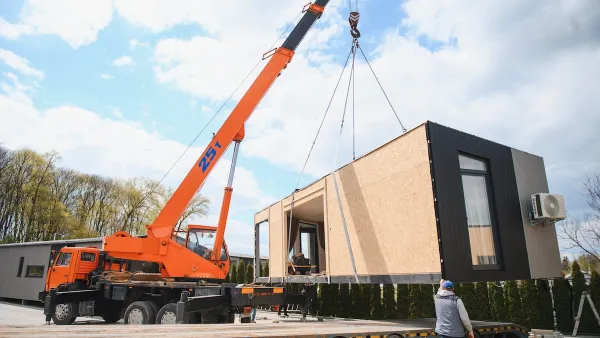
HUD modernizes 50-year-old manufactured housing framework
The Next Generation Manufactured Housing Action Plan establishes new energy-efficiency standards for manufactured homes, and new guidelines for anchoring them.

California voters weigh $11.25 billion housing bond
Prop. 1, combined with other funding, would support over 40,000 new rental units in California.

Connecticut is turning landfills into green infrastructure
Twenty-nine solar arrays have been built, or approved to be built, on top of Connecticut landfills.

Trump guts ‘win-win’ solar energy program for rural farmers
The U.S. Department of Agriculture’s changes have made virtually all solar power ineligible for funding through the Rural Energy for America Program.

FREE Course: Walkable City 1: Why Walkability?
After describing his path towards focusing on walkability as the essence of good planning, Jeff Speck marches through his five principal reasons for making more walkable places.
Reinventing Malls: Planning Alchemy—Turning Gray Fields Into Gold
The course focuses on the opportunities and imperatives that shape reinvention of mall sites.

One Hundred Miles
County of Mendocino
planning NEXT
The Architects Foundation
University of Cincinnati Online
Montrose County
Northern Illinois Transit Authority (NITA)
The Pocatello Development Authority