When The Biosphere was originally built in 1991, it was in the middle of nowhere in the Sonoran Desert. Today, hyper suburban development between Tucson and Phoenix threatens its very existence.


"In 1991, eight researchers in dark blue Star Trek-style uniforms entered Biosphere 2 -- a vast terrarium in the Arizona desert north of Tucson -- hoping to spend two years inside without importing food, water or even air. The goal was to see whether the sealed environment, considered a microcosm of the Earth's, could become self-sustaining.
As it turns out, the real science experiment was going on outside, as development conquered vast swaths of the Sonoran Desert. The Biosphere, miles from nowhere when it was built in the 1980's, is now within the reach of a building boom streaking north from Tucson and south from Phoenix (and which some demographers say will eventually join the two cities, once 100 miles apart).
The Biosphere was designed to simulate the Earth's environment. By succumbing to sprawl, it may have done just that."
Read the full story: Sprawl Outruns Lofty Experiment


Planetizen Federal Action Tracker
A weekly monitor of how Trump’s orders and actions are impacting planners and planning in America.

The state-sanctioned urbicide of Austin
People don’t kill cities. Freeways do.

Colorado’s Largest Data Center Could Rise Next to Homes — Without a Public Hearing
The proposed campus would consume 11 times the power of Denver International Airport; as it has across the country, opposition mounts.
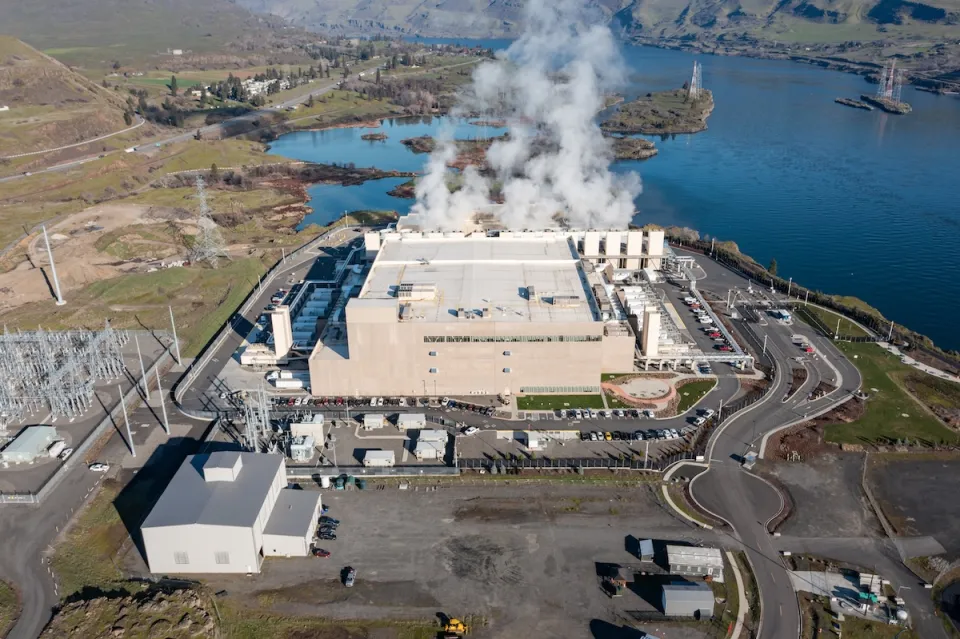
Data centers are consuming nearly 25% of Oregon’s power
The state has 111 data centers, with 32 more either planned or under construction.

A third of Texas cities must update their zoning codes to comply with new housing law
Texas municipalities are now required to allow manufactured housing in at least one residential zoning district.

Nation's most wind-powered state turns to coal as data centers increase energy demand
For the first time in decades, Iowa has increased its generation of coal power.

FREE Course: Walkable City 1: Why Walkability?
After describing his path towards focusing on walkability as the essence of good planning, Jeff Speck marches through his five principal reasons for making more walkable places.
Reinventing Malls: Planning Alchemy—Turning Gray Fields Into Gold
The course focuses on the opportunities and imperatives that shape reinvention of mall sites.

Greater Baltimore Committee
Eagle County Government
Harvard University Graduate School of Design
The Architects Foundation
University of Cincinnati Online
The Pocatello Development Authority
The Urban Renewal Agency of the City of Pocatello
Journal of the American Planning Association