New Jersey "is a cross between a Sun Belt city that relies on buses and cars because it has no rail system and a place like Long Island or Westchester County, where most commuters depend on cars and trains."


"For the most part, commuting in New Jersey, as in most places in America, is about driving, alone. But more than in any other suburban area, getting to work from New Jersey is also about buses. Between 7 and 10 a.m. each weekday, about 250,000 adults in the state do just what many of their children do each morning: they climb aboard a bus. About one-third of them are bound for New York City... New Jersey Transit, the statewide transportation agency, has 2,028 buses. That is more than Philadelphia, Chicago, Denver or any other city has, except New York and Los Angeles...Still, more than 85 percent of New Jersey commuters set out for work in cars, trucks and vans, adding to the burden on the nation's most heavily used highway system."
Thanks to Eric Arzola
Read the full story: Commuter State


Planetizen Federal Action Tracker
A weekly monitor of how Trump’s orders and actions are impacting planners and planning in America.

Chicago breaks ground on $3 billion megadevelopment
The new neighborhood, titled Foundry Park, will one day host 3,700 residences.
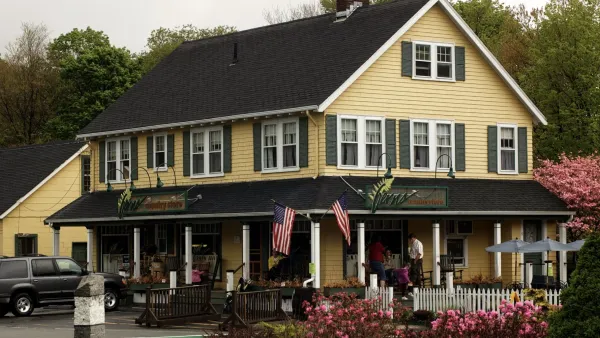
This MA town is drowning in its own sewage — and residents like it that way
Susan Murcott, a waste water expert, said if Carlisle didn't address their leaking sewage, the problem could turn “deadly.”

Home batteries are ushering in an energy revolution
Batteries capable of storing solar energy can stabilize the grid during peaks and keep homes running on cloudy days.

A sneak peek at NYC’s Midtown Bus Terminal rebuild
The city will turn a deck used for storage during the construction process into a park once construction is complete.

Air taxis to connect Texas airports to business hubs
Archer Aviation says its taxis will turn 90 minute drives into 20 minute flights.

FREE Course: Walkable City 1: Why Walkability?
After describing his path towards focusing on walkability as the essence of good planning, Jeff Speck marches through his five principal reasons for making more walkable places.
Reinventing Malls: Planning Alchemy—Turning Gray Fields Into Gold
The course focuses on the opportunities and imperatives that shape reinvention of mall sites.

City of Rosemead
Rutgers University, Edward J. Bloustein School of Planning and Public Policy
One Hundred Miles
The Architects Foundation
University of Cincinnati Online
Montrose County
Northern Illinois Transit Authority (NITA)
The Pocatello Development Authority