After initial treatment, the water will sit in a groundwater aquifer for years to filter further before it is pumped into the city’s tap water.


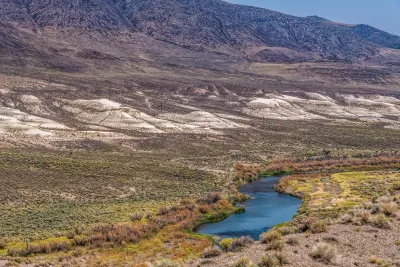
Nevada broke ground on its first wastewater-to-drinking-water plant last week, the culmination of over 15 years of research, teaching and planning. When completed, the plant will treat roughly two million gallons of wastewater a day to make it compliant with drinking-water standards. The facility aims to lessen Nevada’s reliance on the Truckee River: the snow water equivalent in the Truckee River basin, a measure of how much water the snowpack holds, hit its second-lowest level since 1986 this year.
Most advanced purified water facilities in the United States use reverse osmosis to filter their water, which forces water through a membrane to remove contaminants and produces a brine byproduct that coastal facilities can discharge into the ocean. As Nevada is landlocked, the water authority will instead “use an ozone biological activated carbon process. Rather than filtering contaminants out and concentrating them into waste, this method uses ozone gas and naturally occurring microbes to break contaminants down instead of just isolating them,” Piper Heath writes for the Nevada Independent.
“Even after all that treatment, Nevada regulations still require the water to pass through what's called an "environmental buffer" before it can reach a tap. That means the water will get injected into a groundwater aquifer near Stead Airport, where it will sit for years while it filters further before the water authority pumps it back out and into the city's tap water,” the Nevada Independent reports.
Read the full story: Nevada's first wastewater-to-drinking-water plant breaks ground in Reno

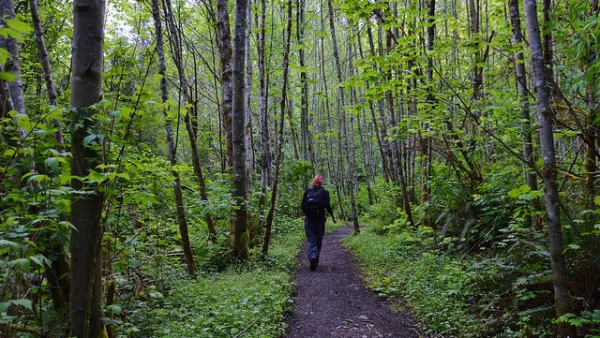
Public Input to Help Plan New Nature Trails
Reno officials hope to protect public green space in the Truckee Meadows before potential new development arrives.

NYC plans sewer upgrades after back-to-back floods
The city is working to expand sewer capacity and improve other stormwater storage and capture systems to prevent flooding.
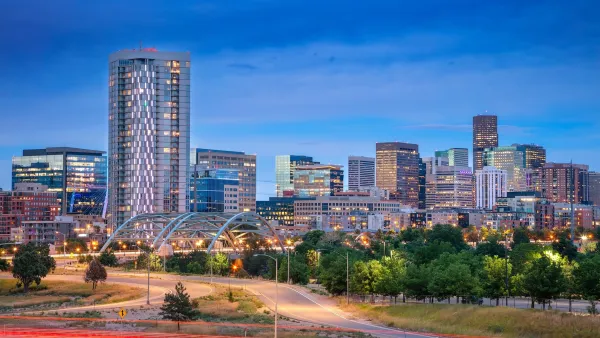
Denver is building a sewage-powered thermal energy network
A proposed thermal energy network will harness heat from the earth and from wastewater to power renewable heating and cooling systems.

Planetizen Federal Action Tracker
A weekly monitor of how Trump’s orders and actions are impacting planners and planning in America.

Amtrak, CN end decades-long dispute with eight-year agreement
The new operating agreement establishes an updated framework for the companies to work together, including processes to resolve disputes.

Northwest rail fans eager for Sept. 30 debut of Amtrak’s Airo fleet
Get ready for that new train smell and more seats. But they won’t go faster or run more frequently on the Cascades route in Washington and Oregon.

St. Louis Metro to test if single-car trains can reduce operating costs, maintain rider satisfaction
The pilot program will run from October to spring 2027, and begin with one single-car train operating on Metrolink’s Red and Blue lines.

Pennsylvania is building data centers in abandoned mines
Housing data centers in mines provides an alternative to destroying local forests and may spare residents from data centers’ noise and air pollution.

If Corpus Christi can’t revive desalination plant project, it may owe Texas $235 million
Earlier this month, city officials declined to pursue developing the plant for the second time in a year.

FREE Course: Walkable City 1: Why Walkability?
After describing his path towards focusing on walkability as the essence of good planning, Jeff Speck marches through his five principal reasons for making more walkable places.
Reinventing Malls: Planning Alchemy—Turning Gray Fields Into Gold
The course focuses on the opportunities and imperatives that shape reinvention of mall sites.

City of Thousand Oaks
City of Wisconsin Rapids
Harvard University Graduate School of Design
The Architects Foundation
University of Cincinnati Online
The Pocatello Development Authority
The Urban Renewal Agency of the City of Pocatello