A California company hopes to avoid opposition by placing a new data center in an existing oil field.


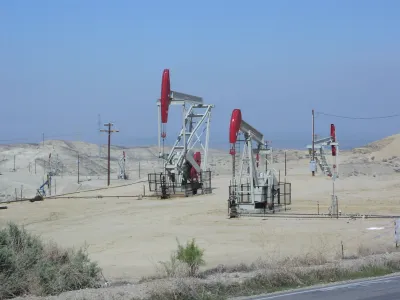
A proposed data center project aims to skirt community opposition by placing the data center campus in an oil field, reports Jake Bittle in Grist.
According to Bittle, similar projects are being proposed in Texas and Pennsylvania. "These projects are seen as a way of juicing revenues for legacy producers, even as the California project is unfolding in a state that has been trying to phase out fossil fuels."
In California's Central Valley, the California Resources Corporation is framing the proposal as a "responsible development" approach to the growing AI sector that would repurpose an existing industrial site and create jobs and tax revenue. "The proposed Golden Valley Technology Hub will sit on 100 acres within an oil field that stretches across tens of thousands of acres, and will sit more than a mile from the nearest homes. The project will also face strict environmental review, which could take about a year."
As Bittle explains, "While the Kern County data center will rely on fossil fuels when many others draw power from the wind or sun, CRC is expanding its business to focus on carbon capture. Just this year it launched a first-of-its-kind system that captures CO2 emitted by another oilfield gas plant and stores it in depleted wells, and plans to build such a system for the plant that will supply the data center." The project could help CRC advance its transition away from fossil fuel production, but climate groups say the proposal could release more carbon dioxide and pollutants into the air. "Earthjustice, the Center for Biological Diversity, and a number of other groups sued the county over its approval of the carbon capture project, and litigation is ongoing."
Read the full story: A solution to data center backlash? Put them in oil fields.

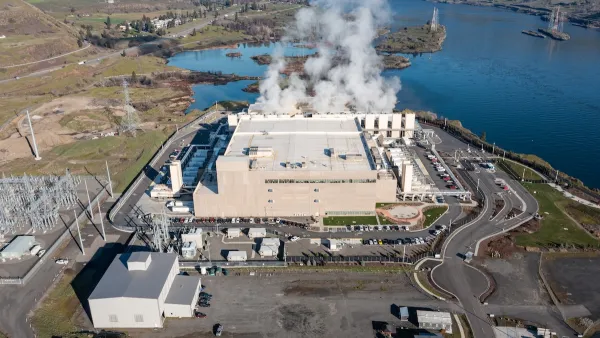
Data centers are consuming nearly 25% of Oregon’s power
The state has 111 data centers, with 32 more either planned or under construction.
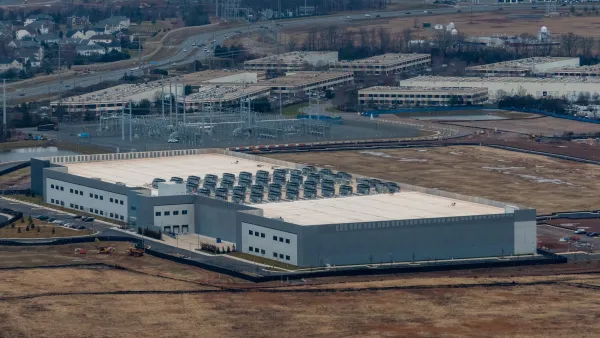
Data center developer offers over $4M per acre to buy out homeowners
Data center builders are outbidding home builders for land, prompting concerns about competition with housing.
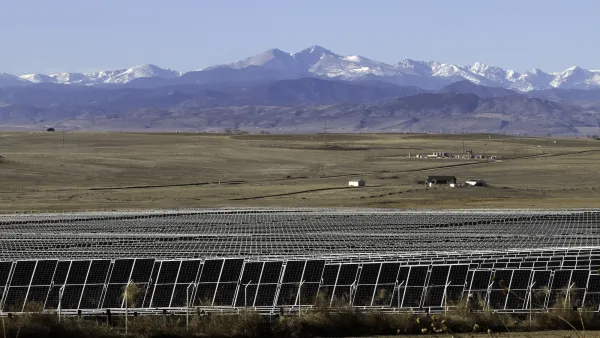
Over half of Colorado's energy now comes from renewables
In the first quarter of 2026, renewables made up 53% of Colorado's electricity, up from 43% in 2025.

Planetizen Federal Action Tracker
A weekly monitor of how Trump’s orders and actions are impacting planners and planning in America.

‘Going backwards:’ Baltimore mayor, students rally against state's transit funding plan
Maryland's proposed six-year plan provides no funding for Baltimore’s BMORE bus program and reduces its road maintenance funding.

Detroit to transform waterfront with $2.2 billion investment
Developers will convert about 18 acres of unused parking lot space into civic spaces.

Guerilla urbanists’ DIY benches joined by sanctioned seats in Chicago
The group behind the original homemade benches said they will continue installing them across bench-less bus stops in Chicago.

Boston spent $765 million to lease battery-powered trains
The trains will serve Boston’s Fairmount Line for fifteen years.

NYC may expand key reservoir after devastating drought
The aqueduct that carries water from the reservoir to New York City has been leaking 35 million gallons of water per day since the 1990s.

FREE Course: Walkable City 1: Why Walkability?
After describing his path towards focusing on walkability as the essence of good planning, Jeff Speck marches through his five principal reasons for making more walkable places.
Reinventing Malls: Planning Alchemy—Turning Gray Fields Into Gold
The course focuses on the opportunities and imperatives that shape reinvention of mall sites.


One Hundred Miles
County of Mendocino
planning NEXT
The Architects Foundation
University of Cincinnati Online
Montrose County
Northern Illinois Transit Authority (NITA)
The Pocatello Development Authority