The state has 111 data centers, with 32 more either planned or under construction.


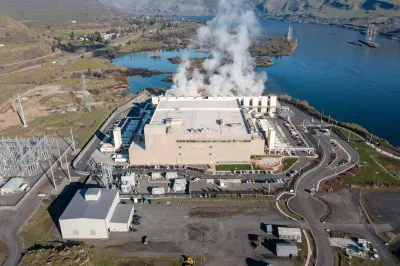
Oregon’s 111 data centers consume nearly a quarter of the state’s power, according to a report from ECONorthwest and the University of Virginia. The report is the first of its kind in Oregon since the explosion of data center development. Thirty-two additional data centers are planned or under construction in the state.
“The report highlights the gaps in available information on how data centers affect the state’s economy and the communities they operate in. Report authors found inconsistent, incomplete, or unavailable data sources for water-use and other information necessary to analyze the effect of the facilities on landscapes and communities around them,” Kyra Buckley writes for OPB.
The report also found that Oregon “essentially has two separate data center markets,” OPB reports. Major hyperscale data centers are largely based in Eastern Oregon, while smaller data centers used by multiple companies are concentrated in Western Oregon.
Read the full story: Oregon data centers by the numbers: 111 facilities consume nearly one-quarter of state’s power, according to new report

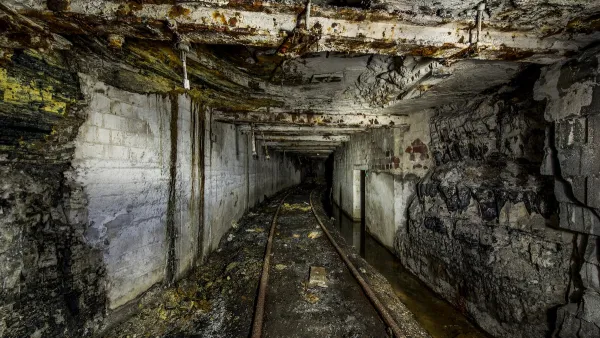
Pennsylvania is building data centers in abandoned mines
Housing data centers in mines provides an alternative to destroying local forests and may spare residents from data centers’ noise and air pollution.

New bill requires California data center developers to create water scarcity plans
Gov. Gavin Newsom recently signed 7 bills intended to give California communities more information about the impact of proposed data centers.
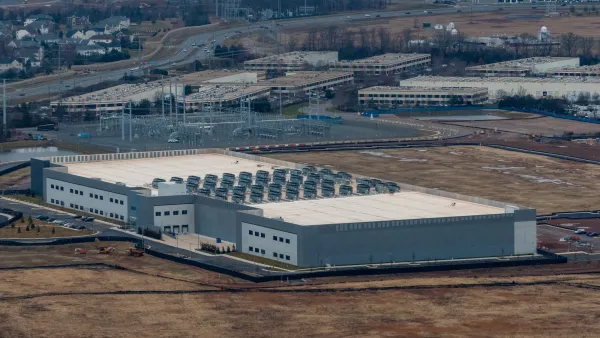
Data center developer offers over $4M per acre to buy out homeowners
Data center builders are outbidding home builders for land, prompting concerns about competition with housing.

Planetizen Federal Action Tracker
A weekly monitor of how Trump’s orders and actions are impacting planners and planning in America.

California plans to bury El Niño’s downpour
If the state plays its cards right, it may be able to store a billion acre-feet of El Niño’s water in aquifers.

Desperate measures: Advocates weigh draining Lake Powell to fill Colorado River
Draining the reservoir could reduce evaporation losses by a couple hundred thousand acre-feet.

California city breaks ground on transit connector
The project includes three mobility hubs and a pedestrian bridge.

After public outcry, Massachusetts city releases housing development tracker
Cambridge’s tracker currently shows 250 housing projects in various stages of development.

40 years after approval, Chicago breaks ground on new park
The park honors Jean Baptiste Point du Sable, the city’s first permanent non-native settler.

FREE Course: Walkable City 1: Why Walkability?
After describing his path towards focusing on walkability as the essence of good planning, Jeff Speck marches through his five principal reasons for making more walkable places.
Reinventing Malls: Planning Alchemy—Turning Gray Fields Into Gold
The course focuses on the opportunities and imperatives that shape reinvention of mall sites.

City of Rosemead
Rutgers University, Edward J. Bloustein School of Planning and Public Policy
One Hundred Miles
Hunter College, City University of New York (CUNY)
The Architects Foundation
University of Cincinnati Online
City of Cambridge
Montrose County
The Pocatello Development Authority