Gov. Gavin Newsom recently signed 7 bills intended to give California communities more information about the impact of proposed data centers.



California Gov. Gavin Newsom signed “seven bills aimed at giving communities more information about proposed data centers’ energy, water, workforce and land use to help weigh their economic costs and benefits” on Sept. 21, Robyn Griggs Lawrence writes for Smart Cities Dive. According to Data Center Map, California has 296 data centers.
One bill commands the California Public Utilities Commission to scrutinize data centers’ energy use and make sure they pay for transmission and distribution upgrades, and two more make it a requirement for “data centers to pay all infrastructure upgrade and generation costs, bear a larger share of wildfire mitigation and liability costs, and undergo environmental review,” Smart Cities Dive reports. Another bill requires data centers to report their energy consumption to the California Energy Commission every month.
Two more bills require potential data center developers to create a water scarcity plan and complete a water supply assessment while in the permitting phase. Another incentivizes data centers to use “onsite clean energy resources,” Smart Cities Dive reports.
Read the full story: Cities get more say in data center development under new California laws
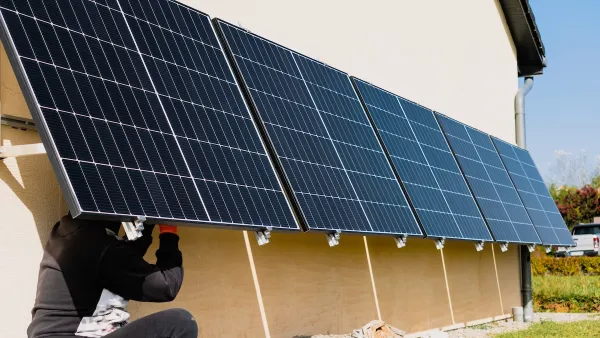
Californians can now transform balconies into power generators
Gov. Gavin Newsom has legalized plug-in solar technology, which allows residents to plug solar panels directly into their outlets

Pennsylvania is building data centers in abandoned mines
Housing data centers in mines provides an alternative to destroying local forests and may spare residents from data centers’ noise and air pollution.
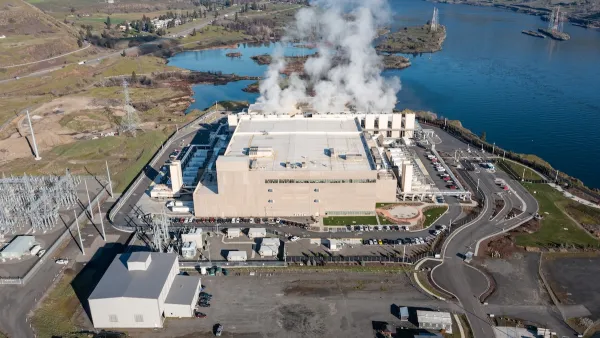
Data centers are consuming nearly 25% of Oregon’s power
The state has 111 data centers, with 32 more either planned or under construction.

Desperate measures: Advocates weigh draining Lake Powell to fill Colorado River
Draining the reservoir could reduce evaporation losses by a couple hundred thousand acre-feet.

Eastern Nebraska is running out of electricity
Data centers and electrification are straining eastern Nebraska’s grid, throttling economic development.

Malls are becoming the midtowns of the future
Mall and office park redevelopments are a generational opportunity to create new nodes of urbanity.

NYC breaks ground on anti-flooding infrastructure project
New York City's new system will reduce stormwater flows to local sewers by 90%.

One Kentucky town’s secret to affordable housing
The Smoketown Community Land Trust has already built seven affordable homes for community members.

Houston gains petal-shaped cooling infrastructure to make streets more ‘delightful’
The city has installed the pavilions along 15 blocks in Houston.

FREE Course: Walkable City 1: Why Walkability?
After describing his path towards focusing on walkability as the essence of good planning, Jeff Speck marches through his five principal reasons for making more walkable places.
Reinventing Malls: Planning Alchemy—Turning Gray Fields Into Gold
The course focuses on the opportunities and imperatives that shape reinvention of mall sites.

City of Rosemead
Rutgers University, Edward J. Bloustein School of Planning and Public Policy
One Hundred Miles
University of Michigan School for Environment and Sustainability (SEAS)
Hunter College, City University of New York (CUNY)
The Architects Foundation
City of Cambridge
Montrose County
The Pocatello Development Authority