Gov. Gavin Newsom has legalized plug-in solar technology, which allows residents to plug solar panels directly into their outlets


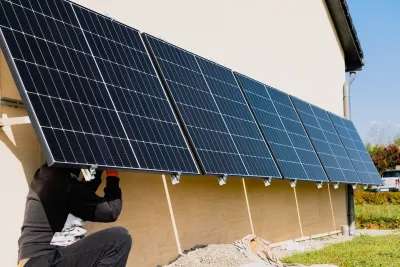
Californians can now plug solar panels right into their walls: Gov. Gavin Newsom signed a bill on Sept. 30 legalizing plug-in solar technology, allowing residents to place solar panels on their balconies or anywhere else within reach of an outlet, and turn their homes into “tiny power plants,” Matt Simon writes for Grist. While plug-in solar panels collect less energy than rooftop panels, they are cheaper and less complicated to install than the rooftop technology.
“[Balcony solar panels offset] some of a residence’s energy use, saving users hundreds of dollars a year, and opens up solar energy to renters with balconies or backyards. As a bonus, the less power homes have to draw from the grid, the less stress they put on the system, especially during heat waves when everyone is running energy-hungry air conditioners,” Grist reports.
Because plug-in solar reduces the amount of energy drawn from a grid, the technology can also help offset some of the extra demand on the grid from data centers and electrification.
Read the full story: California just made it legal to turn balconies into tiny power plants


New bill requires California data center developers to create water scarcity plans
Gov. Gavin Newsom recently signed 7 bills intended to give California communities more information about the impact of proposed data centers.
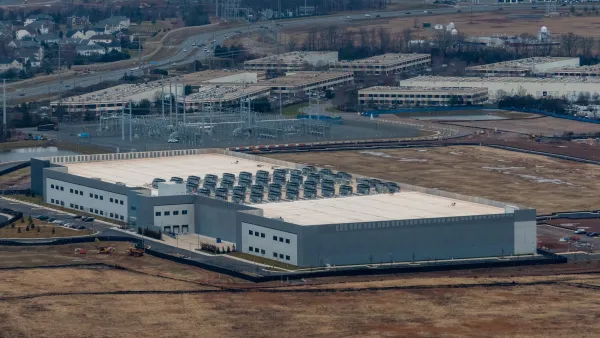
Data center developer offers over $4M per acre to buy out homeowners
Data center builders are outbidding home builders for land, prompting concerns about competition with housing.

Texas bars data centers from raising utility costs for residents
Gov. Abbott is calling on the state's utility regulator to take steps to reduce energy costs for consumers and ensure data center operators pay for any added costs.

Planetizen Federal Action Tracker
A weekly monitor of how Trump’s orders and actions are impacting planners and planning in America.

‘Going backwards:’ Baltimore mayor, students rally against state's transit funding plan
Maryland's proposed six-year plan provides no funding for Baltimore’s BMORE bus program and reduces its road maintenance funding.

Detroit to transform waterfront with $2.2 billion investment
Developers will convert about 18 acres of unused parking lot space into civic spaces.

Californians can now transform balconies into power generators
Gov. Gavin Newsom has legalized plug-in solar technology, which allows residents to plug solar panels directly into their outlets

85-year-old ranch is Texas’ newest state park
The 650 acre ranch is one of the largest parcels of land along Lake Palestine.

MIT to create AI-powered hub for public transportation companies
Google awarded the project, titled the Public Transit Intelligence Hub, $2.1 million in funding.

FREE Course: Walkable City 1: Why Walkability?
After describing his path towards focusing on walkability as the essence of good planning, Jeff Speck marches through his five principal reasons for making more walkable places.
Reinventing Malls: Planning Alchemy—Turning Gray Fields Into Gold
The course focuses on the opportunities and imperatives that shape reinvention of mall sites.

City of Thousand Oaks
City of Wisconsin Rapids
Harvard University Graduate School of Design
The Architects Foundation
University of Cincinnati Online
Northern Illinois Transit Authority (NITA)
The Pocatello Development Authority
The Urban Renewal Agency of the City of Pocatello