Road safety interventions would help protect seniors and other vulnerable groups from traffic violence.


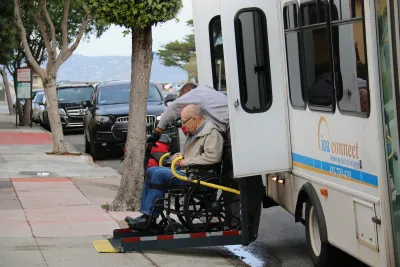
Older people make up a disproportionate number of traffic fatalities in Northern California’s Bay Area, reports Panashe Matemba-Mutasa in The Mercury News.
According to data from the National Highway Traffic Safety Administration (NHTSA), between 2019 and 2023, 32 percent of traffic deaths in San Mateo, Santa Clara, Alameda and Contra Costa counties were people over 60, who make up just 16 percent of the region’s total population.
As the article explains, “Issues like incomplete sidewalks, short crossing times, and turns conflicting with pedestrian crossings all make intersections more precarious. Seniors on foot may move more slowly, use walkers or have trouble seeing, and are more likely to be severely injured in even minor crashes.”
Traffic safety interventions such as slower speeds and improved pedestrian infrastructure can make roads safer for seniors and all users. A new California state ‘daylighting’ law prohibits parking within 20 feet of a crosswalk to improve visibility at intersections.
FULL STORY: Streets not ready for the Bay Area’s fast growing population — seniors

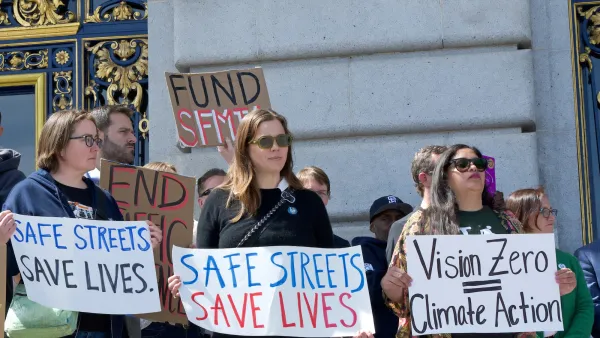
San Francisco Cut Traffic Deaths Almost in Half in 2025
The city credits its Vision Zero strategy and new traffic cameras for reducing the number of deaths and serious injuries on its roads.
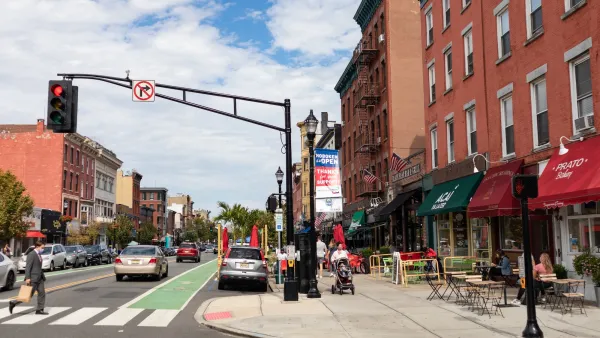
After 30% Spike in 2024, New Jersey Traffic Deaths Drop by 15% in 2025
New Jersey launched the nation’s first statewide Vision Zero plan last year.
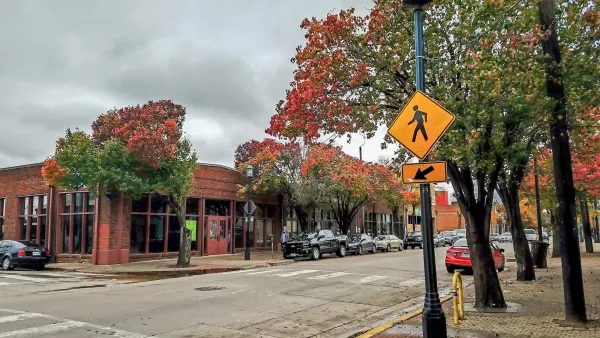
Dallas Cut Traffic Deaths Nearly in Half in 2025
The city saw 107 fatal crashes this year, down from 208 in 2024.

Planetizen Federal Action Tracker
A weekly monitor of how Trump’s orders and actions are impacting planners and planning in America.

The state-sanctioned urbicide of Austin
People don’t kill cities. Freeways do.

US to reduce Colorado River water deliveries to Mexico
A new Colorado Treaty amendment reduces Mexico’s Colorado River water allocation by 250,000 acre feet.

5 New England states march closer to 800 megawatt wind energy project
Securing federal approval for the project may be complicated under the Trump administration, which has historically been hostile towards domestic wind power.

Baltimore to break ground on $50 million Transit Priority Project
The project will bring faster bus trips, safer streets and better bike connections to Baltimore.

Airbnb launches $250 million 'last-dollar financing' housing accelerator, makes first investment in Austin
The company will put $6.4 million towards affordable housing development in Texas’ capital.

FREE Course: Walkable City 1: Why Walkability?
After describing his path towards focusing on walkability as the essence of good planning, Jeff Speck marches through his five principal reasons for making more walkable places.
Reinventing Malls: Planning Alchemy—Turning Gray Fields Into Gold
The course focuses on the opportunities and imperatives that shape reinvention of mall sites.

Eagle County Government
Harvard University Graduate School of Design
Nashville Planning Department
The Architects Foundation
University of Cincinnati Online
The Pocatello Development Authority
The Urban Renewal Agency of the City of Pocatello
Journal of the American Planning Association