If state lawmakers have their way, the city could be forced to remove several bikeways.


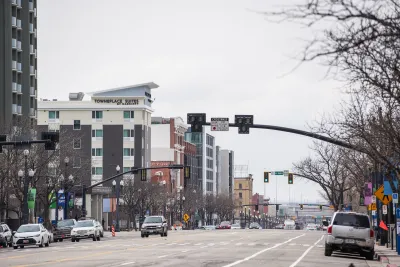
A proposed Utah state bill would require Salt Lake City to remove traffic calming infrastructure including bike lanes on three specific corridors.
According to reporting by Kea Wilson in Streetsblog USA, the bill would also bar local officials from implementing “highway reduction” efforts on many streets. “The hyper-specificity of S.B. 242 … would be a particularly stunning example of a state squashing a city's traffic violence prevention efforts, forcing Salt Lake to adhere to 11-foot minimum car lane widths on many roads and mandating onerous ‘stakeholder engagement’ requirements to remove as few as three parking spaces on specific categories of roads.”
Wilson notes that a previous Utah bill cited a debunked study that claims that traffic calming features can decrease air quality and endanger road users. “S.B. 242 could weaponize that pseudoscience even further by allowing the state to interfere in traffic safety in an even wider subset of Salt Lake City roads.”
FULL STORY: Disturbing Utah ‘Bikelash’ Bill Takes Aim at Salt Lake City Traffic Calming

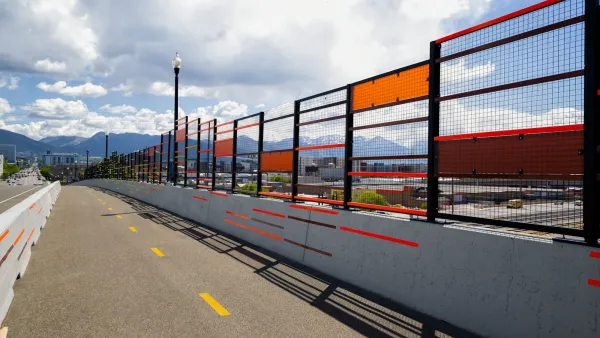
Salt Lake City opens protected bike path on viaduct trail
The 400 South Viaduct Trail features the state's longest continuous piece of public art.
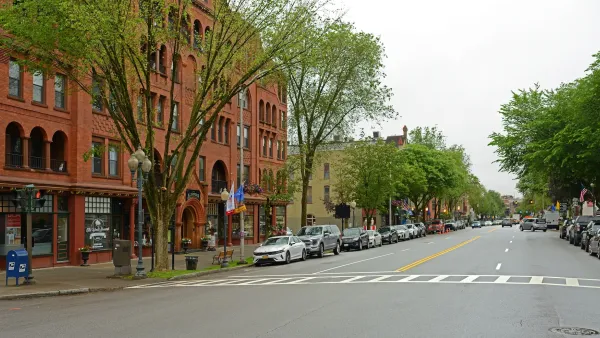
Saratoga Springs bike advocates say city is ignoring its Complete Streets plan
Despite a commitment to improving its multimodal infrastructure, the city has no plans to install bike lanes or curb cuts as part of repaving projects on two streets.
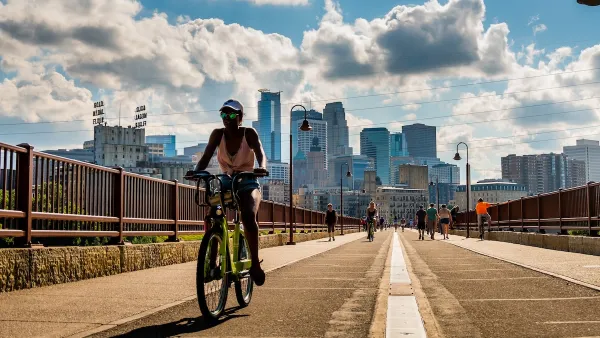
The 5 Safest Cities for Cyclists in America — and What They Have in Common
Cities with low fatality rates for people on bikes have made strong commitments to building safe, protected bike networks and supporting Complete Streets.

Planetizen Federal Action Tracker
A weekly monitor of how Trump’s orders and actions are impacting planners and planning in America.

The state-sanctioned urbicide of Austin
People don’t kill cities. Freeways do.

US to reduce Colorado River water deliveries to Mexico
A new Colorado Treaty amendment reduces Mexico’s Colorado River water allocation by 250,000 acre feet.

Mamdani overhauls NYC's Vision Zero plan with 100 new policy goals
The overhaul aims to reduce traffic deaths and make streets safer for pedestrians, cyclists and drivers through lower speed limits, new safety infrastructure and more.

Amtrak not solely to blame for New Jersey commuter rail's unreliability, report finds
A new study from the Garden State Initiative found that NJ Transit’s budget grew 20% across a 4 year period, but reliability declined significantly over the same period.

EPA erases limits on planet-warming pollution from power plants
Under Monday’s plan, power plants would still have some limits on how much mercury, arsenic and other contaminants they can emit.

FREE Course: Walkable City 1: Why Walkability?
After describing his path towards focusing on walkability as the essence of good planning, Jeff Speck marches through his five principal reasons for making more walkable places.
Reinventing Malls: Planning Alchemy—Turning Gray Fields Into Gold
The course focuses on the opportunities and imperatives that shape reinvention of mall sites.

Eagle County Government
Harvard University Graduate School of Design
Nashville Planning Department
The Architects Foundation
University of Cincinnati Online
The Pocatello Development Authority
The Urban Renewal Agency of the City of Pocatello
Journal of the American Planning Association