Avoid loops, limit deviations, space stops appropriately, and respect layovers.




This column is the fifth of a seven-part series in partnership with Chicago-based transit planner extraordinaire Joshua Woods, who authors Thoughts About Cities. Titled “Transit Planning 101,” it’s the transit planning boot camp you wish you got in planning school. Learn more about Joshua and the inspiration for the column, and read his other installments on bus stop balancing, what makes Good Transit, the case for frequent transit and more here.
Nadine Lee, the current CEO of Dallas Area Rapid Transit (DART), was the keynote speaker at the 2024 Transport Chicago conference.1 The theme of her address: “It’s ok to be basic.” Nadine’s statement reaffirms what sometimes feels lost in my industry as a transit planner. Against a backdrop of Tesla tunnels, autonomous Microtransit, and AI-powered ROW detection systems, most transit trips are still taken on a bus or a train. Of the nearly 50 million DART trips taken in 2023, 97.8 percent of them were taken on a bus or a train, slightly above the national average… of 97 percent.
How was your last ride on the bus? How about the train? How about your last 10 rides? Remember the 5:1 rule?
If 97 percent of transit trips happen on a bus or a train, our mandate should be to ensure those trips are convenient, reliable and dignified. Frequent transit service gets you well on the way. If you want to keep going, sound route design is next. Here’s a crash course.
Lines 👍🏽, Loops 👎🏽
In general, routes should avoid loops. The inbound trip should follow the same path as the outbound trip, in the reverse direction. When a transit route line is a line, trip planning is simple2. Hop on the bus to go to the store. To go home, cross the street and catch the bus going the other way.

When a transit line loops, the return trip becomes more complicated. This is a quirk for people whose trip is about halfway around the loop, and an active deterrent for everybody else. Take for example, this bus line below.

If you’re using this line to get between the transit center and the casino, your trip is alright. Your return trip is slightly different, but not very. If you’re taking this line to get between church and home, getting to church is fine, but your return trip might require some prayer. Your options are to:
- Ride the bus all the way around through the southern portion until you get back home -OR-
- Get off near the high school and catch the next inbound bus -OR-
- Get off near the high school and walk home
Let’s hope you prayed for patience.
In general, transit lines should be lines, not loops, with the inbound routing matching the outbound. If you find yourself designing a transit line, grab a pencil and trace your route. If you can trace all of the route exactly twice (once inbound, and once outbound) without lifting your pencil, your route design is on solid foundation. Let’s check out some examples below.

The last picture is an example of a transit route with a deviation, which leads us to another element of good route design.
Transit lines should limit deviations
Transit lines should be direct and linear, with limited deviations.
There are tons of well intentioned reasons that an otherwise direct transit line might pick up a deviation. Unfortunately, similar to the road to hell, the road to bad route design is paved with good intentions. The problem with deviations is they delay everybody’s trip that does not include the deviation. Let’s return to the route from the last example.

Imagine you are coming home from church and you opted to ride the bus all the way around instead of getting off and walking. Along the way you will deviate from the main road to serve the casino, Menards and an Apartment complex. These deviations add ~12 minutes to the trip… in each direction. (It would have taken you 7 minutes in total to drive home instead).
Deviations are great if it’s your stop, and a pain if it’s not. This must be considered when adding a deviation to a transit route.
DART’s service standard document has one of the most thought out approaches to deviations I’ve seen. They calculate the ratio of the automobile travel time to the transit travel time between two points and use that ratio to guide their directness standard. Their most frequent routes are held to a ratio of 1.2 or less, while their coverage routes are held to a ratio 1.4.
Another approach I have seen is to quantify the ridership gained by the deviation and check if it is more or less than the ridership lost due to riders avoiding the deviation.3
Generally, deviations should be avoided when designing transit lines. When deviations are unavoidable, work to minimize their impact. Make the deviation quick. Avoid deviations into places like parking lots that are prone to delays. If the bus must deviate into a parking lot prone to delays, could your bus drivers benefit from a layover here?

Where the line ends matters a lot
Ideally, bus lines should begin and end at transit centers or major destinations. At minimum, they must end where there is a dignified bathroom for the driver.4
Bus lines have to end somewhere. If you’re lucky, the line ends at an existing destination like a mall or college. Sometimes, the line just stops. This could be because development stops, or because you hit a political boundary, or maybe you’re at the edge of the cycle time and you know better than to cheat the layover.
Done intentionally, ends of line can be key operational assets, facilitating comfortable layovers and supporting timely service.
Cycle Time (n). Transit Planning — The time required for a transit vehicle to complete a round trip and be prepared to start another trip. Includes runtime, plus any additional recovery time. Dividing the cycle time by the desired frequency tells you how many vehicles are required to operate the transit service.
Layover (n) or (v). Transit Planning — Time scheduled into a transit route for the vehicle to recover any time lost in the last lap and start the next lap on time. This also gives the bus driver a break to take care of themselves (eat, stretch, 🧻, etc.)
To maximize operational benefits at the end of the line, ensure that there is room for multiple buses to layover, and that there is a clean and dignified bathroom available for your bus drivers at all times the bus is operating. Bonus points if there is somewhere to grab a snack 🍔. When scheduling layovers, my general rule is 15 percent of the runtime. For example, a bus that just ran for 50 minutes would get a 7.5 minute recovery.5
To the transit rider, ends of lines represent critical decision points. If I want to continue this journey, I’ll need to transfer to a different line, or a different mode of travel altogether. Locating ends of lines at key nodes and destinations like transit centers, malls and colleges ensures that there are options for riders when presented with this question.
Aim for four to five stops per mile
Generally, bus stops should be spaced every 1/4 mile. I’ve previously advocated for 1/4 mile spacing and stand by this recommendation. Check out my article on bus stop spacing if you want to learn more!
¹ If you have opinions about transportation policy in Chicago, you should attend this conference. Here’s the link to the conference website. It is one of my favorite conferences and I am devastated that I will not be able to attend this year.
² If trip planning is harder than calling an Uber….👀
³ Quantifying this can be tricky, which is why I don’t see it often
⁴ This is more of a bus problem than a train problem, since trains have to end at stations.
⁵ In this case, the driver would realistically end up with a 10 min recovery. 50 min + 7.5 min = 57.5 minutes. The minimum cycle time at an every 15, 20, 30 and 60 min frequency are all 60 minutes.

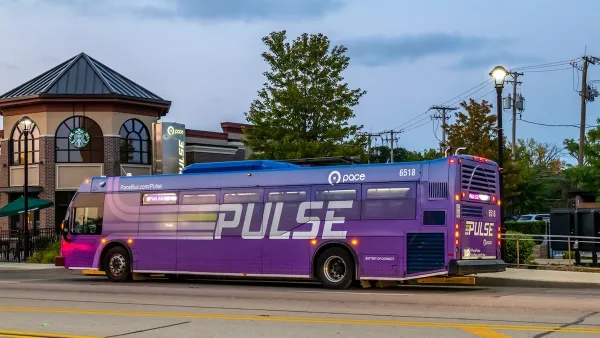
More Buses, More Riders: The Case for Frequent Transit
People can't take the bus that never comes.
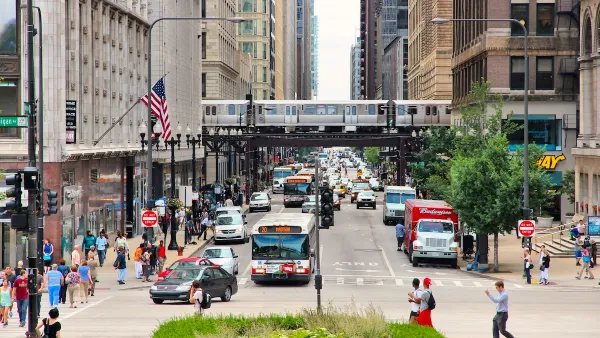
What Is Good Transit?
Good Transit is frequent. Good Transit is reliable. Good Transit is (reasonably) fast. Good Transit feels safe.
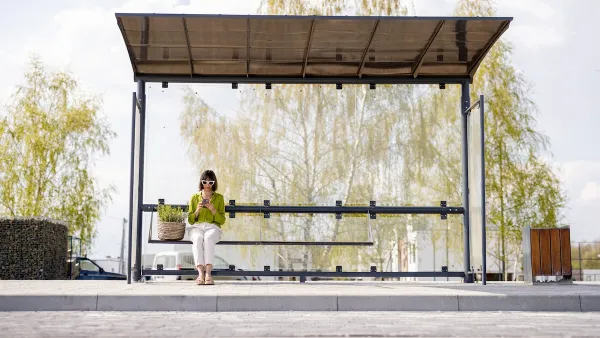
Wow, These Bus Stops are Close Together! The Case for Bus Stop Balancing.
Appropriate bus stop spacing keeps the bus moving and ensures people get where they need to be in a reliable amount of time.

Planetizen Federal Action Tracker
A weekly monitor of how Trump’s orders and actions are impacting planners and planning in America.

Northwest rail fans eager for Sept. 30 debut of Amtrak’s Airo fleet
Get ready for that new train smell and more seats. But they won’t go faster or run more frequently on the Cascades route in Washington and Oregon.
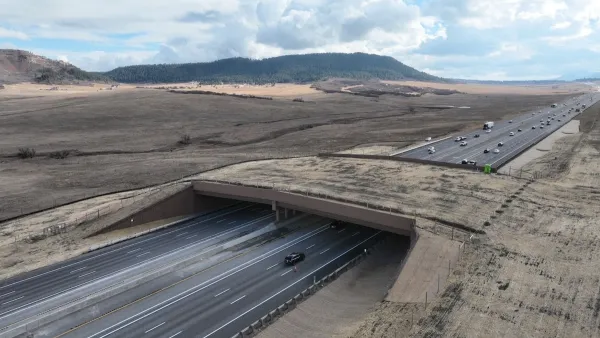
Record-breaking wildlife overpass in Colorado brings 91% reduction in animal collisions
Prior to the overpass, vehicles were hitting one deer per day on Colorado’s Interstate 25.

Detroit to transform waterfront with $2.2 billion investment
Developers will convert about 18 acres of unused parking lot space into civic spaces.

‘Going backwards:’ Baltimore mayor, students rally against state's transit funding plan
Maryland's proposed six-year plan provides no funding for Baltimore’s BMORE bus program and reduces its road maintenance funding.

Trump wants to cancel nearly 98% of funding for HUD housing support program
Multiple housing groups are suing the administration in an effort to preserve the funding.

FREE Course: Walkable City 1: Why Walkability?
After describing his path towards focusing on walkability as the essence of good planning, Jeff Speck marches through his five principal reasons for making more walkable places.
Reinventing Malls: Planning Alchemy—Turning Gray Fields Into Gold
The course focuses on the opportunities and imperatives that shape reinvention of mall sites.

City of Thousand Oaks
City of Wisconsin Rapids
Harvard University Graduate School of Design
The Architects Foundation
University of Cincinnati Online
Northern Illinois Transit Authority (NITA)
The Pocatello Development Authority
The Urban Renewal Agency of the City of Pocatello

