People can't take the bus that never comes.



This column is the third in a seven-part series in partnership with Chicago-based transit planner extraordinaire Joshua Woods, who authors Thoughts About Cities. Titled Transit Planning 101, it’s the transit planning boot camp you wish you got in planning school. Learn more about Joshua and the inspiration for the column, and read his other installments on bus stop balancing and what makes Good Transit here. Next stop: frequency!
Whenever I meet a new person and mention that I’m a transit planner, the first question I often get is some variant of “can you come and fix my local transit system?” Nine times out of ten, the TL;DR¹ answer to the problems they’re facing is frequency.
If you only know one thing about public transit, know this: Public transit’s usefulness increases EXPONENTIALLY with frequency.
There are a lot of reasons why our transit systems are not all that frequent. I’ll get into that in a future post, but for now let’s talk about why frequency is so important to Good Transit.
Frequency (adj) - The elapsed time between consecutive buses (or trains, or ferries) on a transit line²
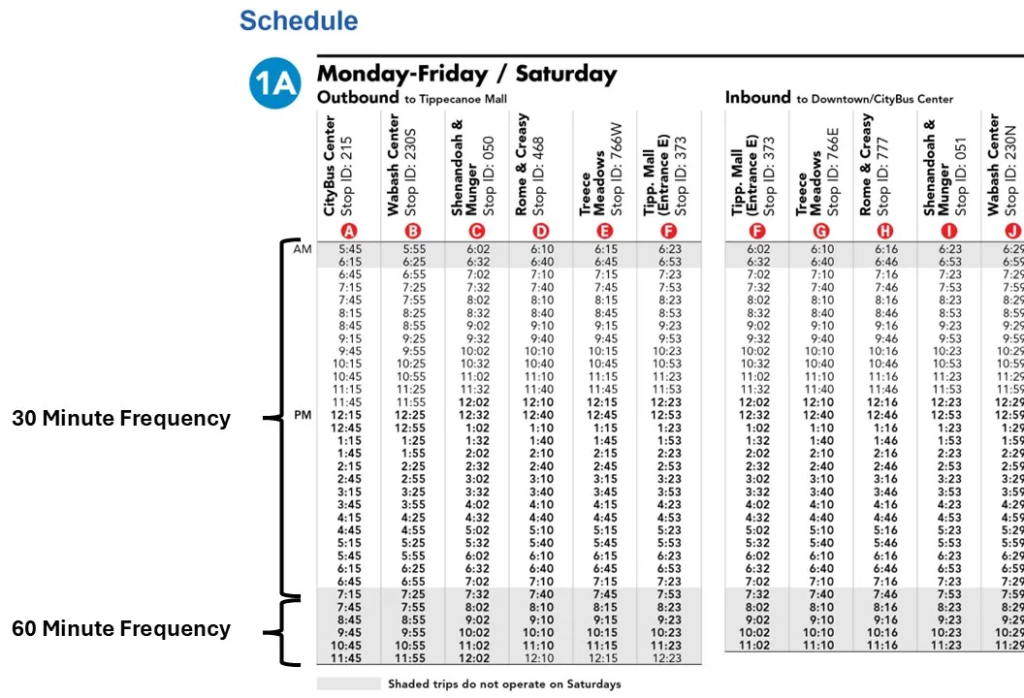
Frequency is how often the bus comes. The route shown below operates at a 30 minute frequency until 7:45 pm, when it drops to a 60 minute frequency.
If you’re already familiar with transit, this is probably old news to you. However, it’s so central to Good Transit that the point is worth belaboring. Imagine. You arrive at work, coffee in hand, ready (enough) to start your day. You get to the elevator and press the up button and you wait…and you wait…and you wait. You work on the 14th floor, so the stairs are an option, but not a great one. After 20 minutes of waiting, the elevator shows up. Upset (and probably a little confused), you and your now cold coffee get on the elevator and head up to join your (already started) first meeting of the day. Not very useful, was it?
Think of transit like the elevator at your workplace. It’s only useful if it actually comes in a reasonable time. For elevators, a reasonable amount of time is about 20 seconds, per Otis Elevators. For transit, a reasonable amount of time is about 7-8 minutes.
In transit planning, average wait time is typically calculated by dividing the frequency by two. If a route runs every 60 minutes, we would say the average wait time is 30 minutes. This reflects how long someone would wait on average if they just arrived at the bus stop without checking the schedule.
An average wait time of 7-8 minutes translates to a bus every 15 minutes. Every 10 minutes is even better. Every 5 minutes, amazing. However, every 15 minutes is the threshold where most industry research shows that transit passengers no longer worry about relying on the schedule, and instead just show up at the bus or train stop. At a 15 minute frequency, the average passenger can expect to wait about 7-8 minutes for the next bus or train.
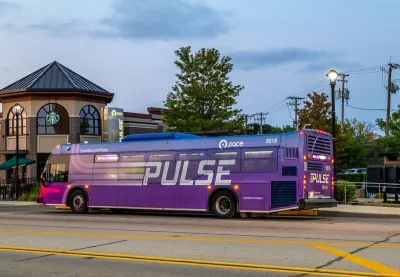
Pace, the transit authority serving suburban Chicagoland, where I live, provides an illustrative example of the power of frequency. Pace operates a network of 150(ish) bus routes that carried over 16 million passengers in 2023. The Regional Transportation Authority Mapping and Statistics (RTAMS) website lets us look at Pace ridership by route. The Pace website lets us observe the frequency of each route. The table below shows Pace’s top 10 busiest routes by ridership in 2024³, with their weekday frequency.

Despite only making up about 7 percent of the overall Pace network, these routes carried about 1/3 of total weekday ridership in 2024. Notably, these are also amongst the most frequent routes in the Pace network. Most notable (at least for the point I’m trying to make here) is the Pulse Dempster line.
This route, the second Arterial Rapid Transit (ART) line to launch under Pace’s Pulse program, started full service in October of 2023. In less than two years, it rose to be one of the busiest routes in the system. I’m sure the limited stops and free on-board Wi-Fi helped this ascent, but it can not be ignored that this route is also very frequent. It operates every 15 minutes, daily. Passengers don’t have to plan ahead to take the Pulse Dempster Line; they can arrive at the stop under the assumption that the bus will be there soon.
I’m not saying any of this to say that other factors (like supporting land use, perceptions of safety, and good service design) are not important to the success of transit. However, lapses in other factors can be papered over pretty easily with higher frequencies.⁴
If you have one demand of your local transit agency, or you are working in planning and are tasked with making decisions about transit service, remember that frequency truly is key. After all, people can only take the bus that actually comes.
¹ Too long, didn’t read
² Basics: The Transit Ridership Recipe
³ December 2024 data was not available at the time of writing
⁴ I’m not suggesting they should be, but they CAN be

Is the Bus Still Running? Seriously… is the Bus Still Running??
Faced with increased operating costs and the end of pandemic-era federal support, many transit systems across the United States find themselves grappling with tough decisions.

Good Transit Is Simple: Lessons in Good Route Design
Avoid loops, limit deviations, space stops appropriately, and respect layovers.
More Buses, Fewer Riders? Thoughts on the Ridership vs Coverage Tradeoff
Transit has to be useful, to be useful.

Planetizen Federal Action Tracker
A weekly monitor of how Trump’s orders and actions are impacting planners and planning in America.

‘Going backwards:’ Baltimore mayor, students rally against state's transit funding plan
Maryland's proposed six-year plan provides no funding for Baltimore’s BMORE bus program and reduces its road maintenance funding.

Detroit to transform waterfront with $2.2 billion investment
Developers will convert about 18 acres of unused parking lot space into civic spaces.

LA to transform part of water treatment facility into new park
By rebuilding some of the Los Angeles-Glendale Water Reclamation Plant’s infrastructure, the city will free up 18,000 square feet to create a new green space for the public.

San Antonio approves $1.1 billion transit agenda
The agency has also begun construction of its Via Rapid Green line, which will service passengers from the San Antonio International Airport.

Guerilla urbanists’ DIY benches joined by sanctioned seats in Chicago
The group behind the original homemade benches said they will continue installing them across bench-less bus stops in Chicago.

FREE Course: Walkable City 1: Why Walkability?
After describing his path towards focusing on walkability as the essence of good planning, Jeff Speck marches through his five principal reasons for making more walkable places.
Reinventing Malls: Planning Alchemy—Turning Gray Fields Into Gold
The course focuses on the opportunities and imperatives that shape reinvention of mall sites.

One Hundred Miles
County of Mendocino
planning NEXT
The Architects Foundation
University of Cincinnati Online
Montrose County
Northern Illinois Transit Authority (NITA)
The Pocatello Development Authority

