Between now and December, Chicago transit planner — and operator! — Joshua Woods will bring Planetizen readers back to school for a deep dive into what it takes to keep the bus running. Literally.




Today, Planetizen launched a special limited series called Transit Planning 101. We’ve partnered with Chicago-based transit planner extraordinaire and author of Thoughts About Cities Joshua Woods to take y’all back to school — or is it the bus depot? — for the transit planning education you always wished you’d gotten.
Joshua knows a thing or two about keeping the bus running. After being “royally humbled” by CE 297 (statics) en route to civil engineering in university, he “spared us all the inevitable bridge collapse headline” by pivoting to transportation. As a planner he’s worked on systems from Duluth, MN and Jackson, MS to Madison, WI and Orlando, FL and has a special penchant for bus stop consolidation. While he briefly flirted with the idea that trains are basically the same as buses (“I was wrong… as it turns out, trains require tracks”) while working for Deutsche Bahn, he professes that buses have his heart.
And while all the planners might say that to buses (heart eyes emoji), Joshua walks the walk. Or rather, drives the drive. After working his first student summer job as a small town dispatcher, he spent his school years driving buses while also learning to plan for them — and still keeps up the practice today!
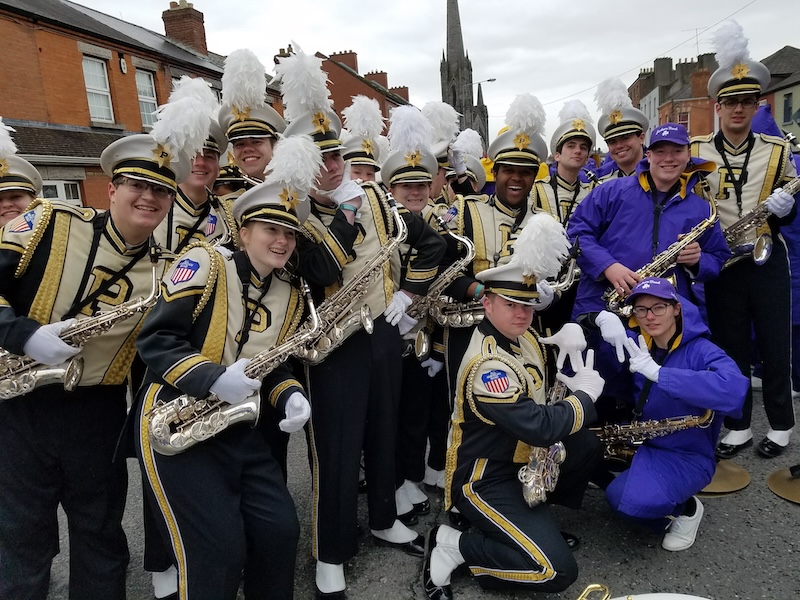
Oh, and did we mention he plays in marching bands? Don’t say he isn’t multimodal.
In advance of his column launching, we caught up with Joshua to learn more about him, why we all need more transit planning education in our lives, and where to find the coolest transit-oriented shirts in America. When you’re done, check out the first installment of his series here.

Planetizen: Tell us a bit about the inspiration behind this column.
Joshua Woods: So, transit planning is actually not super formalized from an academic standpoint. If you want to go be a transit planner, it's not really established. I think it's one of those things that if you find some sort of specific interest in, maybe you'll drill into it, but it is a little too niche to be covered in a general planning education, for the most part. And as I was figuring out what I wanted to do and how to establish my career, there was a lot of, sort of, choose-your-own-adventure along the way. I really would have appreciated maybe having someone steering that adventure for me beforehand. So I'm just, more than anything, trying to leave breadcrumbs, so that if you are trying to figure out your career, and maybe transit is something that you're interested in, this could be a resource for that.
It also has been a really great tool for just my exploration of my thinking about cities, about transit planning, about what it means to be an urban planner. That's kind of my impetus, but I will say: it's real nebulous. I just like talking about transit, and I like talking to other people about it, so I'm just running with that and seeing where it takes me.
Planetizen: What do you love so much about transit?
Joshua Woods: I think the mix of sort of quantitative and qualitative is what I really find the most intriguing about transit. So, there is some level of just straight spreadsheet analysis. How many people are on this bus, where we're having crowding issues, how can we manage that? Then there's also a human element of it, because, when you zoom out from those spreadsheets, this is a lot of people's rides to and from wherever they need to go, and that common carrier — that interweaving of lives that transit sort of facilitates — is the part that I really appreciate. Because everybody's trying to live their life trying to get to where they're trying to go, and transit, when done well, really facilitates that in a behind-the-scenes, seamless way.
Planetizen: You were not always a transit planner. You had a little bit of a non-traditional path into planning in general. Can you tell us a bit about it?
Joshua Woods: I always knew that I wanted to work in cities in some capacity, but I didn't know what exactly that meant. I started in civil engineering. I took statistics and immediately realized that civil engineering was not the direction that I should be heading. While I was at Purdue, I actually was able to work for the transit authority there. I was at City Bus of Lafayette for about 2 years while I was there. I drove buses, I did some stop consolidation, really any projects that need to be done, I got to do, and that hands-on doing the work, made me think… there's something here. This is what I want to do.
Planetizen: Speaking of doing the work, you have more than just planning experience in the transit realm.
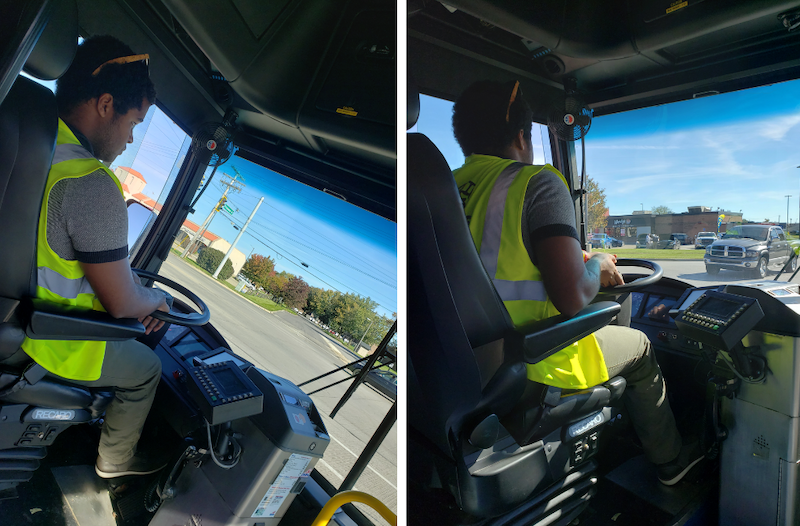
Joshua Woods: Yes, so, I am a transit planner by day, but I'm a bus driver by night! While I was in college working at City Bus, I got my CDL (commercial driver’s license). So, if you've been in transit for any period of time, there's kind of a recurring driver shortage that's always sort of omnipresent in the field. And since I was just generally the intern, since I also had a CDL, when we got to the point where we had more runs than people, I always joked that I was always the trash man. So I would pick up whatever was left so we didn't have to deal with either uncovered runs, or sometimes there was disciplinary action, which is a separate issue within transit.
I got to drive a lot of buses and I absolutely loved it. Interacting with the people is some of my favorite parts of the job, so actually getting to do that on-the-ground work is probably one of the most rewarding parts of the job for me. Even though I am working in consulting right now, I still actually have a part-time job at a private transportation company. So I drive motor coaches, but if there's a bus somewhere, I'm probably gonna find a good excuse to drive it.
Planetizen: You enjoy it!
Joshua Woods: I really do. It’s funny, I can't quite place it, but it seems like if you talk to anybody that has been driving a bus for a while, there's something about it that's just enjoyable. I can't even put words to it. It's cathartic, it's repetitive, it's relaxing, it's fun, it's social, it's gregarious, it's life! I enjoy it.
Planetizen: That does that mean to translate that into your planning practice? It's such a unique perspective to bring to planning. What do you feel it helps you bring to the profession that others without that experience don't bring?
Joshua Woods: Yeah, so having the experience of driving a bus and also doing the planning-level transit planning work actually reconciles really well, in my opinion. A lot of times when you're sort of working in spreadsheets, or you're working in whatever sort of software you're using to visualize the service, it's easy to just think of these as, like, a line in a spreadsheet, or even more mechanically, just a bus. But beyond that, it is a person driving a bus, and if you don't consider that sort of stuff, it really can cause a lot of operational problems for the transit service itself.
I think a really good example, which probably sounds simple, but it's often overlooked, is bathrooms. So, as you're planning transit routes, you want to make sure that at the end of the routes where the drivers have their layover, there's something like a respectable bathroom so they can handle what they need to handle. And oftentimes, if you're just, again, treating it as a spreadsheet exercise, you can forget that. You just give the minimum amount of time to turn that bus around and get it back.
But that'll ripple into real-world problems, because eventually — well, beyond the sort of ethical issues of you need bathrooms for the people operating the bus — if, there’s a bathroom that works on the route that's not the established spot, eventually drivers are just gonna start using that one. Then that just creates a less predictable service, so it's just some of those human elements that I think I really sort of try to keep centered.

Planetizen: Right now you work in Chicago. Have you only worked in Chicago, or have you worked elsewhere?
Joshua Woods: So my very, very, very first job in transit was a small transit property in Independence, Missouri, just outside of Kansas City, Missouri, where I'm originally from. I was a dispatcher for that transit authority! So, that was, again, my very first experience, and probably the most immersive experience. I was manning the customer service line, the building had dial-up, so whenever I had to look up issues, it was chaos. But it was great, because again, I think I really appreciate when I can get my hands dirty, and it provided a great opportunity for that.
But after college, I ended up moving to Chicago with my husband, and when we moved, I couldn't get a job initially. So that's how I picked up my part-time job driving motor coaches. I ended up getting a job with Kinetics Transportation Group, which was eventually acquired by Nelson\Nygaard. I often joke that since there isn't a formalized transit planning educational program in a lot of places, that was my transit planning 101, for lack of better words. I got to do system redesigns all over the country and learn a lot about the mechanics of transit, so that was a super rewarding experience. I've also worked for Deutsche Bahn. They have a domestic practice that tries to bring in European best practices when it comes to train and rail operations to the United States. I learned a whole lot about just trains specifically, because even within the niche that is transit, trains are their own very informationally dense subset.

Planetizen: You also mentioned that you're from Kansas City, and that you generally bring a lot of experience insights from places that are smaller than Chicago. Can you tell me a little bit about that and the different perspectives that it helps you bring to bigger city planning?
Joshua Woods: Yes, so I'm originally from Kansas City. My husband’s family mostly lives in rural Indiana. So we bounce around between those three different geographies a fair amount: Chicago, Kansas City, and then the middle of unincorporated Indiana.
I think that actually does inform a lot of how I think about planning, because above all, I think planning is just trying to facilitate a world that sort of accommodates the lives that people are trying to live in the places that they are. And that life here in Chicago… that is not the experience in Kansas City, that's not the experience in, like, the middle of Indiana. Beyond the physical needs, cultures are different in places, and then the culture of the place really informs the transit solutions that make sense and carry.
Being able to see all these different places, and all the different needs and pieces that come together, and then how it comes together into a transportation system — I think keeps me kind of broad in my perspective. Being in such a big city is sometimes hard. It can get a little insular, and it's easy to think that the world sort of stops at the city limits.
That's actually one thing that I do really appreciate about consulting specifically. I've worked on projects in California, I've worked on projects in Michigan, in Florida, like, across the country. And again, every place that ostensibly is doing the same thing: we're providing, for the most part, fixed route transit service, like a bus on the road. But it's doing it a little different, because the place requires something a little different, and it's neat to see how the same thing manifests in all these different ways all over the place.
Planetizen: Before we tie up, talk to me about your shirt.
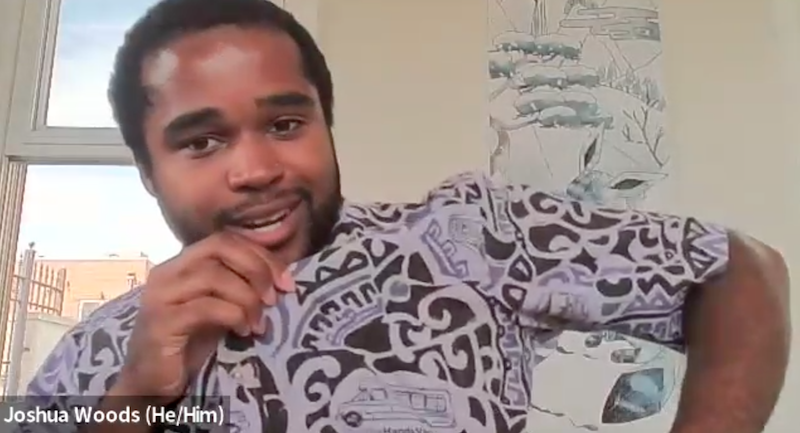
Joshua Woods: So, I'm actually starting to establish a decent collection of transit shirts. This is the bus in Hawaii. So, the transit authority serving Honolulu, this is their uniform, and it rotates I think, annually. So there are a whole lot of versions of this shirt. So this (*points to a bus on the shirt*) is, like, one of their fixed route buses. This (*points to another*) is the handy van in their paratransit service. And this is what the bus driver's wearing. I mean, it's very Hawaii. It's one of my favorite transit shirts, although if I get a second one, I imagine the ranking could change, because it's an awesome shirt.
Planetizen: I love that you have enough transit shirts that you can say, “I think it's one of my favorite transit shirts.”
So, as we tie up here, what are you hoping people will get out of this column?
Joshua Woods: So it's probably come through that I kind of like transit. And as I've started to write this column, it's been exciting to see how there is kind of this latent interest for that. So I think it's kind of a combination. I would really love to just maybe see where my transit people are, because I think we have a lot of sleepers out there, and it's exciting to see.
I've also enjoyed a whole lot learning from the other perspectives that I've bumped into, as I've started writing more and more. So, more than I think I have something to tell you guys, I'm excited to see what maybe y'all have to say to me. So, if I write something that is interesting, if I write something that you disagree with, interact with me!
More than anything, I want interaction. I think, especially in the moment that we're in, we have to make transit that actually, it speaks to people. It's something that people want, because we're making a lot of rough trade-offs right now, in real time. So, we're actually having these conversations about what we want, what we don't want about our transit services. I think it creates a better foundation for the continued existence of mass transit here. So I'm just here for the interaction, I'm here for the experience. I… I'm here to talk about transit.


Good Transit Is Simple: Lessons in Good Route Design
Avoid loops, limit deviations, space stops appropriately, and respect layovers.
More Buses, More Riders: The Case for Frequent Transit
People can't take the bus that never comes.
What Is Good Transit?
Good Transit is frequent. Good Transit is reliable. Good Transit is (reasonably) fast. Good Transit feels safe.

The state-sanctioned urbicide of Austin
People don’t kill cities. Freeways do.

US to reduce Colorado River water deliveries to Mexico
A new Colorado Treaty amendment reduces Mexico’s Colorado River water allocation by 250,000 acre feet.

New Jersey’s second-largest city bans standalone data centers
Jersey City will continue to allow co-location facilities, such as those meant for research institutions that store their own data.

Amtrak not solely to blame for New Jersey commuter rail's unreliability, report finds
A new study from the Garden State Initiative found that NJ Transit’s budget grew 20% across a 4 year period, but reliability declined significantly over the same period.

EPA erases limits on planet-warming pollution from power plants
Under Monday’s plan, power plants would still have some limits on how much mercury, arsenic and other contaminants they can emit.

Phoenix announces new on-demand transit service, more frequent RAPID buses
Both new services will launch in October, and are part of Phoenix's Project Effective Access Solutions for Easing Congestion.

FREE Course: Walkable City 1: Why Walkability?
After describing his path towards focusing on walkability as the essence of good planning, Jeff Speck marches through his five principal reasons for making more walkable places.
Reinventing Malls: Planning Alchemy—Turning Gray Fields Into Gold
The course focuses on the opportunities and imperatives that shape reinvention of mall sites.

Eagle County Government
Harvard University Graduate School of Design
Nashville Planning Department
The Architects Foundation
University of Cincinnati Online
The Pocatello Development Authority
The Urban Renewal Agency of the City of Pocatello
Journal of the American Planning Association

