Mall redevelopment, saving California’s high-speed rail, and a provocative rethinking of the concept of redlining.



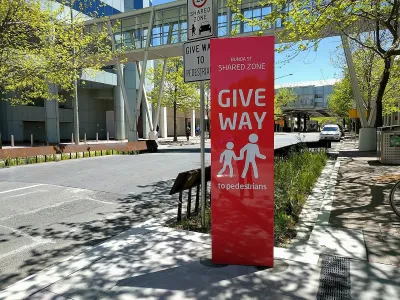
Last month on Planetizen, readers zeroed in on a story about a massive mall redevelopment project in Montreal, a plan to save California’s high-speed rail project, and the nation’s first ‘shared streets’ law, passed in Washington state. Advocates for unhoused people in Texas say bills being pushed in the state legislature would exacerbate the state’s housing crisis and further criminalize homelessness, and service providers in rural Kentucky struggle to meet the unique barriers posed by rural homelessness. New Hampshire could soon reduce parking requirements for residential projects, and an ode to the disappearing ‘third place’ offered by Dairy Queen restaurants.
The full list of May’s most-read stories:
A 62-year-old shopping complex will be redeveloped over the next 25 years to include a school, a hotel, and thousands of housing units.
The rail authority’s CEO has a plan to get the beleaguered project back on track. Can it be done?
Cities can now create pedestrian-friendly streets with speed limits of 10 miles per hour.
Proposals to speed up the eviction process and accelerate enforcement of a camping ban could make the state’s homelessness crisis worse, advocates say.
Under the law, new developments would not be allowed to prohibit manufactured housing, which offers an affordable option for many homebuyers.
If passed by the Senate, the bill would limit parking requirements to one spot per residential unit.
Were HOLC maps really to blame for the patterns of spatial inequality in U.S. cities?
People experiencing homelessness in rural areas and those trying to offer services face a unique set of challenges.
The transit agency says it will stop taking out new loans as USDOT threatens to suspend federal funding over NYC’s congestion pricing program and purported security concerns.
The closure of dozens of Dairy Queens across Texas leaves some communities suddenly missing a key social space.

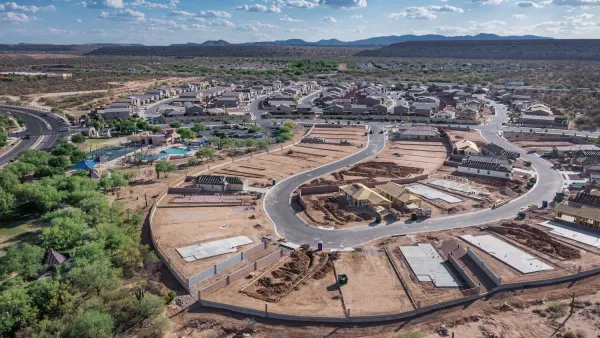
October Must-Reads: Top 10 Articles From Last Month
Arizona’s future needs sustainable growth, and part of the answer may lie in an experiment from its past.

August Must-Reads: Top 10 Articles From Last Month
In suburban Houston, cities are scrambling to expand water infrastructure to serve new communities. But can sprawl be part of a workable solution to the housing crisis?
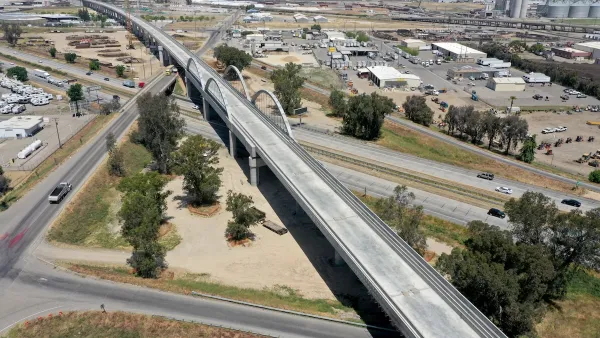
July Must-Reads: Top 10 Articles From Last Month
California loses high-speed rail funding, rural Texas hospitals risk closure, and housing advocates warn that a proposed DC law would disproportionately harm Black residents.

Planetizen Federal Action Tracker
A weekly monitor of how Trump’s orders and actions are impacting planners and planning in America.

The state-sanctioned urbicide of Austin
People don’t kill cities. Freeways do.

US to reduce Colorado River water deliveries to Mexico
A new Colorado Treaty amendment reduces Mexico’s Colorado River water allocation by 250,000 acre feet.

Nation's most wind-powered state turns to coal as data centers increase energy demand
For the first time in decades, Iowa has increased its generation of coal power.

NYC cools commuters with city's first rain garden above a bus stop
New York City officials say the plants in the rain garden can absorb 16 gallons of rainwater during heavy storms.

Brightline West’s future may rely on $6 billion federal loan
The company has until Nov. 2 to make a $400 million equity investment into its proposed high-speed rail line.

FREE Course: Walkable City 1: Why Walkability?
After describing his path towards focusing on walkability as the essence of good planning, Jeff Speck marches through his five principal reasons for making more walkable places.
Reinventing Malls: Planning Alchemy—Turning Gray Fields Into Gold
The course focuses on the opportunities and imperatives that shape reinvention of mall sites.

Greater Baltimore Committee
Eagle County Government
Harvard University Graduate School of Design
The Architects Foundation
University of Cincinnati Online
The Pocatello Development Authority
The Urban Renewal Agency of the City of Pocatello
Journal of the American Planning Association


