In the face of federal cuts to climate resilience funding, a panel at ULI’s Resilience Summit offered suggestions for maintaining managed retreat and other climate adaptation programs.



With federal funding for emergency management and climate resilience projects under threat, city governments are reassessing how to achieve their resilience goals and continue plans for managed retreat — “Asking people to leave their homes and relocate from areas at risk of repeated environmental threats” — in areas highly prone to flooding or other disasters.
In a panel at the Urban Land Institute’s Resilience Summit, city leaders discussed the tools and strategies cities can use to acquire at-risk properties and incentivize and assist residents in relocation. Robyn Griggs Lawrence covered the panel for Smart Cities Dive.
“Alison Branco, director of climate adaptation for The Nature Conservancy in New York, urged audience members to take advantage of the assistance nonprofits like land trusts, land banks and community development corporations can provide in managing transactions and stewarding properties after they’re purchased.”
Branco also pointed to programs led by nonprofits, such as The Nature Conservancy’s pilot program that provides cash assistance for people who agree to a buyout of a vulnerable property to ensure they follow through.
FULL STORY: Reimagining ‘managed retreat’ in a new reality

How US Cities Can Prepare for Climate Disasters
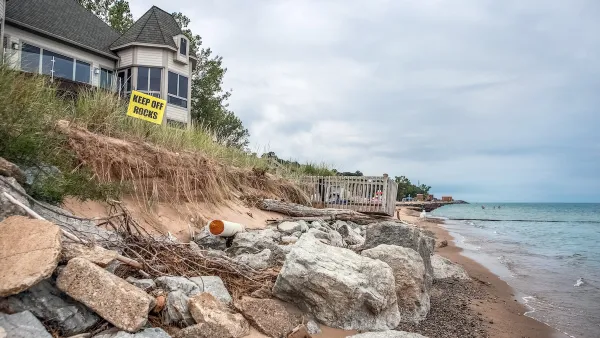
Resilience, encompassing infrastructure, governance, economic strength, and social cohesion, is critical for cities to mitigate rising climate risks like flooding, wildfires, and heat, ensuring long-term recovery and adaptability.

Two Coastal Areas Face Climate Change Threats, but Their Stories Are Vastly Different
In Manila and the San Francisco Bay Area, the severe impacts of rising sea levels are indisputable. But the only similarities are that both places face very uncertain futures.
An Early Look at Louisiana's 'Strategic Adaptations for Future Environments' Plan
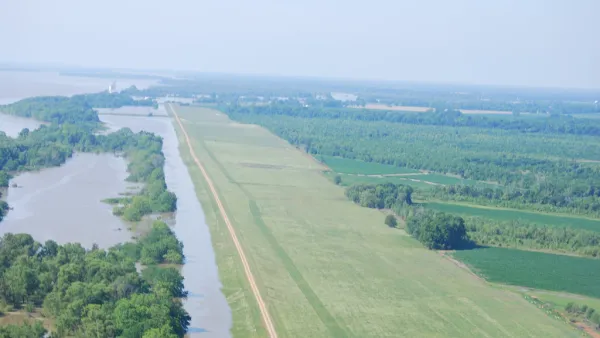
The state of Louisiana could be the first state to adopt a massive plan to push residents out of coastal areas threatened by sea level rise and coastal erosion. More states are expected to follow Louisiana's lead.

The state-sanctioned urbicide of Austin
People don’t kill cities. Freeways do.

US to reduce Colorado River water deliveries to Mexico
A new Colorado Treaty amendment reduces Mexico’s Colorado River water allocation by 250,000 acre feet.

New Jersey’s second-largest city bans standalone data centers
Jersey City will continue to allow co-location facilities, such as those meant for research institutions that store their own data.

Amtrak not solely to blame for New Jersey commuter rail's unreliability, report finds
A new study from the Garden State Initiative found that NJ Transit’s budget grew 20% across a 4 year period, but reliability declined significantly over the same period.

EPA erases limits on planet-warming pollution from power plants
Under Monday’s plan, power plants would still have some limits on how much mercury, arsenic and other contaminants they can emit.

Phoenix announces new on-demand transit service, more frequent RAPID buses
Both new services will launch in October, and are part of Phoenix's Project Effective Access Solutions for Easing Congestion.

FREE Course: Walkable City 1: Why Walkability?
After describing his path towards focusing on walkability as the essence of good planning, Jeff Speck marches through his five principal reasons for making more walkable places.
Reinventing Malls: Planning Alchemy—Turning Gray Fields Into Gold
The course focuses on the opportunities and imperatives that shape reinvention of mall sites.

Eagle County Government
Harvard University Graduate School of Design
Nashville Planning Department
The Architects Foundation
University of Cincinnati Online
The Pocatello Development Authority
The Urban Renewal Agency of the City of Pocatello
Journal of the American Planning Association