San Francisco incorporates green infrastructure in its city development initiatives, elevating the importance of sustainability in urban planning.


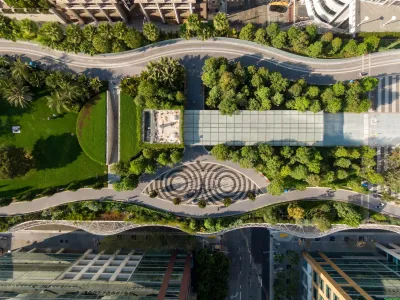
Seeking to prioritize sustainability, San Francisco incorporates green infrastructure in its urban planning initiatives. According to The Daily Californian, these initiatives include “improving water quality, creating sustainable urban landscapes and managing stormwater.”
Diverging from traditional forms of green infrastructure, San Francisco aims to include diverse sustainable approaches in its city development projects. The Daily Californian reports, “When people hear the term 'green infrastructure,' they may picture green-painted (or planted) rooftops, a modern urban design approach that has been quickly implemented in cities across the country. However, green infrastructure encompasses a wide range of strategies beyond green rooftops, all of which support a city’s long-term sustainability.”
By utilizing green infrastructure, San Francisco desires to include “... a diverse collection of measures that incorporate natural systems and biomimicry techniques in order to store stormwater and reduce its flow into sewer systems and/or contamination of surface water.” The Daily Californian highlights that “... stormwater poses a huge challenge to water quality in the United States, as substances like motor oil, gasoline and toxic chemicals get caught in its runoff, adversely affecting biodiversity and human health.”
In response, San Francisco is launching the Sunset Boulevard Greenway project. According to The Daily Californian, “the San Francisco Public Utilities Commission, or SFPUC, has spearheaded a 20-year, multibillion-dollar project known as the Sunset Boulevard Greenway. The project runs 12 blocks on Sunset Boulevard, boasting 30 rain gardens and managing 5.3 million gallons of stormwater annually. Plants and soils native to the region work to absorb water and reduce the quantity of runoff entering the sewer system.”
Overall, by integrating innovative green infrastructure strategies into its urban planning projects, San Francisco ensures environmentally sound initiatives and sustainable urban development for its residents and the surrounding landscape. These implementations will “... serve as a mechanism to boost climate resiliency and make large metropolitan areas more sustainable as we continue forward into the 21st century.”
Read the full story: Green Infrastructure Revolutionizing SF’s Urban Planning


Planetizen Federal Action Tracker
A weekly monitor of how Trump’s orders and actions are impacting planners and planning in America.

California plans to bury El Niño’s downpour
If the state plays its cards right, it may be able to store a billion acre-feet of El Niño’s water in aquifers.

Chicago breaks ground on $3 billion megadevelopment
The new neighborhood, titled Foundry Park, will one day host 3,700 residences.

Satanic place names
From streams and lakes to valleys and canyons, I mapped more than 1,000 places named after the Devil.

California High-Speed Rail Authority CEO resigns after $600,000 scandal
Under Ian Choudri, the authority used taxpayer dollars to fund first class flights and trips to nightclubs.

Want to study the Missouri River? Soon, you may need unanimous approval from 10 states
Legislation would require 10 governors’ permission to study or build projects moving water outside the basin.

FREE Course: Walkable City 1: Why Walkability?
After describing his path towards focusing on walkability as the essence of good planning, Jeff Speck marches through his five principal reasons for making more walkable places.
Reinventing Malls: Planning Alchemy—Turning Gray Fields Into Gold
The course focuses on the opportunities and imperatives that shape reinvention of mall sites.

City of Rosemead
Rutgers University, Edward J. Bloustein School of Planning and Public Policy
One Hundred Miles
Hunter College, City University of New York (CUNY)
The Architects Foundation
University of Cincinnati Online
City of Cambridge
Montrose County
The Pocatello Development Authority