A Biden-era regulation required states to report and plan to reduce transportation-related emissions.



The U.S Department of Transportation (USDOT) announced its repeal of a rule that required states to “monitor and report transportation-related emissions on interstate highways and other major roads.” The rule also required states to create two- and four-year greenhouse gas emissions reduction targets.
An announcement from the Federal Highway Administration (FHA) subtitles the announcement “Prevents Radical Environmental Agenda from Tying up Road Construction.” According to Smart Cities Dive’s Dan Zukowski, the rule had been the target of criticism from conservative lawmakers and many transportation industry leaders and officials such as U.S. Transportation Secretary Sean Duffy, who called it a “ridiculous climate requirement.”
Meanwhile, “Steven Higashide, clean transportation program director at the Union of Concerned Scientists, said in an email that it is ‘deeply disappointing to see the US DOT go along with vested interests in the road-building industry.’”
Read the full story: DOT repeals highway GHG emissions reporting rule

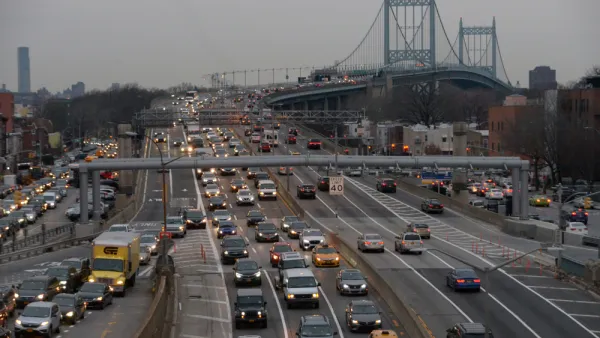
Trump Administration Eliminates U.S. DOT's Emission Reductions Goals
The Federal Highway Administration recently announced the end of policy requiring state and regional departments of transportation to make goals to reduce emissions and track progress.
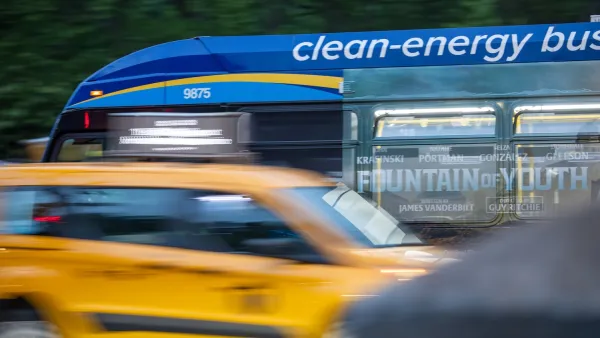
FTA Kills ‘Social Cost of Carbon’ in Transit Grant Criteria
The Capital Investments Grant program will no longer factor in the future impacts of carbon emissions.

Driving Equity and Clean Air: California Invests in Greener School Transportation
California has awarded $500 million to fund 1,000 zero-emission school buses and chargers for educational agencies as part of its effort to reduce pollution, improve student health, and accelerate the transition to clean transportation.

Planetizen Federal Action Tracker
A weekly monitor of how Trump’s orders and actions are impacting planners and planning in America.

California plans to bury El Niño’s downpour
If the state plays its cards right, it may be able to store a billion acre-feet of El Niño’s water in aquifers.

Chicago breaks ground on $3 billion megadevelopment
The new neighborhood, titled Foundry Park, will one day host 3,700 residences.

Satanic place names
From streams and lakes to valleys and canyons, I mapped more than 1,000 places named after the Devil.

California High-Speed Rail Authority CEO resigns after $600,000 scandal
Under Ian Choudri, the authority used taxpayer dollars to fund first class flights and trips to nightclubs.

Want to study the Missouri River? Soon, you may need unanimous approval from 10 states
Legislation would require 10 governors’ permission to study or build projects moving water outside the basin.

FREE Course: Walkable City 1: Why Walkability?
After describing his path towards focusing on walkability as the essence of good planning, Jeff Speck marches through his five principal reasons for making more walkable places.
Reinventing Malls: Planning Alchemy—Turning Gray Fields Into Gold
The course focuses on the opportunities and imperatives that shape reinvention of mall sites.

City of Rosemead
Rutgers University, Edward J. Bloustein School of Planning and Public Policy
One Hundred Miles
Hunter College, City University of New York (CUNY)
The Architects Foundation
University of Cincinnati Online
City of Cambridge
Montrose County
The Pocatello Development Authority