Contrary to popular assumptions, public transportation has far lower crash and crime rates than automobile travel. For safer communities, improve and encourage transit travel.


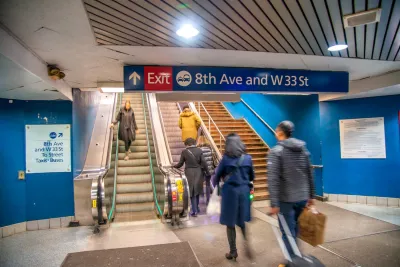
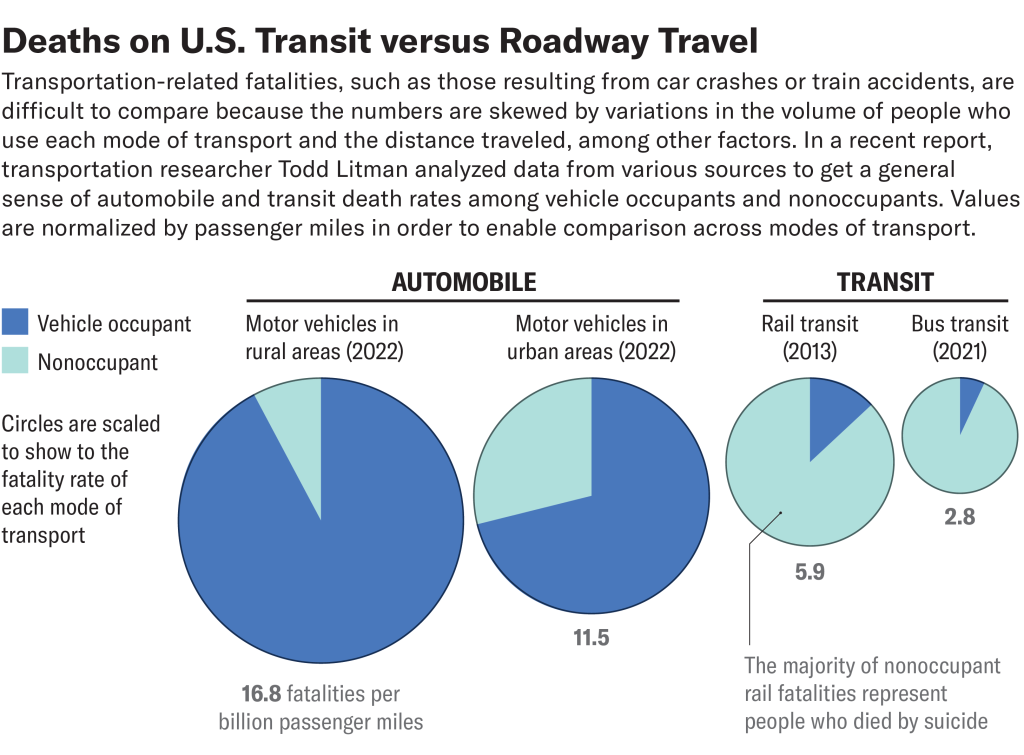
A new Scientific American article shows the much lower crash and crime rates of public transit travel compared with driving. “According to the data, driving a car in the U.S. is far more dangerous than taking public transit—in terms of crash risk and crime.”
“Public transit travel requires people to travel with strangers in a confined space, and especially in large cities with very diverse populations, it’s easy to feel intimidated by that experience,” says Todd Litman, founder and executive director of the Victoria Transport Policy Institute in British Columbia, who has published numerous studies on public transit safety. “Just from an experiential perspective, it feels unsafe, especially to people who don’t do it frequently.” Litman calls this dread: fearing a risk despite it having a low probability.
According to Litman, the risk of death or injury on public transit is about one tenth that of car travel. “And neighborhoods oriented more around public transit have about one fifth the overall traffic deaths per capita of car-oriented neighborhoods.”
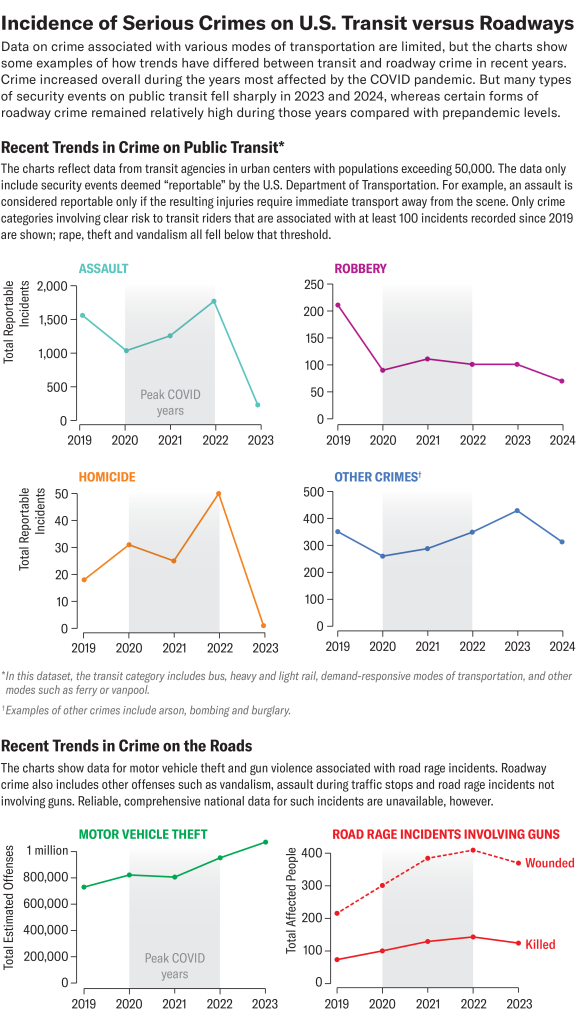
FULL STORY: These Charts Explain Why Public Transit Is Safer Than Driving

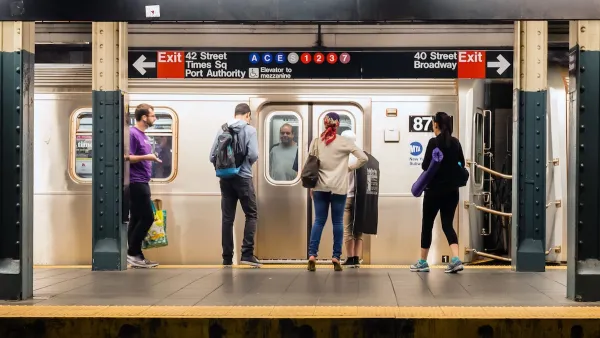
A Reality Check on Crime, Safety, and Transit
While Duffy and Nadler battle it out in a shouting match, the data is clear: transit is safe.
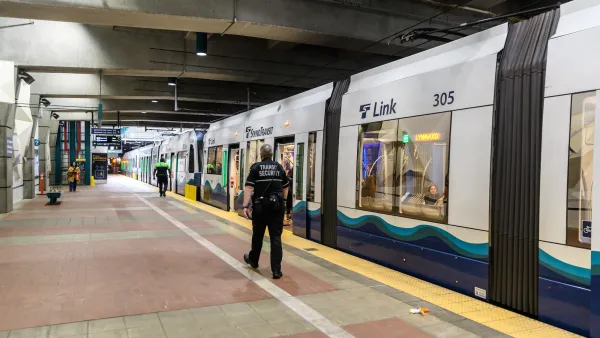
Perception vs. reality: NYC transit crime declined by 14% since 2019
In spite of popular perceptions, crime on many US transit systems is steadily dropping.
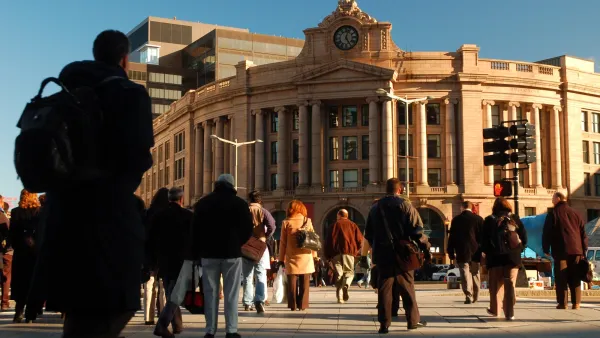
MBTA threatens to use eminent domain to pedestrianize Boston streets during World Cup
Boston city hall has been unusually reluctant to align with MassDOT and MBTA's proposed crowd management plans.

Planetizen Federal Action Tracker
A weekly monitor of how Trump’s orders and actions are impacting planners and planning in America.

The state-sanctioned urbicide of Austin
People don’t kill cities. Freeways do.

US to reduce Colorado River water deliveries to Mexico
A new Colorado Treaty amendment reduces Mexico’s Colorado River water allocation by 250,000 acre feet.

5 New England states march closer to 800 megawatt wind energy project
Securing federal approval for the project may be complicated under the Trump administration, which has historically been hostile towards domestic wind power.

Baltimore to break ground on $50 million Transit Priority Project
The project will bring faster bus trips, safer streets and better bike connections to Baltimore.

Airbnb launches $250 million 'last-dollar financing' housing accelerator, makes first investment in Austin
The company will put $6.4 million towards affordable housing development in Texas’ capital.

FREE Course: Walkable City 1: Why Walkability?
After describing his path towards focusing on walkability as the essence of good planning, Jeff Speck marches through his five principal reasons for making more walkable places.
Reinventing Malls: Planning Alchemy—Turning Gray Fields Into Gold
The course focuses on the opportunities and imperatives that shape reinvention of mall sites.

Eagle County Government
Harvard University Graduate School of Design
Nashville Planning Department
The Architects Foundation
University of Cincinnati Online
The Pocatello Development Authority
The Urban Renewal Agency of the City of Pocatello
Journal of the American Planning Association