Utility restoration efforts in areas affected by the January wildfires in Los Angeles will be exempt from environmental regulations to speed up the rebuilding of essential infrastructure.


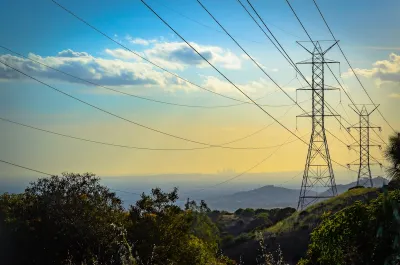
California Governor Gavin Newsom issued an executive order suspending environmental laws for utilities working to restore infrastructure in areas damaged by the Los Angeles fires.
According to a report by Grace Toohey for the Los Angeles Times, the order exempts utilities working on “electric, gas, water, sewer and telecommunication infrastructure” from California Environmental Quality Act (CEQA) rules. “In a letter sent last month, Newsom urged Southern California Edison, the area’s largest electricity provider, to do all it can to rebuild lines underground in these areas.” A spokesperson for Southern California Edison said the exemption will help the company move electrical wires underground.
A prior executive order also exempts rebuilding work from the California Coastal Act, although the Coastal Commission typically exempts such work after a disaster as long as new construction doesn’t exceed the old footprint by more than 10 percent.
Some environmentalists worry that the exemptions set a poor precedent and could put communities at further risk of future fires and other disasters. “Susan Jordan, executive director of the California Coastal Protection Network, said Newsom’s continued exemptions build on concerning environmental practices she’s seen in the fires’ aftermath, including the decision not to test soil in affected areas.”
FULL STORY: California suspends environmental laws to speed rebuilding of utilities after L.A. fires


Berkeley Noise Pollution Precedent Blocks Los Angeles Housing
Opponents to a new university housing project cited a recent Berkeley case in which noise pollution was successfully used to deny an exemption from environmental review.
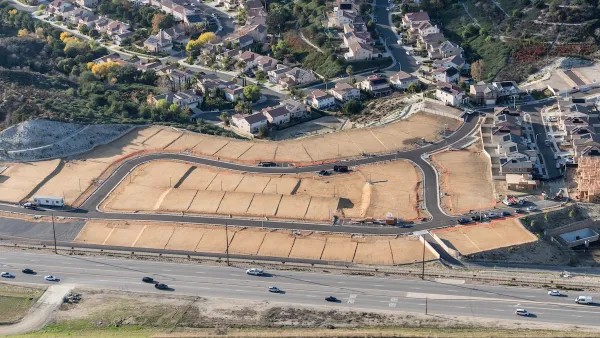
In California Battle of Housing vs. Environment, Housing Just Won
A new state law significantly limits the power of CEQA, an environmental review law that served as a powerful tool for blocking new development.

Half of Altadena’s Black Homes Lost or Damaged in Eaton Fire
The community has higher Black homeownership rates than most of Los Angeles, but now faces an uncertain future as residents struggle to rebuild.

Planetizen Federal Action Tracker
A weekly monitor of how Trump’s orders and actions are impacting planners and planning in America.

The state-sanctioned urbicide of Austin
People don’t kill cities. Freeways do.

US to reduce Colorado River water deliveries to Mexico
A new Colorado Treaty amendment reduces Mexico’s Colorado River water allocation by 250,000 acre feet.

Mamdani overhauls NYC's Vision Zero plan with 100 new policy goals
The overhaul aims to reduce traffic deaths and make streets safer for pedestrians, cyclists and drivers through lower speed limits, new safety infrastructure and more.

Amtrak not solely to blame for New Jersey commuter rail's unreliability, report finds
A new study from the Garden State Initiative found that NJ Transit’s budget grew 20% across a 4 year period, but reliability declined significantly over the same period.

EPA erases limits on planet-warming pollution from power plants
Under Monday’s plan, power plants would still have some limits on how much mercury, arsenic and other contaminants they can emit.

FREE Course: Walkable City 1: Why Walkability?
After describing his path towards focusing on walkability as the essence of good planning, Jeff Speck marches through his five principal reasons for making more walkable places.
Reinventing Malls: Planning Alchemy—Turning Gray Fields Into Gold
The course focuses on the opportunities and imperatives that shape reinvention of mall sites.

Eagle County Government
Harvard University Graduate School of Design
Nashville Planning Department
The Architects Foundation
University of Cincinnati Online
The Pocatello Development Authority
The Urban Renewal Agency of the City of Pocatello
Journal of the American Planning Association