As water supplies become strained and technology advances, cities look to wastewater as a viable source of drinking water.


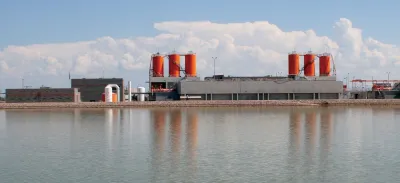
A new water purification facility in El Paso, Texas will clean and deliver 10 million gallons of water per day from the city’s wastewater system to its drinking water system. “El Paso’s Pure Water Center, which will go online by 2028, is the first direct-to-distribution reuse facility in the country,” writes Martha Pskowski in Governing.
As Pskowski explains, “The advanced purification process begins with treated wastewater from the Roberto Bustamante Wastewater Treatment Plant in El Paso. This source water then goes through a multiple barrier system, first going through reverse osmosis, in which a membrane separates water molecules from other substances. Then hydrogen peroxide and ultraviolet light are used to kill bacteria in the water. Next, activated carbon absorbs chemicals or compounds in the water. Lastly, chlorine is added for disinfection.”
The project’s technology underwent testing before gaining approval from the Texas Commission on Environmental Quality (TCEQ). However, “Environmental advocates have raised concerns about contaminants of emerging concern in the purified water, like per- and polyfluoroalkyl substances (PFAS), which aren’t yet regulated in drinking water.”
This would be El Paso’s first direct-to-distribution system, but the city has been distributing treated wastewater for irrigation since the 1960s and pumping treated wastewater into local reservoirs since the 1980s. While El Paso is the first city to break ground on its project, Phoenix and Tucson are expected to start work on their own wastewater purification projects soon, and a similar project has been in the works in San Diego for years.
FULL STORY: El Paso Breaks Ground on First U.S. Facility to Turn Wastewater Into Drinking Water

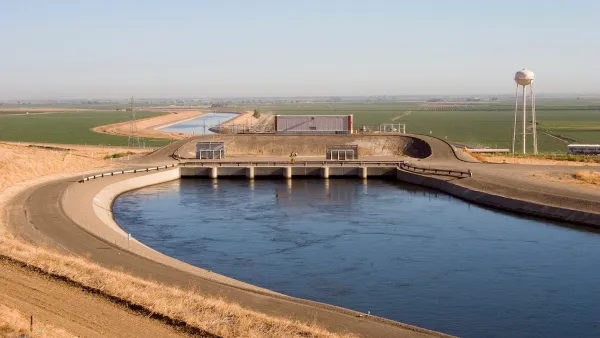
California’s 2024 Drinking Water Needs Assessment Reveals Critical Issues in Public Water Systems
The assessment identifies 385 failing public water systems and highlights significant funding gaps and affordability challenges in ensuring safe drinking water for disadvantaged communities.
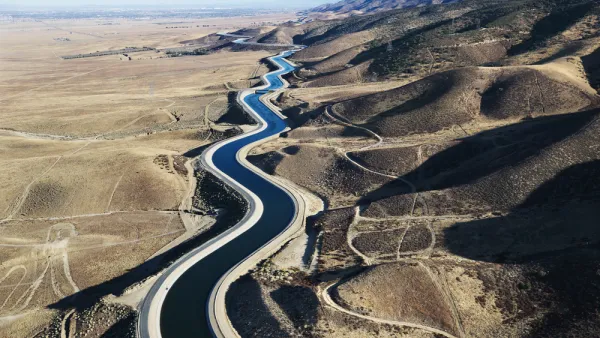
California Governor Outlines Plan for a ‘Hotter, Drier Future’
With California’s water supply expected to drop by 10 percent in the next two decades, Governor Newsom’s strategy calls for conservation and increased investment in water collection, storage, and desalination infrastructure.
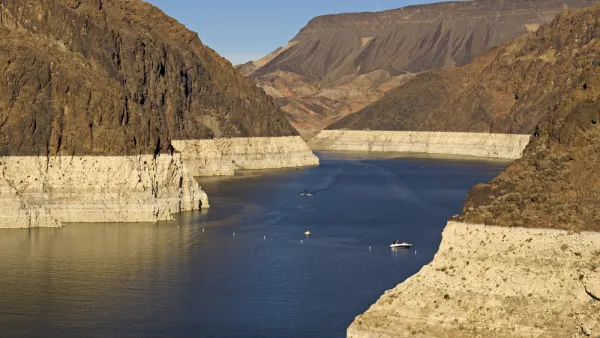
House Bill Would Invest Up to $750 Million in Wastewater Recycling Projects
HR 4099, which recently passed a House subcommittee, would create a new pool of money for 17 western states to use for new wastewater recycling capacity.

Planetizen Federal Action Tracker
A weekly monitor of how Trump’s orders and actions are impacting planners and planning in America.

The state-sanctioned urbicide of Austin
People don’t kill cities. Freeways do.

US to reduce Colorado River water deliveries to Mexico
A new Colorado Treaty amendment reduces Mexico’s Colorado River water allocation by 250,000 acre feet.

Mamdani overhauls NYC's Vision Zero plan with 100 new policy goals
The overhaul aims to reduce traffic deaths and make streets safer for pedestrians, cyclists and drivers through lower speed limits, new safety infrastructure and more.

Amtrak not solely to blame for New Jersey commuter rail's unreliability, report finds
A new study from the Garden State Initiative found that NJ Transit’s budget grew 20% across a 4 year period, but reliability declined significantly over the same period.

EPA erases limits on planet-warming pollution from power plants
Under Monday’s plan, power plants would still have some limits on how much mercury, arsenic and other contaminants they can emit.

FREE Course: Walkable City 1: Why Walkability?
After describing his path towards focusing on walkability as the essence of good planning, Jeff Speck marches through his five principal reasons for making more walkable places.
Reinventing Malls: Planning Alchemy—Turning Gray Fields Into Gold
The course focuses on the opportunities and imperatives that shape reinvention of mall sites.

Eagle County Government
Harvard University Graduate School of Design
Nashville Planning Department
The Architects Foundation
University of Cincinnati Online
The Pocatello Development Authority
The Urban Renewal Agency of the City of Pocatello
Journal of the American Planning Association