HR 4099, which recently passed a House subcommittee, would create a new pool of money for 17 western states to use for new wastewater recycling capacity.


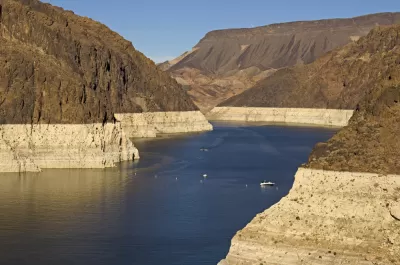
House representatives from California, Nevada, and Arizona have introduced H.R. 4099, the Large Scale Water Recycling Project Investment Act, "to create a water recycling grant program for large-scale projects in California and the other sixteen western states," according to a press release from Congresswoman Grace Napolitano (D-CA), which is one of the authors of the bill.
"H.R. 4099 establishes a competitive grant program within the Department of the Interior for large-scale water recycling projects that have a total estimated cost of at least $500 million. The legislation authorizes $750 million for the program through Fiscal Year 2027; projects must be within one of the Bureau of Reclamation's seventeen western states."
In an article for the Las Vegas Review-Journal, Blake Apgar reports that officials from the Southern Nevada Water Authority are supporting the bill for its potential to leave water in Lake Mead. The largest reservoir in the United States continues to break record low levels, triggering unprecedented drought contingency actions, including water supply reductions throughout the Western United States.
Read the full story: Napolitano, Grijalva, Huffman, and Lee Introduce Legislation to Fund Large-Scale Water Recycling Projects in the West

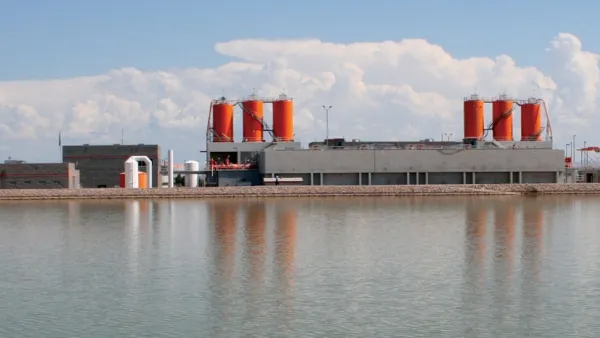
El Paso Wastewater Purification Facility Breaks Ground
As water supplies become strained and technology advances, cities look to wastewater as a viable source of drinking water.
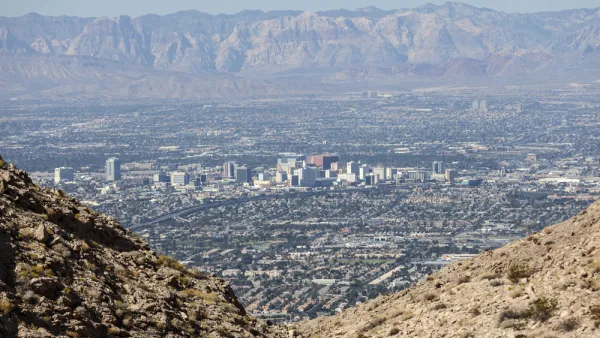
Sales Tax to Fund Water Projects Extended in Las Vegas Region
The Clark County Commission is extending a sales tax, created in 1998, which could have drawn to a close after raising $2.3 billion or the year 2025, whichever came first. The tax will remain in place indefinitely.
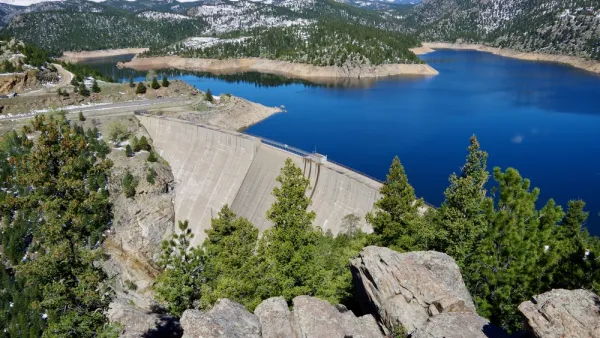
Planning for Water Scarcity in Colorado
The state of Colorado is growing quickly, and that means planners and developers will have to actively implement more efficient water infrastructure.

Planetizen Federal Action Tracker
A weekly monitor of how Trump’s orders and actions are impacting planners and planning in America.

California plans to bury El Niño’s downpour
If the state plays its cards right, it may be able to store a billion acre-feet of El Niño’s water in aquifers.

Desperate measures: Advocates weigh draining Lake Powell to fill Colorado River
Draining the reservoir could reduce evaporation losses by a couple hundred thousand acre-feet.

How a Chicago-sized wind farm beat the odds and powered on
The project spanned five presidential administrations and a standoff with a U.S. military base.

MTA gives itself 30 days to transform pit into basketball court
The site has been under construction since 2022; the city originally estimated it would finish the court in 2024.

Non-stop party: Chicago voters weigh permanent festival grounds
A stable place for bleachers, stages and drainage may streamline the setup and teardown of large events.

FREE Course: Walkable City 1: Why Walkability?
After describing his path towards focusing on walkability as the essence of good planning, Jeff Speck marches through his five principal reasons for making more walkable places.
Reinventing Malls: Planning Alchemy—Turning Gray Fields Into Gold
The course focuses on the opportunities and imperatives that shape reinvention of mall sites.

City of Rosemead
Rutgers University, Edward J. Bloustein School of Planning and Public Policy
One Hundred Miles
Hunter College, City University of New York (CUNY)
The Architects Foundation
University of Cincinnati Online
City of Cambridge
Montrose County
The Pocatello Development Authority