Low-cost interventions aimed at slowing traffic are making a major impact on road safety.


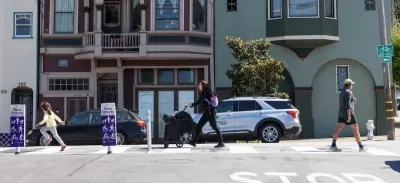
San Francisco’s Slow Streets program is dramatically reducing injury collisions, reports Dan Brekke for KQED.
The program, which covers 32 miles and was made permanent in late 2022, is designed to limit traffic and reduce speeds to 15 miles per hour or lower on participating streets. Those segments saw a 61 percent drop in injury crashes, while the rest of the city saw a rise of 6 percent since December 2022.
“Christopher White, executive director of the San Francisco Bicycle Coalition, said in a statement that Slow Streets is a key component to building a citywide network accessible to people of all ages and abilities.” Advocates are calling on the city to speed the expansion of the program to achieve its Vision Zero goals, noting that the success of Slow Streets indicates how small changes can have a major impact.
Slow Streets interventions include low-cost tools such as flexible posts, paint, and signs. “It’s such an insignificant cost in terms of materials and labor, but yet it has had such a significant impact on public safety,” said data analyst Stephen Braitsch. Traffic safety advocates suggest adding other interventions such as signal timing and reducing the number of lanes on dangerous streets.
FULL STORY: SF Is Struggling to Reduce Traffic Deaths. Slow Streets Could Be an Answer

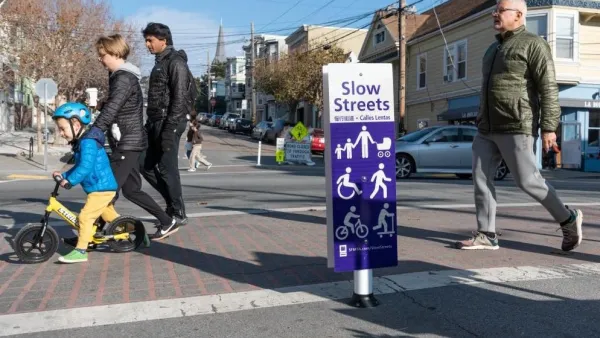
San Francisco Suspends Traffic Calming Amidst Record Deaths
Citing “a challenging fiscal landscape,” the city will cease the program on the heels of 42 traffic deaths, including 24 pedestrians.
Pedestrian Deaths Drop, Remain Twice as High as in 2009
Fatalities declined by 4 percent in 2024, but the U.S. is still nowhere close to ‘Vision Zero.’
Vehicle-related Deaths Drop 29% in Richmond, VA
The seventh year of the city's Vision Zero strategy also cut the number of people killed in alcohol-related crashes by half.

Planetizen Federal Action Tracker
A weekly monitor of how Trump’s orders and actions are impacting planners and planning in America.

The state-sanctioned urbicide of Austin
People don’t kill cities. Freeways do.

US to reduce Colorado River water deliveries to Mexico
A new Colorado Treaty amendment reduces Mexico’s Colorado River water allocation by 250,000 acre feet.

Mamdani overhauls NYC's Vision Zero plan with 100 new policy goals
The overhaul aims to reduce traffic deaths and make streets safer for pedestrians, cyclists and drivers through lower speed limits, new safety infrastructure and more.

Amtrak not solely to blame for New Jersey commuter rail's unreliability, report finds
A new study from the Garden State Initiative found that NJ Transit’s budget grew 20% across a 4 year period, but reliability declined significantly over the same period.

EPA erases limits on planet-warming pollution from power plants
Under Monday’s plan, power plants would still have some limits on how much mercury, arsenic and other contaminants they can emit.

FREE Course: Walkable City 1: Why Walkability?
After describing his path towards focusing on walkability as the essence of good planning, Jeff Speck marches through his five principal reasons for making more walkable places.
Reinventing Malls: Planning Alchemy—Turning Gray Fields Into Gold
The course focuses on the opportunities and imperatives that shape reinvention of mall sites.

Eagle County Government
Harvard University Graduate School of Design
Nashville Planning Department
The Architects Foundation
University of Cincinnati Online
The Pocatello Development Authority
The Urban Renewal Agency of the City of Pocatello
Journal of the American Planning Association