The towering ʻUmeke Lāʻau installation by Native Hawaiian artist Meleanna Aluli Meyer, unveiled at Honolulu's city hall, is a powerful symbol of cultural resilience and healing.


A historic new art installation, ʻUmeke Lāʻau (Culture Medicine) by Native Hawaiian artist Meleanna Aluli Meyer, has been unveiled at Honolulu Hale (city hall) as part of Hawaiʻi Triennial 2025: Aloha Nō (HT25). Unlike traditional ʻumeke (calabashes) that are small vessels for food, water, and sacred offerings, this towering 22-foot-wide, 8-foot-tall wooden structure reimagines the form as a symbol of healing, reflection, and societal repair. Created in collaboration with Honolulu Community College carpentry students and the University of Hawaiʻi at Mānoa’s art and theatre programs, the immersive installation invites visitors to step inside, remove their shoes, and reflect on themes of culture, history, and transformation.
More than just an art piece, ʻUmeke Lāʻau serves as a tribute to the Native Hawaiians and Hawaiʻi citizens who opposed the U.S. annexation of Hawaiʻi in 1897. Built-in speakers within the structure play the names of over 38,000 individuals who signed the Kūʻē Petitions, including Meleanna’s grandfather, Noa Webster Aluli. The recordings, voiced by UH Mānoa Hawaiian Theatre faculty and students, ensure that these historical figures are remembered and honored. According to Tammy Hailiʻōpua Baker, founder of the Hawaiian theatre program, the experience of reading ancestral names into the microphone was deeply moving and reinforced the personal and collective significance of the installation.
The project was made possible through the efforts of many hands, including UH Mānoa artist-in-residence Meleanna Aluli Meyer, Honolulu CC carpentry students, and local artists such as newly appointed UH Mānoa assistant professor Kaʻili Chun. Described as an artwork that “feeds” not just physically but spiritually and culturally, ʻUmeke Lāʻau offers a rare immersive experience where visitors can engage with its meaning firsthand. The installation will be on display at Honolulu Hale through May 4 before traveling to other locations, ensuring its message of resilience and healing reaches broader audiences.
FULL STORY: Historic Native Hawaiian art unveiled at Honolulu Hale

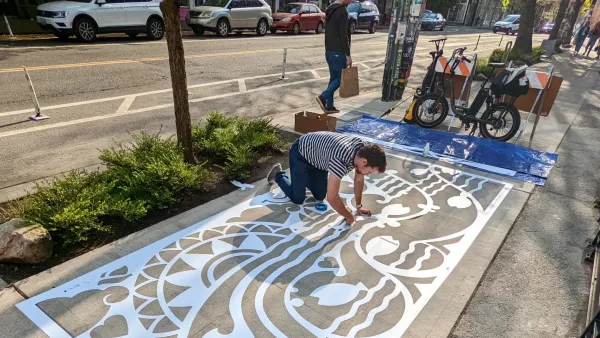
This Seattle sidewalk art only appears when it rains
Prompted to find a silver lining to the gloom of rainy Pacific Northwest days, an artist hit upon a novel solution: water-activated sidewalk paint.
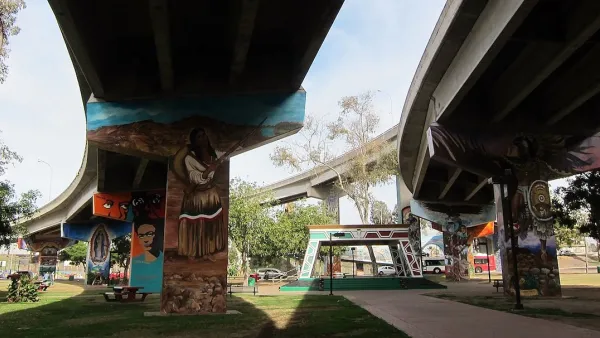
Opinion: Enhancing Inclusive Development: The Crucial Role of the Creative Class in Urban Planning
How bringing local artists into the development process can foster more vibrant, equitable neighborhoods.
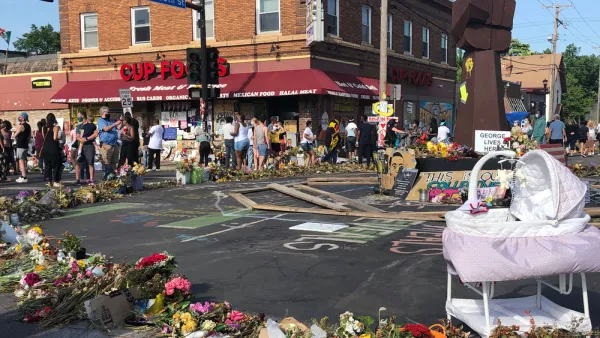
The Racial Reckoning in Public Spaces
Following George Floyd’s murder in 2020, there was an explosion of anti-racist street art across the country. “When we allow ourselves to release our emotions, oftentimes what is produced out of that is art.”

Planetizen Federal Action Tracker
A weekly monitor of how Trump’s orders and actions are impacting planners and planning in America.

The state-sanctioned urbicide of Austin
People don’t kill cities. Freeways do.

US to reduce Colorado River water deliveries to Mexico
A new Colorado Treaty amendment reduces Mexico’s Colorado River water allocation by 250,000 acre feet.

Mamdani overhauls NYC's Vision Zero plan with 100 new policy goals
The overhaul aims to reduce traffic deaths and make streets safer for pedestrians, cyclists and drivers through lower speed limits, new safety infrastructure and more.

Amtrak not solely to blame for New Jersey commuter rail's unreliability, report finds
A new study from the Garden State Initiative found that NJ Transit’s budget grew 20% across a 4 year period, but reliability declined significantly over the same period.

EPA erases limits on planet-warming pollution from power plants
Under Monday’s plan, power plants would still have some limits on how much mercury, arsenic and other contaminants they can emit.

FREE Course: Walkable City 1: Why Walkability?
After describing his path towards focusing on walkability as the essence of good planning, Jeff Speck marches through his five principal reasons for making more walkable places.
Reinventing Malls: Planning Alchemy—Turning Gray Fields Into Gold
The course focuses on the opportunities and imperatives that shape reinvention of mall sites.

Eagle County Government
Harvard University Graduate School of Design
Nashville Planning Department
The Architects Foundation
University of Cincinnati Online
The Pocatello Development Authority
The Urban Renewal Agency of the City of Pocatello
Journal of the American Planning Association