How the rigidity of modern suburban development fails to prepare cities for the future.


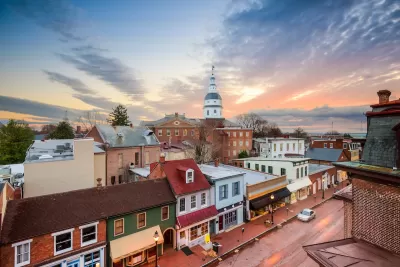
Drawing on his experience in Annapolis, Maryland, Edward Erfurt highlights how older cities make better use of space than suburban developments. In Annapolis, Erfurt writes, “The city evolved organically, filling in nooks and crannies with buildings and spaces that adapted to the existing topography and ownership patterns.”
According to Erfurt, Annapolis is a city full of “irregularly shaped lots and buildings” that are squeezed into nooks and crannies to maximize the use of space. The result is a uniquely charming — and functional — urban landscape.
Suburban development, on the other hand, “is rigid, designed to be ‘complete’ upon construction with little expectation for future growth or change.” It also wastes resources by duplicating infrastructure, such as roads, that go largely underused. For Erfurt, “By building to a "finished state," suburban developments sacrifice the possibility of future expansion and adaptability.”
Erfurt offers some examples of ‘nook and cranny urbanism’ that could make modern cities more adaptable and diverse. These include “Positioning buildings closer to the street or corners of lots,” “Placing utilities strategically along future corridors” to reduce the cost of future development, and “Designing flexible parking layouts” that allow for future redevelopment of parking lots. Changes like these could yield a more “productive and sustainable model” for city planning that actively prepares for future change and growth.
FULL STORY: Nook and Cranny Urbanism: How To Maximize Every Inch of Space

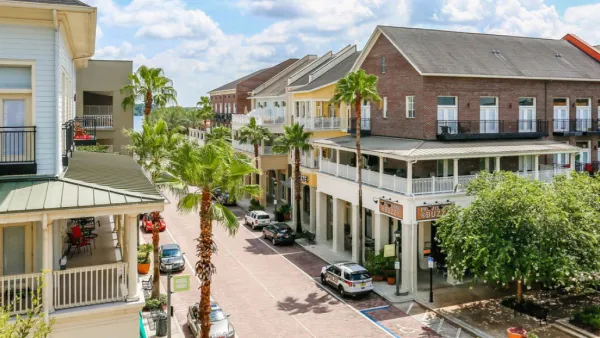
Orange County, Florida Adopts Largest US “Sprawl Repair” Code
The ‘Orange Code’ seeks to rectify decades of sprawl-inducing, car-oriented development.
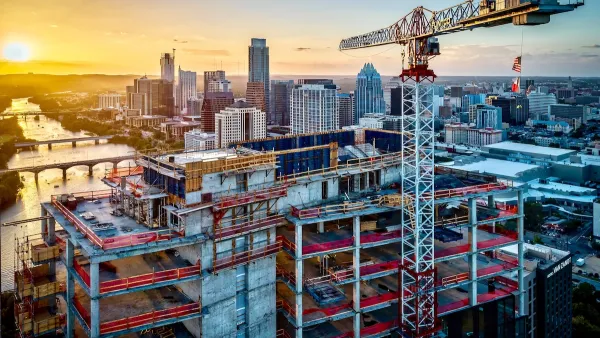
Texas Legislature’s Surprising Pro-Housing Swing
Smaller homes on smaller lots, office to apartment conversions, and 40% less say for NIMBYs, vote state lawmakers.
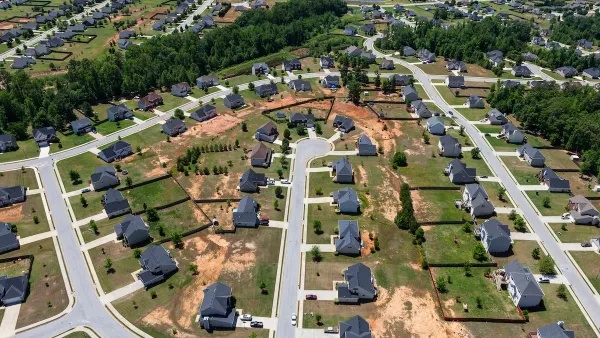
Commentary: Minimum Lot Sizes Drive Up Housing Costs
How making residential building requirements more flexible can ease the housing crisis and make neighborhoods more livable for more households.

Planetizen Federal Action Tracker
A weekly monitor of how Trump’s orders and actions are impacting planners and planning in America.

The state-sanctioned urbicide of Austin
People don’t kill cities. Freeways do.

US to reduce Colorado River water deliveries to Mexico
A new Colorado Treaty amendment reduces Mexico’s Colorado River water allocation by 250,000 acre feet.

5 New England states march closer to 800 megawatt wind energy project
Securing federal approval for the project may be complicated under the Trump administration, which has historically been hostile towards domestic wind power.

Baltimore to break ground on $50 million Transit Priority Project
The project will bring faster bus trips, safer streets and better bike connections to Baltimore.

Airbnb launches $250 million 'last-dollar financing' housing accelerator, makes first investment in Austin
The company will put $6.4 million towards affordable housing development in Texas’ capital.

FREE Course: Walkable City 1: Why Walkability?
After describing his path towards focusing on walkability as the essence of good planning, Jeff Speck marches through his five principal reasons for making more walkable places.
Reinventing Malls: Planning Alchemy—Turning Gray Fields Into Gold
The course focuses on the opportunities and imperatives that shape reinvention of mall sites.

Eagle County Government
Harvard University Graduate School of Design
Nashville Planning Department
The Architects Foundation
University of Cincinnati Online
The Pocatello Development Authority
The Urban Renewal Agency of the City of Pocatello
Journal of the American Planning Association