The Los Angeles County Department of Parks and Recreation demonstrates how parks serve as vital community infrastructure by adapting to crises, offering public health services, disaster relief, and essential support for residents in need.



Parks are more than recreational spaces; they are critical infrastructure that supports communities in everyday life and during times of crisis. In Los Angeles County, the Department of Parks and Recreation (DPR) has played a pivotal role in addressing challenges like climate change, public health crises, and natural disasters. During the COVID-19 pandemic, DPR transformed parks into testing and vaccination sites, food distribution centers, and spaces for mental and physical well-being. Programs like Parks After Dark (PAD) in Motion and Park on the Move ensured that underserved communities had access to recreational opportunities. By leveraging its facilities and staff, DPR provided essential resources to residents, demonstrating the indispensable role of parks in public health and community resilience.
Beyond the pandemic, DPR has been instrumental in disaster relief efforts, particularly in response to California's worsening wildfires. During the Eaton Fire, DPR established Care Camps to support evacuated families, providing children with a safe space to learn and play while parents focused on recovery. The department also facilitated donation drives and partnered with organizations like the Dodgers Foundation and local museums to offer enriching experiences at no cost to affected families. Additionally, DPR organized community events such as concerts to aid emotional recovery, recognizing that parks serve as spaces for healing and social connection. These initiatives align with trauma-informed care principles, ensuring that communities receive holistic support during difficult times.
DPR’s success in crisis response is driven by its dedicated staff, innovative programming, and resilient infrastructure. From maintenance crews keeping facilities operational to recreation leaders organizing relief efforts, employees have shown exceptional commitment, even when personally impacted by disasters. As crises become more frequent due to climate change and other global challenges, DPR’s proactive and adaptive approach underscores the need for continued investment in parks and recreation. By serving as hubs for relief efforts, gathering spaces, and symbols of hope, parks remain at the heart of community resilience.
FULL STORY: Parks in Action: Meeting Community Needs During Times of Crisis

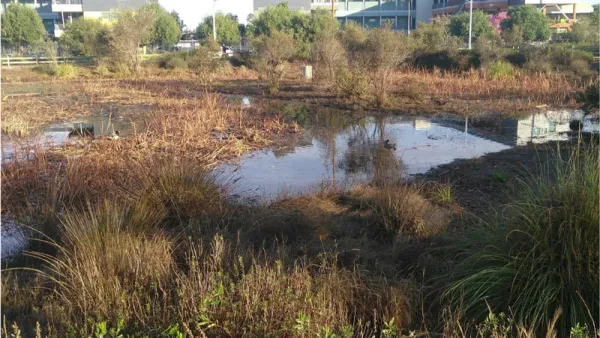
How South LA Green Spaces Power Community Health and Hope
Green spaces like South L.A. Wetlands Park are helping South Los Angeles residents promote healthy lifestyles, build community, and advocate for improvements that reflect local needs in historically underserved neighborhoods.

Making California State Parks More Climate-Resilient
A recently released report offers recommendations for keeping state parks healthy and robust, including acquiring additional land for conservation and recreation.

‘Grätzloasen’: The Urban Oases Vienna Pays its Citizens to Build
The Austrian capital offers grants of up to 5,000 Euros to residents who want to build their own parklets in curbside parking spaces.

The state-sanctioned urbicide of Austin
People don’t kill cities. Freeways do.

US to reduce Colorado River water deliveries to Mexico
A new Colorado Treaty amendment reduces Mexico’s Colorado River water allocation by 250,000 acre feet.

New Jersey’s second-largest city bans standalone data centers
Jersey City will continue to allow co-location facilities, such as those meant for research institutions that store their own data.

Amtrak not solely to blame for New Jersey commuter rail's unreliability, report finds
A new study from the Garden State Initiative found that NJ Transit’s budget grew 20% across a 4 year period, but reliability declined significantly over the same period.

EPA erases limits on planet-warming pollution from power plants
Under Monday’s plan, power plants would still have some limits on how much mercury, arsenic and other contaminants they can emit.

Phoenix announces new on-demand transit service, more frequent RAPID buses
Both new services will launch in October, and are part of Phoenix's Project Effective Access Solutions for Easing Congestion.

FREE Course: Walkable City 1: Why Walkability?
After describing his path towards focusing on walkability as the essence of good planning, Jeff Speck marches through his five principal reasons for making more walkable places.
Reinventing Malls: Planning Alchemy—Turning Gray Fields Into Gold
The course focuses on the opportunities and imperatives that shape reinvention of mall sites.

Eagle County Government
Harvard University Graduate School of Design
Nashville Planning Department
The Architects Foundation
University of Cincinnati Online
The Pocatello Development Authority
The Urban Renewal Agency of the City of Pocatello
Journal of the American Planning Association