The humble apartment, as a typology, has been with us for millennia.


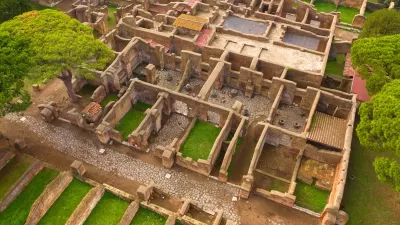
The urban apartment, while it may feel like a modern invention, dates back thousands of years, writes Ashley Gardini in a piece for JSTOR Daily.
In the Americas, the ancient city of Teotihuacan housed up to 200,000 people in compact compounds. “While these may have looked a bit different than what we think of as apartments today, evidence shows that these structures ‘generally consist[ed] of several rooms at slightly different levels, arranged around open spaces (courtyards, refuse areas, and light wells) that serve[d] as places for ritual, rainwater collection, partial refuse disposal, and light provision.’” In ancient Rome, ‘insulae’ of up to five stories housed residents of crowded cities.
Later in history, planners and leaders attempted — with varying degrees of success — to sanitize and organize cities by building massive apartment blocks. As technology evolved, so did the ability of builders to construct larger and taller buildings. “In the twenty-first century, even as we continue to build larger and taller structures, architecture needs to respond to the climate crisis and other evolving environmental factors.” A wood-based material called mass timber is being explored as a sustainable alternative to other construction materials that is strong enough to use in buildings of up to 25 stories (to date).
FULL STORY: The Eternal, Essential Apartment

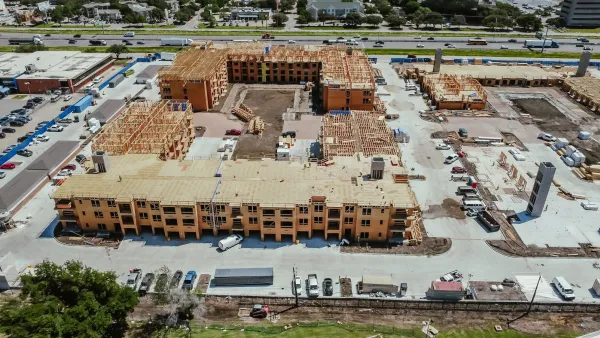
Controversial Texas housing law has 'directly facilitated' over 1,250 new homes
SB 840 allows developers to build multifamily housing by-right on lots zoned for commercial use without applying to a zoning change.
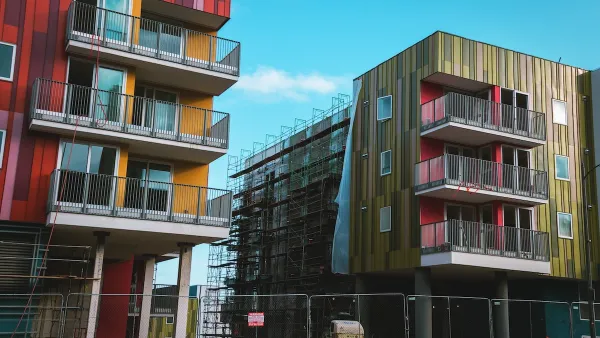
Survey: 59% of LA Residents Want Dense Housing in Their own Neighborhoods
A UCLA survey reveals strong support for new apartments across the city, bucking the notion that Angelenos are NIMBYs.
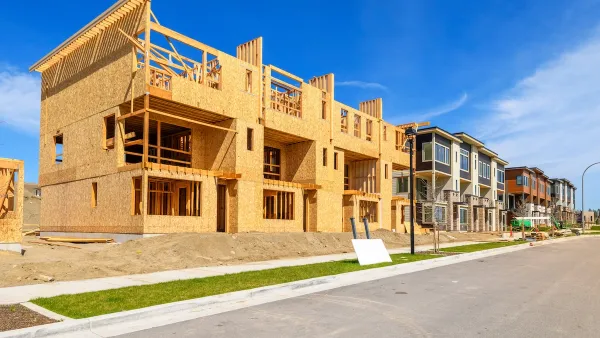
More Apartments Are Being Built in Less-Dense Areas
Rising housing costs in urban cores and a demand for rental housing is driving more multifamily development to exurbs and small metros.

Planetizen Federal Action Tracker
A weekly monitor of how Trump’s orders and actions are impacting planners and planning in America.

The state-sanctioned urbicide of Austin
People don’t kill cities. Freeways do.

US to reduce Colorado River water deliveries to Mexico
A new Colorado Treaty amendment reduces Mexico’s Colorado River water allocation by 250,000 acre feet.

Colorado’s Largest Data Center Could Rise Next to Homes — Without a Public Hearing
The proposed campus would consume 11 times the power of Denver International Airport; as it has across the country, opposition mounts.

5 New England states march closer to 800 megawatt wind energy project
Securing federal approval for the project may be complicated under the Trump administration, which has historically been hostile towards domestic wind power.

Baltimore to break ground on $50 million Transit Priority Project
The project will bring faster bus trips, safer streets and better bike connections to Baltimore.

FREE Course: Walkable City 1: Why Walkability?
After describing his path towards focusing on walkability as the essence of good planning, Jeff Speck marches through his five principal reasons for making more walkable places.
Reinventing Malls: Planning Alchemy—Turning Gray Fields Into Gold
The course focuses on the opportunities and imperatives that shape reinvention of mall sites.

Eagle County Government
Harvard University Graduate School of Design
Nashville Planning Department
The Architects Foundation
University of Cincinnati Online
The Pocatello Development Authority
The Urban Renewal Agency of the City of Pocatello
Journal of the American Planning Association