A watchdog group is questioning whether the benefits of data centers outweigh their negative impacts on the local economy and power grid.



Watchdog group Policy Matters Ohio is raising some key concerns about the proliferation of data centers in the state, including “whether the state is giving up too much in tax revenue for the number of jobs they’ll create, who will pay to add electricity generation to meet the centers’ surging demand, and whether the new demand will force fossil-fuel burning generators to stay online, making the world’s climate crisis worse.”
As Marty Schladen explains in the Ohio Capital Journal, the group says the state’s tax exemptions subsidize some of the world’s largest corporations at the expense of its residents. “The investments the companies are making might sound huge, but exemptions already granted to Google and Facebook owner Meta cost Ohio an estimated $1 million per job created, the analysis said.” Even so, research shows that tax incentives are only the deciding factor in a small number of decisions about data center locations.
Data centers require massive amounts of electricity, raising questions about the state’s capacity to support them while maintaining a reliable supply for other needs.
FULL STORY: Serious concerns raised over proliferation of Ohio data centers

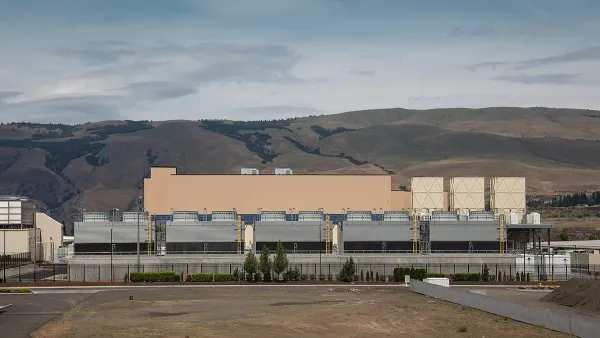
Data Centers Threaten Western Water Supplies, Power Grids
The rapidly growing need for water to cool data centers is endangering one of the West’s most essential resources.

Michigan Proposal to Attract Data Centers Garners Criticism
The state legislature is poised to pass a law that would bring more data centers to the state, but critics say the move would threaten the state’s climate goals.
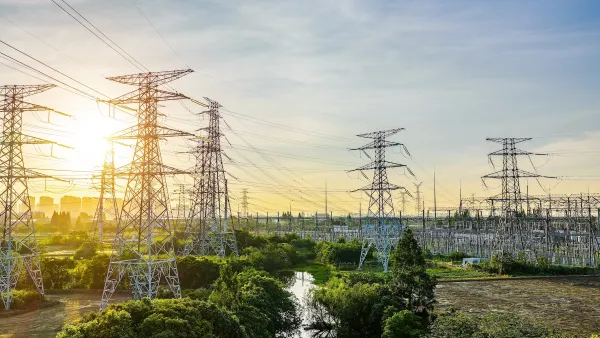
When can a power company take your land for data center infrastructure?
Meeting data center power demands will mean building more transmission lines and acquiring more land to put them on.

Planetizen Federal Action Tracker
A weekly monitor of how Trump’s orders and actions are impacting planners and planning in America.

The state-sanctioned urbicide of Austin
People don’t kill cities. Freeways do.

US to reduce Colorado River water deliveries to Mexico
A new Colorado Treaty amendment reduces Mexico’s Colorado River water allocation by 250,000 acre feet.

5 New England states march closer to 800 megawatt wind energy project
Securing federal approval for the project may be complicated under the Trump administration, which has historically been hostile towards domestic wind power.

Baltimore to break ground on $50 million Transit Priority Project
The project will bring faster bus trips, safer streets and better bike connections to Baltimore.

Airbnb launches $250 million 'last-dollar financing' housing accelerator, makes first investment in Austin
The company will put $6.4 million towards affordable housing development in Texas’ capital.

FREE Course: Walkable City 1: Why Walkability?
After describing his path towards focusing on walkability as the essence of good planning, Jeff Speck marches through his five principal reasons for making more walkable places.
Reinventing Malls: Planning Alchemy—Turning Gray Fields Into Gold
The course focuses on the opportunities and imperatives that shape reinvention of mall sites.

Eagle County Government
Harvard University Graduate School of Design
Nashville Planning Department
The Architects Foundation
University of Cincinnati Online
The Pocatello Development Authority
The Urban Renewal Agency of the City of Pocatello
Journal of the American Planning Association