Why are most renters required to earn 40 times their rent in annual income?


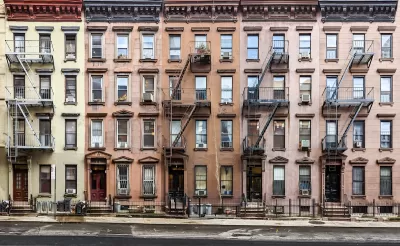
In a piece for Curbed, Clio Chang probes the origins of New York City’s income requirement for apartment rentals, which typically asks for 40 times the rent in annual income.
“The financial crash of 2008 seemed like a plausible theory, so I started looking at newspaper archives to see if I could find early mentions of the income requirement. After a little poking around, I found a New York Times piece from 1997 in which a broker told the paper that “strict” buildings require up to 50 times the monthly rent while a more “liberal” landlord accepts 40 times.” A tenant lawyer told Chang that the requirement could also be related to the 30 percent figure that most government agencies use as the maximum percentage of their income a household should spend on housing.
Looking further into where the 30 percent rule comes from, Chang found that the concept first came about in the early 1900s, when housing activists called for rents not exceeding 20 percent of family income. “When the Section 8 program started in the 1970s, it was considered standard that households would only pay 25 percent of their income, which under Reagan was later raised to 30 percent, and today, that number pops up in all kinds of housing policies.”
Chang concludes, “A big problem is that rents are simply too high — a recent report found that between 2019 and 2023, median rents rose by 18 percent while incomes grew by just 11.5 percent. Today, a fifth of New Yorkers now pay 50 percent of their income on rent.”
FULL STORY: Who Came Up With Those Rental Income Requirements Anyway?


The Facts About Mamdani’s Proposed NYC Rent Freeze
The mayoral candidate has promised to freeze rent for close to a million New Yorkers. Could he actually do it?
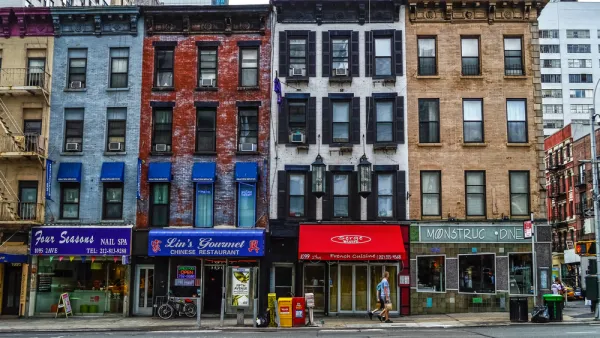
New York’s Small Landlords Protest for the Right to Exclude
Landlords with fewer properties say rent stabilization, eviction moratoriums, and rising costs for repairs and maintenance are making it impossible for them to keep their businesses going.

NYC Mayor Mamdani Backs Down on Expanded Rental Assistance Program, Citing $7 Billion Deficit
The new mayor had promised to expand the CityFHEPS rent assistance program to an additional 47,000 households.

The state-sanctioned urbicide of Austin
People don’t kill cities. Freeways do.

US to reduce Colorado River water deliveries to Mexico
A new Colorado Treaty amendment reduces Mexico’s Colorado River water allocation by 250,000 acre feet.

New Jersey’s second-largest city bans standalone data centers
Jersey City will continue to allow co-location facilities, such as those meant for research institutions that store their own data.

Amtrak not solely to blame for New Jersey commuter rail's unreliability, report finds
A new study from the Garden State Initiative found that NJ Transit’s budget grew 20% across a 4 year period, but reliability declined significantly over the same period.

EPA erases limits on planet-warming pollution from power plants
Under Monday’s plan, power plants would still have some limits on how much mercury, arsenic and other contaminants they can emit.

Phoenix announces new on-demand transit service, more frequent RAPID buses
Both new services will launch in October, and are part of Phoenix's Project Effective Access Solutions for Easing Congestion.

FREE Course: Walkable City 1: Why Walkability?
After describing his path towards focusing on walkability as the essence of good planning, Jeff Speck marches through his five principal reasons for making more walkable places.
Reinventing Malls: Planning Alchemy—Turning Gray Fields Into Gold
The course focuses on the opportunities and imperatives that shape reinvention of mall sites.

Eagle County Government
Harvard University Graduate School of Design
Nashville Planning Department
The Architects Foundation
University of Cincinnati Online
The Pocatello Development Authority
The Urban Renewal Agency of the City of Pocatello
Journal of the American Planning Association