Residents of co-living developments say the built-in community helps ease the growing isolation felt by many Americans.



Co-housing (also known as coliving) is becoming popular with more American households, with nearly 200 co-housing communities existing around the country. In an NPR article, Katia Riddle explains why some people favor the benefits of shared spaces and living arrangements.
In most cases, co-housing is more affordable for residents than other options. “But many also say that they've found a way to conquer the loneliness and isolation that plagues so many Americans — especially today's parents.”
However, the still-unconventional nature of the co-housing model makes it difficult to build in many U.S. communities. “The barrier to entry to build a cohousing development can be high, as this kind of new construction is subject to the same market dynamics as any new building,” Riddle adds.
Recognizing the need for more diverse housing options, some states and cities, such as Seattle, are moving to ease land use and building restrictions on co-living developments.
FULL STORY: How to be not lonely? 'Cohousing' is an answer for some people


Cohousing as a Solution to High Housing Costs and Social Isolation
Living arrangements designed to encourage social interaction and provide shared facilities can lower the cost of living and build more friendly, supportive neighborhoods.
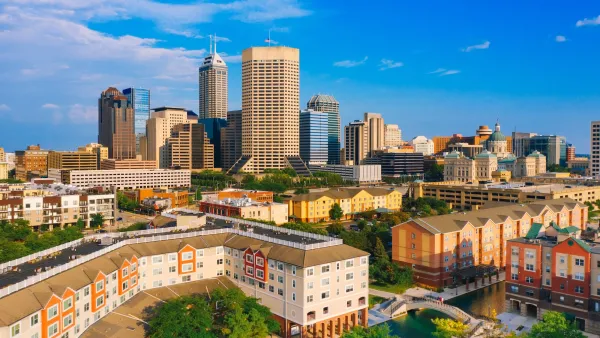
Indianapolis rents grew by 30% since 2020
The metro area has a shortage of roughly 137,000 affordable homes for the lowest-income households.

These Las Vegas tiny homes can be assembled in an hour
The city approved a project using modular microhousing units that will rent for roughly $1,000 per month.

Planetizen Federal Action Tracker
A weekly monitor of how Trump’s orders and actions are impacting planners and planning in America.

The state-sanctioned urbicide of Austin
People don’t kill cities. Freeways do.

US to reduce Colorado River water deliveries to Mexico
A new Colorado Treaty amendment reduces Mexico’s Colorado River water allocation by 250,000 acre feet.

5 New England states march closer to 800 megawatt wind energy project
Securing federal approval for the project may be complicated under the Trump administration, which has historically been hostile towards domestic wind power.

Baltimore to break ground on $50 million Transit Priority Project
The project will bring faster bus trips, safer streets and better bike connections to Baltimore.

Airbnb launches $250 million 'last-dollar financing' housing accelerator, makes first investment in Austin
The company will put $6.4 million towards affordable housing development in Texas’ capital.

FREE Course: Walkable City 1: Why Walkability?
After describing his path towards focusing on walkability as the essence of good planning, Jeff Speck marches through his five principal reasons for making more walkable places.
Reinventing Malls: Planning Alchemy—Turning Gray Fields Into Gold
The course focuses on the opportunities and imperatives that shape reinvention of mall sites.

Eagle County Government
Harvard University Graduate School of Design
Nashville Planning Department
The Architects Foundation
University of Cincinnati Online
The Pocatello Development Authority
The Urban Renewal Agency of the City of Pocatello
Journal of the American Planning Association