The shift to electronic controls can have deadly consequences for drivers and passengers.


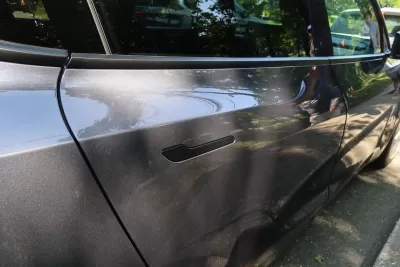
A recent crash that killed four people in a Tesla illustrates the importance of keeping mechanical handles on vehicles, writes Jesus Diaz in Fast Company.
“As Tesla details on its website, the Model Y features electronic door latches that require pressing a button to open via an electric mechanism. The car also has a mechanical emergency open system that many say would be nearly impossible to operate in an actual emergency.” The people involved in the latest crash were trapped inside the car, unable to open the doors — and neither were passersby who tried to help.
I get it, opening a door by clicking a button may seem cool—until it kills you. But the fact is that these buttons, just like the touch interfaces that control many car functions nowadays, are dangerous.
According to Diaz, all Tesla models have complicated emergency release mechanisms that require removing a panel or reaching under a seat. “Most people traveling in these cars are clueless about these mechanisms,” Diaz adds.
To address the issue, the European New Car Assessment Program (Euro NCAP) has announced that “starting in 2026, vehicles that delegate essential functions to touchscreens and fail to meet minimum physical control requirements will not qualify for the highest safety certifications.”
Read the full story: Tesla’s latest fatal fire is a reminder of why cars need old-school door handles
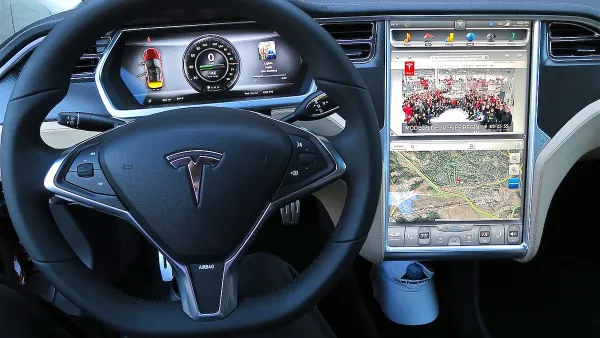
Tesla Found Partly Liable in Fatal Autopilot Crash
The Miami ruling is the first to find the company partly responsible in a crash that killed one pedestrian and injured another.

Analysis: Cybertruck Fatality Rate Far Exceeds That of Ford Pinto
The Tesla Cybertruck was recalled seven times last year.
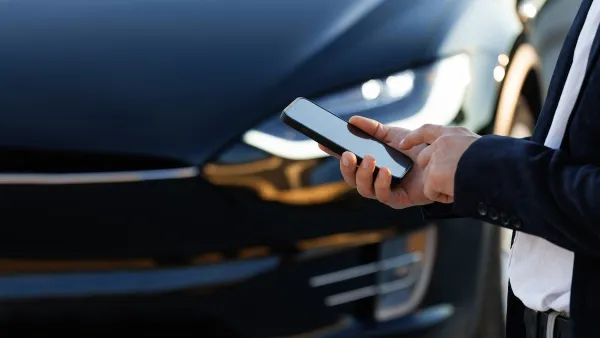
NHTSA Investigation Targets Tesla Remote Parking
Dozens of videos reportedly show Tesla vehicles colliding with other cars, parking signs, and walls while using a driverless remote parking feature.

Planetizen Federal Action Tracker
A weekly monitor of how Trump’s orders and actions are impacting planners and planning in America.

California plans to bury El Niño’s downpour
If the state plays its cards right, it may be able to store a billion acre-feet of El Niño’s water in aquifers.

Desperate measures: Advocates weigh draining Lake Powell to fill Colorado River
Draining the reservoir could reduce evaporation losses by a couple hundred thousand acre-feet.

Housing is the top priority of Seattle’s sole new councilmember
Jenks campaigned on building 1,000 new units of affordable housing.

New tax cuts may slash $1.5 billion in funding for Miami transit, public parks
Amendment 3 will save Miami-Dade homeowners $2,700 in 2028.

Arizona, Wisconsin, Pennsylvania hope to finally advance climate goals post-midterms
The three states have spent years under Republican or divided control.

FREE Course: Walkable City 1: Why Walkability?
After describing his path towards focusing on walkability as the essence of good planning, Jeff Speck marches through his five principal reasons for making more walkable places.
Reinventing Malls: Planning Alchemy—Turning Gray Fields Into Gold
The course focuses on the opportunities and imperatives that shape reinvention of mall sites.

City of Rosemead
Rutgers University, Edward J. Bloustein School of Planning and Public Policy
One Hundred Miles
University of Michigan School for Environment and Sustainability (SEAS)
Hunter College, City University of New York (CUNY)
The Architects Foundation
City of Cambridge
Montrose County
The Pocatello Development Authority