A new map illustrates the neighborhoods and buildings that were razed to make way for freeways and estimates the number of people displaced by roadways.


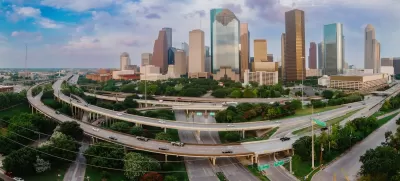
An interactive map from the Baker Institute Center for Energy Studies at Rice University visualizes the displacement of people and buildings caused by highway construction in Houston. “Displayed alongside the interactive database are historical maps of Houston, aerial photography before and after highway construction, freeway plans and proposals, and details about each of the more than 11,000 structures in our database of buildings removed for urban freeways.”
According to the researchers, “The map also estimates the number of individuals displaced by highway construction between 1946 and 1974, who were mostly Black Houstonians. We hope this history will allow both the public and policymakers to explore the legacies of segregation and inequality as debates over the rebuilding, reshaping, and expansion of Houston's highway system continue.”
Read the full story: A history of highway displacement in Houston

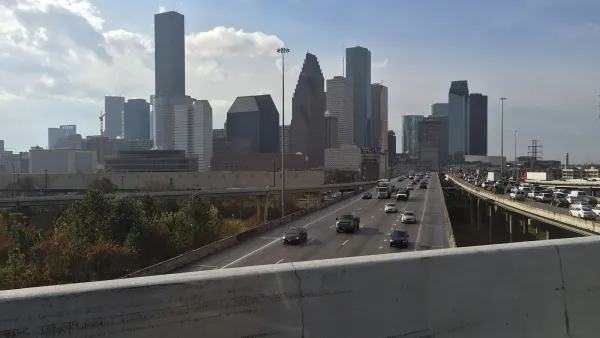
Contentious Houston Freeway Widening Project Inches Forward
Federal officials have given TxDOT the go-ahead to resume work on a small portion of a controversial interstate widening project in downtown Houston.
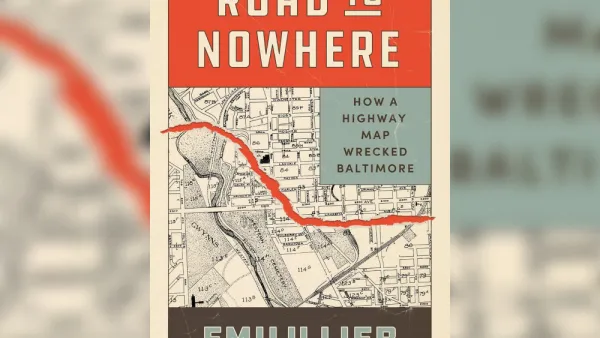
Tracing the Destruction of the Highway Baltimore Never Built
In “Road to Nowhere: How a Highway Map Wrecked Baltimore,” historian Emily Lieb demonstrates how the mere threat of a highway project, combined with systemic redlining and predatory real estate practices, can dismantle a community just as effectively as physical construction can.
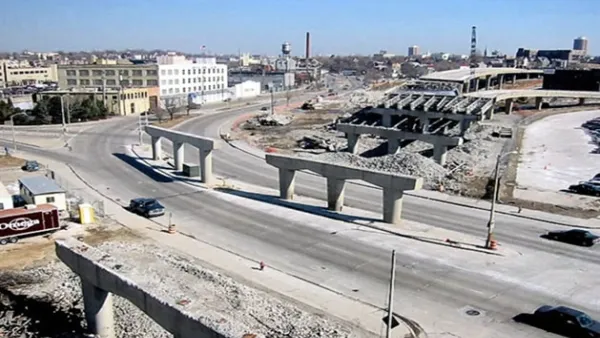
Bridging Divides: The Crucial Role of Collaboration in Highway Removal
Highway removal is most successful when agencies at all levels of government work closely with each other and the impacted community.

Planetizen Federal Action Tracker
A weekly monitor of how Trump’s orders and actions are impacting planners and planning in America.

California plans to bury El Niño’s downpour
If the state plays its cards right, it may be able to store a billion acre-feet of El Niño’s water in aquifers.

Desperate measures: Advocates weigh draining Lake Powell to fill Colorado River
Draining the reservoir could reduce evaporation losses by a couple hundred thousand acre-feet.

Chicago Avenue bridge construction delays enrages city leaders
The bridge has been closed since 2025. The city originally aimed to re-open it in December, and now expects to finish construction in 2027.

NYC bus network redesign speeds up Queens buses
Rush routes have seen a 4.6% speed increase after the redesign.

California High-Speed Rail Authority picks trainset manufacturer
The California High-Speed Rail Authority aims to start servicing passengers by 2033.

FREE Course: Walkable City 1: Why Walkability?
After describing his path towards focusing on walkability as the essence of good planning, Jeff Speck marches through his five principal reasons for making more walkable places.
Reinventing Malls: Planning Alchemy—Turning Gray Fields Into Gold
The course focuses on the opportunities and imperatives that shape reinvention of mall sites.

City of Rosemead
Rutgers University, Edward J. Bloustein School of Planning and Public Policy
One Hundred Miles
Hunter College, City University of New York (CUNY)
The Architects Foundation
University of Cincinnati Online
City of Cambridge
Montrose County
The Pocatello Development Authority