Funds will be used to support water, wildfire prevention, environmental, and park projects, reflecting strong public support for climate resilience.



California voters have approved Proposition 4, a $10 billion bond measure focused on financing projects to bolster the state’s climate resilience and environmental health. This landmark measure dedicates $3.8 billion toward water initiatives, including efforts for safe drinking water, water recycling, groundwater storage, and flood management. Additionally, the bond sets aside $1.5 billion for wildfire prevention and $1.2 billion for protecting coastal areas from rising sea levels. The proposition also directs funds toward creating parks, wildlife habitat protection, air quality improvements, extreme heat mitigation, and support for sustainable agriculture.
As reported by Melody Petersen, the measure garnered significant support from environmental groups, social justice organizations, labor unions, and renewable energy industries, all of whom advocated for the bond as a critical investment in California’s future. Liz Forsburg Pardi, the California policy director at the Nature Conservancy, expressed gratitude for voter approval, stating it reflects a strong commitment to climate resilience. Proponents argue that these projects will help prevent the devastating impacts of environmental disasters like wildfires and erosion, which are predicted to worsen as climate change progresses.
While widely supported, the bond measure also faced opposition from taxpayer groups like the Howard Jarvis Taxpayers Association, which argued that funding these projects through bonds would ultimately cost the state more in interest payments. According to the Legislative Analyst’s Office, the bond will cost taxpayers $400 million annually over the next 40 years, totaling $16 billion. Critics contend that the state could have pursued more fiscally responsible funding alternatives, yet the measure’s passage indicates voters’ prioritization of environmental sustainability over concerns about debt.
FULL STORY: California voters approve Proposition 4, the bond measure for water and environmental projects

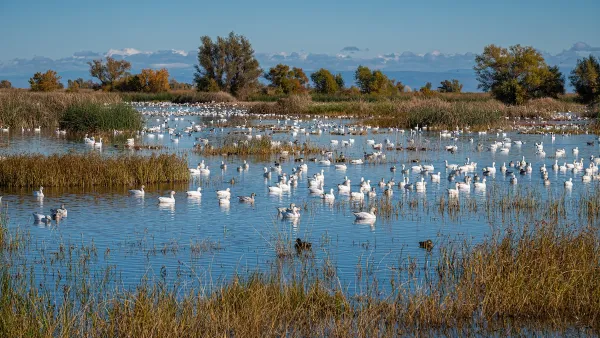
California Lawmakers Move to Protect Waterways
Anticipating that the Trump EPA will reinstate a 2017 policy that excluded seasonal wetlands and waterways from environmental protections.

America’s 10 ‘Greenest’ Cities
A new analysis ranks cities based on their environmental quality, energy consumption and production, transportation, density, and other factors.
Trump's proposed budget slashes EPA funding by 52%
The budget also reduces funding for FEMA, climate resilience projects, and water infrastructure programs.

Planetizen Federal Action Tracker
A weekly monitor of how Trump’s orders and actions are impacting planners and planning in America.

The state-sanctioned urbicide of Austin
People don’t kill cities. Freeways do.

US to reduce Colorado River water deliveries to Mexico
A new Colorado Treaty amendment reduces Mexico’s Colorado River water allocation by 250,000 acre feet.

Mamdani overhauls NYC's Vision Zero plan with 100 new policy goals
The overhaul aims to reduce traffic deaths and make streets safer for pedestrians, cyclists and drivers through lower speed limits, new safety infrastructure and more.

Amtrak not solely to blame for New Jersey commuter rail's unreliability, report finds
A new study from the Garden State Initiative found that NJ Transit’s budget grew 20% across a 4 year period, but reliability declined significantly over the same period.

EPA erases limits on planet-warming pollution from power plants
Under Monday’s plan, power plants would still have some limits on how much mercury, arsenic and other contaminants they can emit.

FREE Course: Walkable City 1: Why Walkability?
After describing his path towards focusing on walkability as the essence of good planning, Jeff Speck marches through his five principal reasons for making more walkable places.
Reinventing Malls: Planning Alchemy—Turning Gray Fields Into Gold
The course focuses on the opportunities and imperatives that shape reinvention of mall sites.

Eagle County Government
Harvard University Graduate School of Design
Nashville Planning Department
The Architects Foundation
University of Cincinnati Online
The Pocatello Development Authority
The Urban Renewal Agency of the City of Pocatello
Journal of the American Planning Association