The first commercial-scale offshore wind installation in the United States is powering roughly 70,000 homes in Long Island, New York.


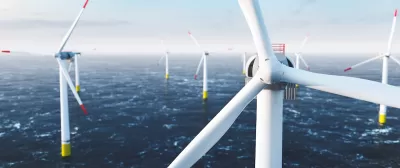
The South Fork Wind Farm off the coast of Montauk, New York is the nation’s first commercial-scale offshore wind farm and a bright spot in a struggling industry that “offers tangible evidence that wind projects can work,” writes Pippa Stevens for CNBC News.
The project produces enough power for 70,000 homes annually, which it sells to the Long Island Power Authority. “Each turbine is connected to an offshore substation – the first of its kind built in the U.S. – which is connected to the local power grid in East Hampton, New York, via a 65-mile subsea and underground cable.”
The growth of the offshore wind industry has come in fits and starts, with interest rates and an uncertain, specialized supply chain driving up project costs and forcing companies to cancel some projects altogether. Because operators sign long-term contracts with power purchasers long in advance of construction, ballooning costs can make some projects financially unfeasible.
“The U.S. does have 58 gigawatts of capacity under development, according to American Clean Power, but some of those projects won’t come online for years, and there is no guarantee all of them will be built.” However, industry experts are optimistic that the sector is in a period of readjustment and will bounce back as components and skilled labor become more available.

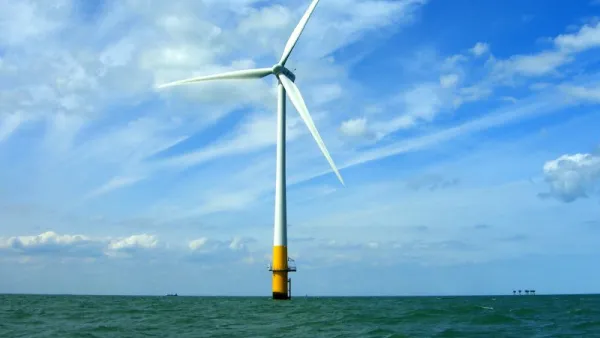
Offshore Wind Zone Proposed for the East Coast
A "priority offshore wind zone" between Long Island and New Jersey could accelerate permits and help the industry gain a foothold in the United States.
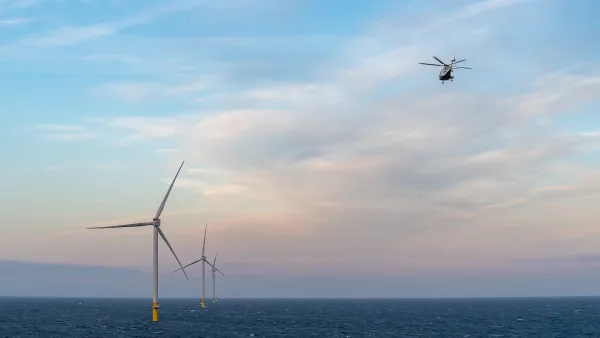
California presses forward on offshore wind
The state is taking steps to prepare its grid and port infrastructure for offshore wind projects despite the federal government's pushback on the technology.
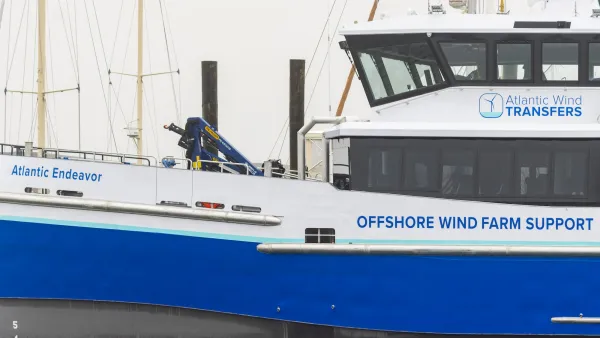
Nation’s Largest Offshore Wind Project, Suspended by Trump, Restarts Construction
A judge issued a temporary restraining order against the Trump administration’s suspension of five East Coast offshore wind projects.

Planetizen Federal Action Tracker
A weekly monitor of how Trump’s orders and actions are impacting planners and planning in America.

The state-sanctioned urbicide of Austin
People don’t kill cities. Freeways do.

US to reduce Colorado River water deliveries to Mexico
A new Colorado Treaty amendment reduces Mexico’s Colorado River water allocation by 250,000 acre feet.

Mamdani overhauls NYC's Vision Zero plan with 100 new policy goals
The overhaul aims to reduce traffic deaths and make streets safer for pedestrians, cyclists and drivers through lower speed limits, new safety infrastructure and more.

Amtrak not solely to blame for New Jersey commuter rail's unreliability, report finds
A new study from the Garden State Initiative found that NJ Transit’s budget grew 20% across a 4 year period, but reliability declined significantly over the same period.

EPA erases limits on planet-warming pollution from power plants
Under Monday’s plan, power plants would still have some limits on how much mercury, arsenic and other contaminants they can emit.

FREE Course: Walkable City 1: Why Walkability?
After describing his path towards focusing on walkability as the essence of good planning, Jeff Speck marches through his five principal reasons for making more walkable places.
Reinventing Malls: Planning Alchemy—Turning Gray Fields Into Gold
The course focuses on the opportunities and imperatives that shape reinvention of mall sites.

Eagle County Government
Harvard University Graduate School of Design
Nashville Planning Department
The Architects Foundation
University of Cincinnati Online
The Pocatello Development Authority
The Urban Renewal Agency of the City of Pocatello
Journal of the American Planning Association