The legislation acknowledges the impact of cumulative damage and expands access to funds for communities adjacent to storm-hit states.


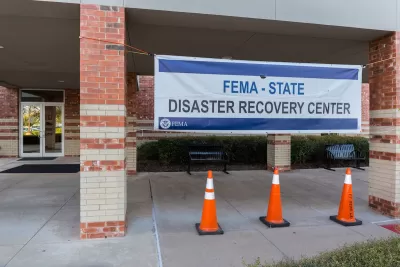
A proposed federal bill would let more communities access federal disaster relief dollars, reports Ysabelle Kempe in Smart Cities Dive.
The bill would allow communities “contiguous with a disaster area” that are not in the same state where a disaster was declared access federal funding.
“The Regional Impact of Disasters and Emergencies Relief, or RIDER, Act would also modify the Federal Emergency Management Agency’s definition of a “major disaster” to include cumulative impacts of disasters over a yearlong period, even if none individually meet the threshold for federal relief,” Kempe adds.
The bill aims to assist communities that are often excluded due to technicalities and eliminate the mismatch between federal disaster relief rules and local conditions. According to the bill, the changes “would improve the distribution of disaster relief funds by recognizing that disasters do not neatly follow county or state lines.”
The legislation acknowledges that the cumulative impacts of repetitive storms in one area can pose the same dangers as major single storms.
However, Kempe points out that FEMA has been struggling to keep up with the demand for assistance. In early August, FEMA began operating on an “immediate needs funding” basis in August before Congress authorized an additional $20 billion to keep the agency operating through the hurricane season.
FULL STORY: Bill aims to help disaster-struck communities excluded from federal relief

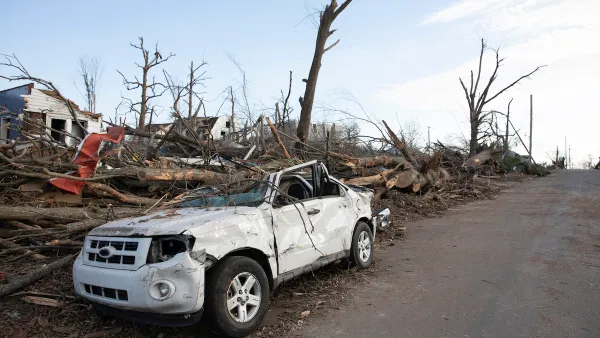
The Growing Role of Federal Government in Disaster Relief
As flooding, fires, and other disasters become more destructive, an effective response requires more resources than local governments can offer.
Judge Says FEMA Can’t Withhold Grant Funds Under ‘Arbitrary and Capricious’ Conditions
The decision favors a coalition of 12 states that sued the Trump administration over new conditions for disaster recovery and emergency relief funds.
‘Quality Work, Fast’: NC Gears up for Homebuilding After Helene, Trying to Avoid Past Pitfalls
The state will field bids to demolish, repair and rebuild homes in the mountains. After struggles in eastern NC, officials aim to chart a different course.

Planetizen Federal Action Tracker
A weekly monitor of how Trump’s orders and actions are impacting planners and planning in America.

The state-sanctioned urbicide of Austin
People don’t kill cities. Freeways do.

US to reduce Colorado River water deliveries to Mexico
A new Colorado Treaty amendment reduces Mexico’s Colorado River water allocation by 250,000 acre feet.

5 New England states march closer to 800 megawatt wind energy project
Securing federal approval for the project may be complicated under the Trump administration, which has historically been hostile towards domestic wind power.

Baltimore to break ground on $50 million Transit Priority Project
The project will bring faster bus trips, safer streets and better bike connections to Baltimore.

Airbnb launches $250 million 'last-dollar financing' housing accelerator, makes first investment in Austin
The company will put $6.4 million towards affordable housing development in Texas’ capital.

FREE Course: Walkable City 1: Why Walkability?
After describing his path towards focusing on walkability as the essence of good planning, Jeff Speck marches through his five principal reasons for making more walkable places.
Reinventing Malls: Planning Alchemy—Turning Gray Fields Into Gold
The course focuses on the opportunities and imperatives that shape reinvention of mall sites.

Eagle County Government
Harvard University Graduate School of Design
Nashville Planning Department
The Architects Foundation
University of Cincinnati Online
The Pocatello Development Authority
The Urban Renewal Agency of the City of Pocatello
Journal of the American Planning Association