The high-speed rail line will connect Southern California and Las Vegas via a two-hour trip along Interstate 15.



The Federal Railroad Administration (FRA) signed off on $3 billion in funding for the Brightline West high-speed rail project that will connect Las Vegas to the Los Angeles area, releasing the funding to the Nevada Department of Transportation (NDOT) and keeping the project on track to begin construction in 2025.
As Greg Haas explains in NewsNation, “Initial estimates indicate the high-speed train project will cost $12 billion. The train will run on tracks in the median of Interstate 15 and serve four stations — Las Vegas, and three stations in California at Victor Valley, Hesperia and Rancho Cucamonga, where it will connect to existing Metrolink lines to Los Angeles.”
Brightline already operates a high-speed rail line in Florida connecting Orlando and Miami. The company expects to launch the Southern California-to-Vegas service in time for the 2028 Olympics, which Los Angeles is hosting. The trip will take roughly two hours, with trains traveling at top speeds of up to 200 miles per hour. “The train is expected to reduce traffic congestion on I-15, removing 3 million cars from roadways and eliminating more than 400,000 tons of emissions annually, according to Brightline.”
FULL STORY: High-speed train project chugs ahead as $3B funding gets OK

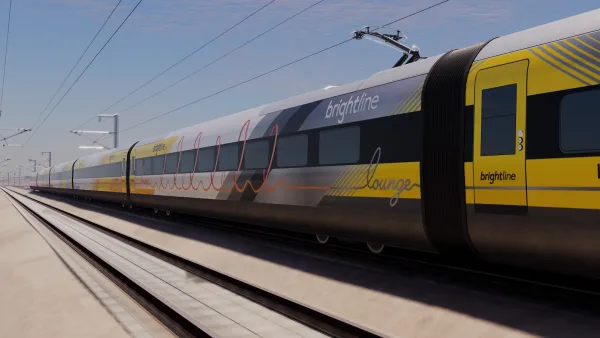
California’s Brightline West High-Speed Rail Announces 2029 Completion Date
The Las Vegas-to-Southern California rail line was originally slated to open for service in time for the 2028 Olympics.
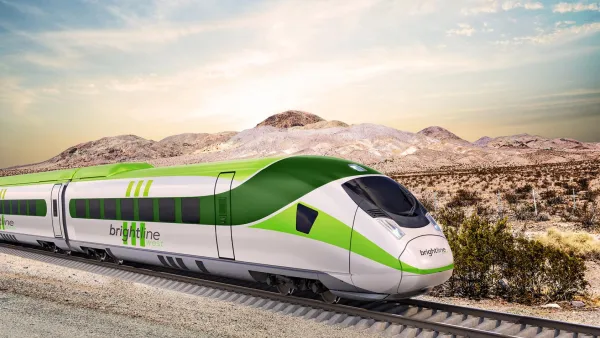
Brightline West Breaks Ground
The high-speed rail line will link Las Vegas and the Los Angeles area.
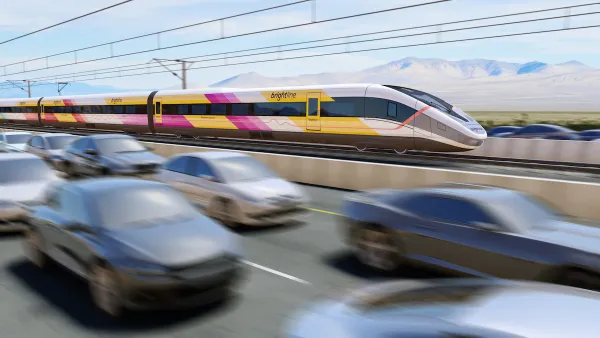
Brightline West Awarded $3 Billion in Federal Funding
The high-speed rail line will cut travel time between Southern California and Las Vegas roughly in half.

The state-sanctioned urbicide of Austin
People don’t kill cities. Freeways do.

US to reduce Colorado River water deliveries to Mexico
A new Colorado Treaty amendment reduces Mexico’s Colorado River water allocation by 250,000 acre feet.

New Jersey’s second-largest city bans standalone data centers
Jersey City will continue to allow co-location facilities, such as those meant for research institutions that store their own data.

Amtrak not solely to blame for New Jersey commuter rail's unreliability, report finds
A new study from the Garden State Initiative found that NJ Transit’s budget grew 20% across a 4 year period, but reliability declined significantly over the same period.

EPA erases limits on planet-warming pollution from power plants
Under Monday’s plan, power plants would still have some limits on how much mercury, arsenic and other contaminants they can emit.

Phoenix announces new on-demand transit service, more frequent RAPID buses
Both new services will launch in October, and are part of Phoenix's Project Effective Access Solutions for Easing Congestion.

FREE Course: Walkable City 1: Why Walkability?
After describing his path towards focusing on walkability as the essence of good planning, Jeff Speck marches through his five principal reasons for making more walkable places.
Reinventing Malls: Planning Alchemy—Turning Gray Fields Into Gold
The course focuses on the opportunities and imperatives that shape reinvention of mall sites.

Eagle County Government
Harvard University Graduate School of Design
Nashville Planning Department
The Architects Foundation
University of Cincinnati Online
The Pocatello Development Authority
The Urban Renewal Agency of the City of Pocatello
Journal of the American Planning Association