The Bay Area agency will switch to all electric trains by the end of September.


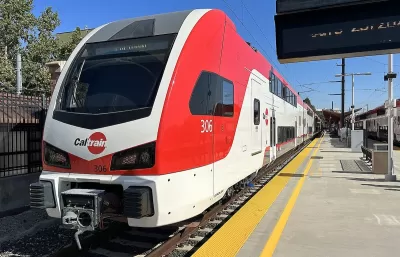
The West’s oldest continuously operated railroad, Caltrain, inaugurated a fleet of electric trains along its 51-mile corridor “that represents a landmark shift toward a faster, more frequent and environmentally friendly public transportation network along the San Francisco Peninsula.”
According to an article by Kurt Knutsson, the 160-year-old railroad will be fully electrified by September 21 as the agency introduced new trains on a weekly basis.
For Knutsson, “This is a game-changer. These new electric trains can zip between San Francisco and San Jose in under an hour. Plus, they're increasing service by 20% because they can speed up and slow down faster than their diesel counterparts.” Sixteen of the system’s stations will now see frequencies of 15 to 20 minutes at peak hours.
The new trains include passenger upgrades such as wi-fi, power outlets at seats, and expanded storage. Caltrain says the switch to electric will cut 250,000 metric tons of carbon dioxide emissions each year. The project also created 33,000 jobs, will reduce noise and air pollution along its routes, and will increase transit access in underserved communities.
FULL STORY: California's first electric train could be what’s coming to your city

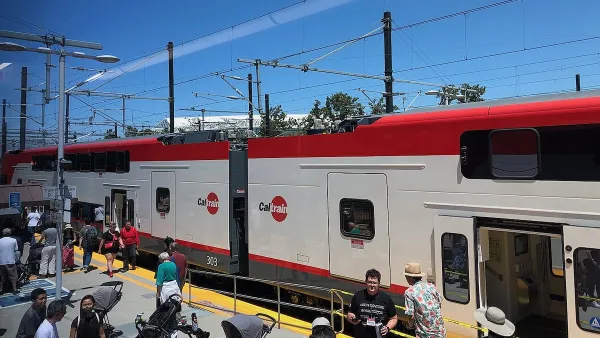
Electrified Caltrain Boosts Ridership 76%
The introduction of electric trains and faster, more frequent service has led to a dramatic increase in ridership.
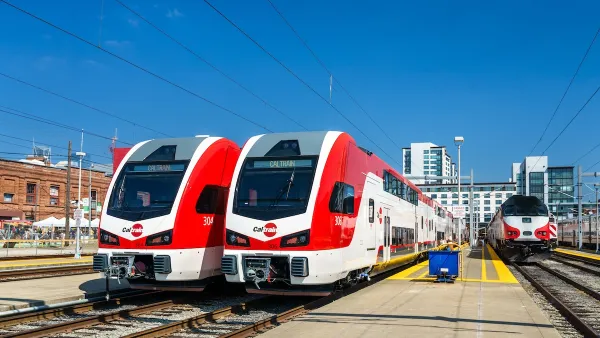
Caltrain Ridership Up 54 Percent Over October 2023
The system made the switch to faster, more modern all-electric trains in September.
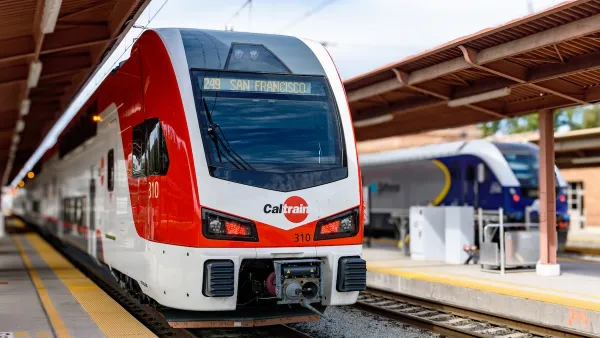
Electric Caltrain Will Earn $1 Million/Year Returning Power to the Grid
The train returns 23% of the power it generates to the state’s grid, powering homes and businesses along its route.

Planetizen Federal Action Tracker
A weekly monitor of how Trump’s orders and actions are impacting planners and planning in America.

The state-sanctioned urbicide of Austin
People don’t kill cities. Freeways do.

US to reduce Colorado River water deliveries to Mexico
A new Colorado Treaty amendment reduces Mexico’s Colorado River water allocation by 250,000 acre feet.

5 New England states march closer to 800 megawatt wind energy project
Securing federal approval for the project may be complicated under the Trump administration, which has historically been hostile towards domestic wind power.

Baltimore to break ground on $50 million Transit Priority Project
The project will bring faster bus trips, safer streets and better bike connections to Baltimore.

Airbnb launches $250 million 'last-dollar financing' housing accelerator, makes first investment in Austin
The company will put $6.4 million towards affordable housing development in Texas’ capital.

FREE Course: Walkable City 1: Why Walkability?
After describing his path towards focusing on walkability as the essence of good planning, Jeff Speck marches through his five principal reasons for making more walkable places.
Reinventing Malls: Planning Alchemy—Turning Gray Fields Into Gold
The course focuses on the opportunities and imperatives that shape reinvention of mall sites.


Eagle County Government
Harvard University Graduate School of Design
Nashville Planning Department
The Architects Foundation
University of Cincinnati Online
The Pocatello Development Authority
The Urban Renewal Agency of the City of Pocatello
Journal of the American Planning Association