Californians will determine whether to approve a $10 billion bond for climate and environmental projects, which seeks to address critical issues such as wildfire prevention, safe drinking water, and protection of disadvantaged communities.


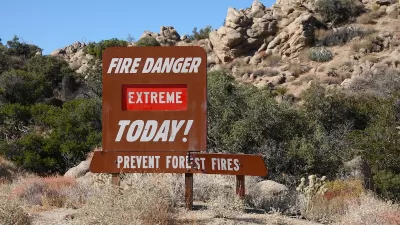
In November, California voters will decide on a $10 billion bond aimed at funding climate and environmental projects, including those previously cut due to budget deficits. The "Safe Drinking Water, Wildfire Prevention, Drought Preparedness, and Clean Air Bond Act of 2024" (Senate Bill 867) was approved by the Senate and Assembly on the final day for ballot inclusion. The bond will finance projects for safe drinking water, drought, flood, and water resilience, wildfire and forest resilience, coastal resilience, extreme heat mitigation, biodiversity and nature-based climate solutions, climate-smart, sustainable, and resilient farms, ranches, and working lands, park creation and outdoor access, and clean air programs.
The proposed bond will be repaid with interest, potentially costing the state over $19 billion in the long term. As reported by Melody Petersen, environmental groups, renewable energy companies, labor unions, and social justice advocates heavily lobbied for this measure, emphasizing the need for robust climate action despite recent budget cuts. This bond is widely seen as crucial for mitigating the adverse impacts of climate change, which include extreme weather events, sea-level rise, and severe droughts.
A key provision of the bond requires at least 40% of the funds to benefit disadvantaged communities. However, some legislators expressed concerns that recent changes weakened this provision, potentially diverting funds from the most vulnerable populations. Additionally, hundreds of millions of dollars are earmarked for private industry, including clean energy projects like offshore wind farms, sparking debate about the allocation of these funds.
FULL STORY: $10-billion climate bond will go before voters in November


Biden's New Climate Plan Would Spend $2 Trillion in Four Years
Biden is amping up his campaign promises to leverage the federal government in the fight to reduce greenhouse emissions in the U.S. economy.
Court unfreezes $20B in federal climate grants
A U.S. Court of Appeals ruled that the Trump administration potentially violated the Inflation Reduction Act by attempting to claw back grants awarded under the Greenhouse Gas Reduction Fund program.

Portland's clean energy fund has generated $1 billion for climate action
Since 2019, the city has levied a 1% sales tax on large corporations to support climate resilience and clean energy projects.

Planetizen Federal Action Tracker
A weekly monitor of how Trump’s orders and actions are impacting planners and planning in America.

The state-sanctioned urbicide of Austin
People don’t kill cities. Freeways do.

US to reduce Colorado River water deliveries to Mexico
A new Colorado Treaty amendment reduces Mexico’s Colorado River water allocation by 250,000 acre feet.

Colorado’s Largest Data Center Could Rise Next to Homes — Without a Public Hearing
The proposed campus would consume 11 times the power of Denver International Airport; as it has across the country, opposition mounts.

5 New England states march closer to 800 megawatt wind energy project
Securing federal approval for the project may be complicated under the Trump administration, which has historically been hostile towards domestic wind power.

Baltimore to break ground on $50 million Transit Priority Project
The project will bring faster bus trips, safer streets and better bike connections to Baltimore.

FREE Course: Walkable City 1: Why Walkability?
After describing his path towards focusing on walkability as the essence of good planning, Jeff Speck marches through his five principal reasons for making more walkable places.
Reinventing Malls: Planning Alchemy—Turning Gray Fields Into Gold
The course focuses on the opportunities and imperatives that shape reinvention of mall sites.

Eagle County Government
Harvard University Graduate School of Design
Nashville Planning Department
The Architects Foundation
University of Cincinnati Online
The Pocatello Development Authority
The Urban Renewal Agency of the City of Pocatello
Journal of the American Planning Association