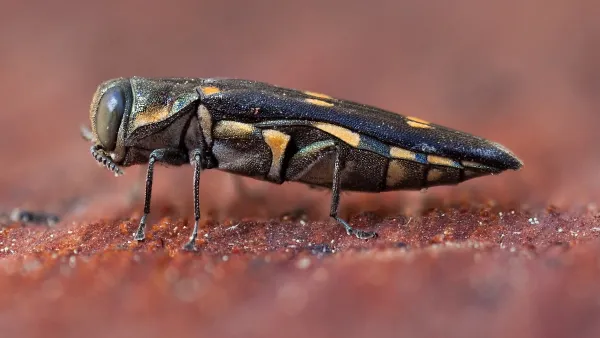
Goldspotted oak borers (GSOB) are invasive pests that are harming and killing oak trees across San Diego, Riverside, Orange, and Los Angeles counties.


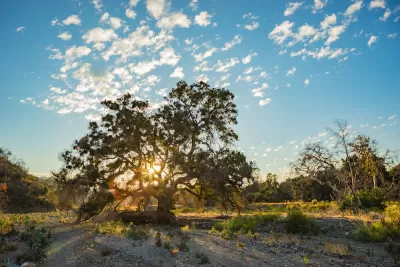
The goldspotted oak borer (GSOB) is a devastating beetle currently spreading through Southern California's oak trees, causing widespread destruction. As reported in this article by Lila Seidman, the beetle's presence has been confirmed in parts of Los Angeles County, including East Canyon, Rice Canyon, Whitney Canyon, and recently in Silverado Canyon. Ron Durbin, forestry division chief for the Los Angeles County Fire Department, compares the beetle's spread to stage-four cancer, highlighting its rapid and deadly impact since its discovery in San Diego County in 2008, where it has killed more than 80,000 trees. The beetle targets oaks, particularly the coast live oak, canyon live oak, and California black oak, severely disrupting the ecosystem and increasing fire hazards due to dead, dry trees.
The L.A. County Board of Supervisors is taking action to combat this threat by exploring a state of emergency declaration and seeking additional resources to address the infestation. The primary concern is the potential spread to the oak-rich Santa Monica Mountains, which are home to around 600,000 oak trees. The trees' demise would result in the loss of shade, wildlife habitat, and significant fire hazards. Eradication of the beetle is not possible, but efforts focus on slowing its spread, such as regulating firewood movement, treating trees with systemic pesticides, and exploring alternative methods like limewash and prescribed burns.
Volunteers and organizations, such as Earthroots Field School, are actively involved in mitigating the beetle's impact. Researchers are investigating management techniques, including indigenous cultural burning practices and heat-treating firewood to prevent further infestations. These efforts aim to buy time and develop better treatment methods, emphasizing the urgent need for proactive measures to protect California's oak forests from current and future invasive pests exacerbated by climate change. The fight against the GSOB underscores the broader importance of effective and coordinated responses to invasive species threatening ecosystems statewide.
Read the full story: Tree-killing beetle is on a death march through Southern California’s oaks. Can it be stopped?

Help Stop the Beetle Killing Southern California’s Oak Trees
Claifornia residents can join a volunteer “blitz” this June to help detect and map infestations of an invasive beetle that is killing thousands of oak trees across Southern California.
What Forest Service Cuts Mean for Cities
U.S. Forest Service employees work on projects that have impacts far beyond remote, rural wilderness areas.

Fighting Forest Pests With AI: A Hemlock Success Story
Fairfax County utilized GeoAI and ArcGIS technology to efficiently map and protect its hemlock trees from the invasive woolly adelgid, ensuring targeted pest management and preservation of its evergreen canopy.

Planetizen Federal Action Tracker
A weekly monitor of how Trump’s orders and actions are impacting planners and planning in America.

The state-sanctioned urbicide of Austin
People don’t kill cities. Freeways do.

US to reduce Colorado River water deliveries to Mexico
A new Colorado Treaty amendment reduces Mexico’s Colorado River water allocation by 250,000 acre feet.

Nation's most wind-powered state turns to coal as data centers increase energy demand
For the first time in decades, Iowa has increased its generation of coal power.

NYC cools commuters with city's first rain garden above a bus stop
New York City officials say the plants in the rain garden can absorb 16 gallons of rainwater during heavy storms.

Brightline West’s future may rely on $6 billion federal loan
The company has until Nov. 2 to make a $400 million equity investment into its proposed high-speed rail line.

FREE Course: Walkable City 1: Why Walkability?
After describing his path towards focusing on walkability as the essence of good planning, Jeff Speck marches through his five principal reasons for making more walkable places.
Reinventing Malls: Planning Alchemy—Turning Gray Fields Into Gold
The course focuses on the opportunities and imperatives that shape reinvention of mall sites.

Eagle County Government
Harvard University Graduate School of Design
Nashville Planning Department
The Architects Foundation
University of Cincinnati Online
The Pocatello Development Authority
The Urban Renewal Agency of the City of Pocatello
Journal of the American Planning Association