One-fourth of the state’s land falls within 100-year or 500-year floodplains.


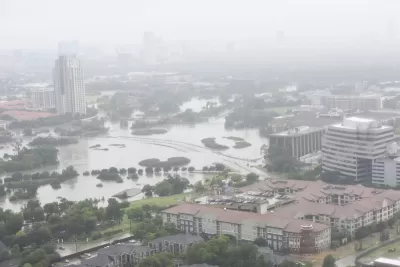
A draft statewide flood plan for Texas estimates that one in six of the state’s residents — or over 5 million people — live in a flood-prone area, reports Alejandra Martinez in The Texas Tribune.
The plan, developed by the Texas Water Development Board (TWDB), was a result of a 2019 law passed after Hurricane Harvey devastated the Houston area.
As Martinez explains, “The plan used existing flood data to create the maps that served as a baseline, but many state regions either didn't have flood maps, or used outdated maps. Local water managers filled the gaps with their knowledge and the TWDB contracted flood risk modeling data company Fathom to help.”
The TWDB recommends a variety of flood mitigation strategies, but Martinez notes that “the state doesn’t have a reliable source of revenue for flood projects unless state lawmakers approve additional funding each legislative session.”
The TWDB is also asking the state to implement an early warning system for flooding and provide technical assistance to small and rural communities. “Because money is limited for flood projects, the regional groups recommended that the state give counties the authority to collect drainage fees in unincorporated areas — currently only cities can charge such fees. The regional groups argue this would help counties self-finance flood mitigation and drainage projects outside of city limits.”
Read the full story: Texas’ first-ever statewide flood plan estimates 5 million live in flood-prone areas

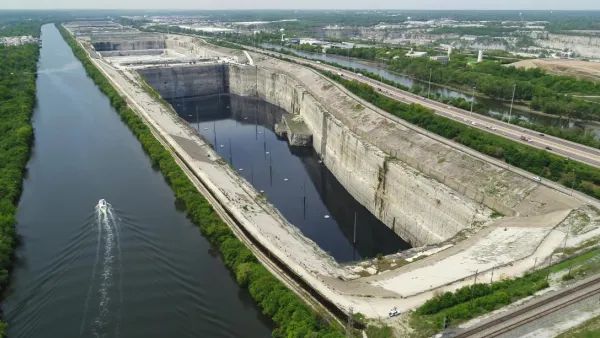
Chicago's underground flood control system is almost full
The system known as Deep Tunnel has never filled much more than halfway, but the cumulative effect of recent rains is putting suburban communities at risk of flooding.
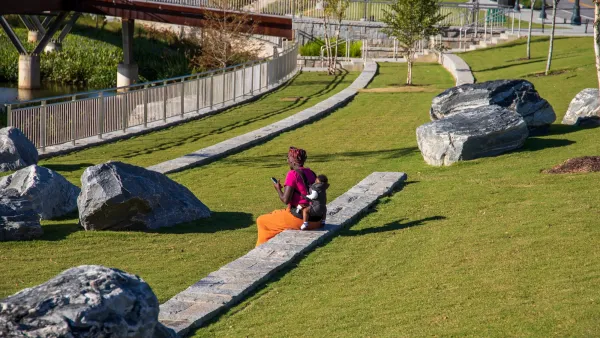
Atlanta Flood Prevention Efforts are Causing ‘Climate Gentrification’ in its Black Communities
New infrastructure in neighborhoods that have borne the brunt of seasonal floods is making them safer — and more expensive.
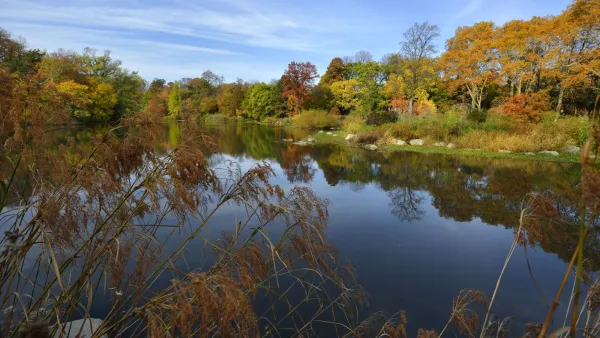
NYC’s Prospect Park is Getting a $68 Million ‘Bluebelt’
The city plans to upgrade the park’s drainage infrastructure to channel more stormwater into its lake and other drainage ponds and reduce flooding risk.

Planetizen Federal Action Tracker
A weekly monitor of how Trump’s orders and actions are impacting planners and planning in America.

The state-sanctioned urbicide of Austin
People don’t kill cities. Freeways do.

Colorado’s Largest Data Center Could Rise Next to Homes — Without a Public Hearing
The proposed campus would consume 11 times the power of Denver International Airport; as it has across the country, opposition mounts.

Nation's most wind-powered state turns to coal as data centers increase energy demand
For the first time in decades, Iowa has increased its generation of coal power.

NYC cools commuters with city's first rain garden above a bus stop
New York City officials say the plants in the rain garden can absorb 16 gallons of rainwater during heavy storms.

Brightline West’s future may rely on $6 billion federal loan
The company has until Nov. 2 to make a $400 million equity investment into its proposed high-speed rail line.

FREE Course: Walkable City 1: Why Walkability?
After describing his path towards focusing on walkability as the essence of good planning, Jeff Speck marches through his five principal reasons for making more walkable places.
Reinventing Malls: Planning Alchemy—Turning Gray Fields Into Gold
The course focuses on the opportunities and imperatives that shape reinvention of mall sites.

Greater Baltimore Committee
Eagle County Government
Harvard University Graduate School of Design
The Architects Foundation
University of Cincinnati Online
The Pocatello Development Authority
The Urban Renewal Agency of the City of Pocatello
Journal of the American Planning Association