City officials in northeast Ohio are putting limits on how many car wash facilities can open in their towns.


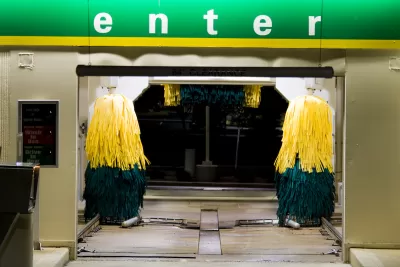
Some communities in northeast Ohio are making changes to their zoning codes that effectively ban new car wash facilities in their jurisdictions, reports Michelle Jarboe for News 5 Cleveland.
According to Jarboe, “Changes in technology, profitability and customer habits are driving huge growth in the once-grubby business,” prompting a boom in proposed facilities. A new subscription-based business model is also driving growth. “From 2012 to 2022, car-wash revenues more than doubled, from $7 billion to upwards of $16 billion, according to data from the U.S. Census Bureau and the Federal Reserve Bank of St. Louis.”
Now, new rules in towns including Brook Park and Parma Heights will block new car washes from opening. City officials say they want to ensure a broad mix of businesses. “Northeast Ohio cities are looking to put limits on other types of businesses, from dollar stores and self-storage facilities to short-term rentals and dispensaries.”
Read the full story: Northeast Ohio cities are blocking new car washes. Here's what's driving the backlash.

To upzone or not to upzone? Two views on the housing crisis
Allowing more density can increase the housing supply, but does the attendant rise in land prices cancel out the benefits?
Controversial Texas housing law has 'directly facilitated' over 1,250 new homes
SB 840 allows developers to build multifamily housing by-right on lots zoned for commercial use without applying to a zoning change.
Indianapolis rents grew by 30% since 2020
The metro area has a shortage of roughly 137,000 affordable homes for the lowest-income households.

Planetizen Federal Action Tracker
A weekly monitor of how Trump’s orders and actions are impacting planners and planning in America.

The state-sanctioned urbicide of Austin
People don’t kill cities. Freeways do.

Colorado’s Largest Data Center Could Rise Next to Homes — Without a Public Hearing
The proposed campus would consume 11 times the power of Denver International Airport; as it has across the country, opposition mounts.

Nation's most wind-powered state turns to coal as data centers increase energy demand
For the first time in decades, Iowa has increased its generation of coal power.

NYC cools commuters with city's first rain garden above a bus stop
New York City officials say the plants in the rain garden can absorb 16 gallons of rainwater during heavy storms.

Brightline West’s future may rely on $6 billion federal loan
The company has until Nov. 2 to make a $400 million equity investment into its proposed high-speed rail line.

FREE Course: Walkable City 1: Why Walkability?
After describing his path towards focusing on walkability as the essence of good planning, Jeff Speck marches through his five principal reasons for making more walkable places.
Reinventing Malls: Planning Alchemy—Turning Gray Fields Into Gold
The course focuses on the opportunities and imperatives that shape reinvention of mall sites.

Greater Baltimore Committee
Eagle County Government
Harvard University Graduate School of Design
The Architects Foundation
University of Cincinnati Online
The Pocatello Development Authority
The Urban Renewal Agency of the City of Pocatello
Journal of the American Planning Association