Redeveloping closed correctional facilities in ways that foster just and thriving communities is a growing trend across the United States.


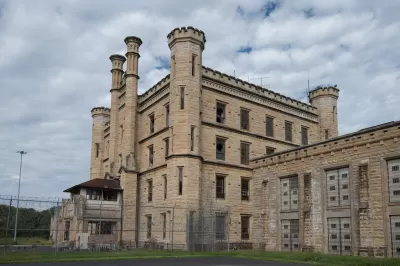
Everyone’s been talking about adaptive reuse of office buildings in the wake of record office vacancies following the pandemic. But that isn’t the only type of vacancy on the rise, according to an article from the Vera Institute of Justice. Jail and prison closures — driven by a steady decline in the United States correctional population and a glut of closed facilities — have increased since 2000.
The trend presents “an opportunity to reallocate energy, funds, space, and personnel toward collectively beneficial enterprises that help foster thriving and just communities,” writes Elizabeth Allen.
The article outlines and offers real-life examples of ways former correctional institutions can be reimagined to revitalize communities and economies, including:
- Housing
- Industry and commerce
- Agriculture, parks, and recreation
- Social and community services
- Renewable energy microgrids
“Done thoughtfully, redevelopment can bring community renewal,” Allen writes. Reuse of former jails and prisons can result in new businesses and jobs to foster local economies. “Former facilities, too, can be restored for reconciliation and reparation—as commemorative, educational sites or ones addressing the root causes of criminal legal system involvement” and to promote racial, social, and cultural justice.
Read the full story: How to Redevelop Former Jails and Prisons for the Collective Good

Opinion: As Prison Populations Drop, Shuttered Facilities Offer Opportunity
The redevelopment of hundreds of former military bases in the 1980s provides a model for how similar facilities can be repurposed to serve the surrounding communities.
Madison approves hundreds of affordable apartments as deadline for federal funding looms
A recently approved project will bring 163 affordable units to the north side.
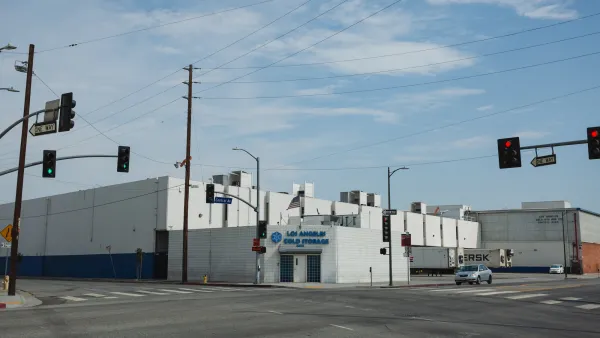
LA approves $2B 'urban village' plan for former cold storage facilities
The project promises an interconnected neighborhood with a focus on public space.

Planetizen Federal Action Tracker
A weekly monitor of how Trump’s orders and actions are impacting planners and planning in America.

California plans to bury El Niño’s downpour
If the state plays its cards right, it may be able to store a billion acre-feet of El Niño’s water in aquifers.

Desperate measures: Advocates weigh draining Lake Powell to fill Colorado River
Draining the reservoir could reduce evaporation losses by a couple hundred thousand acre-feet.

Chicago Avenue bridge construction delays enrages city leaders
The bridge has been closed since 2025. The city originally aimed to re-open it in December, and now expects to finish construction in 2027.

NYC bus network redesign speeds up Queens buses
Rush routes have seen a 4.6% speed increase after the redesign.

California High-Speed Rail Authority picks trainset manufacturer
The California High-Speed Rail Authority aims to start servicing passengers by 2033.

FREE Course: Walkable City 1: Why Walkability?
After describing his path towards focusing on walkability as the essence of good planning, Jeff Speck marches through his five principal reasons for making more walkable places.
Reinventing Malls: Planning Alchemy—Turning Gray Fields Into Gold
The course focuses on the opportunities and imperatives that shape reinvention of mall sites.

City of Rosemead
Rutgers University, Edward J. Bloustein School of Planning and Public Policy
One Hundred Miles
Hunter College, City University of New York (CUNY)
The Architects Foundation
University of Cincinnati Online
City of Cambridge
Montrose County
The Pocatello Development Authority