An earlier settlement for flood damages incurred by residents of Shiloh, Alabama came with an unexpected condition.


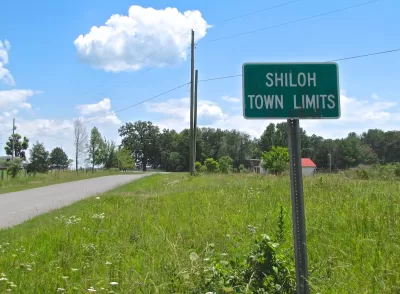
In an article for Inside Climate News, Lee Hedgepeth describes how restrictive deed covenants attached to residential properties in Alabama limit residents’ ability to file actions against the state related to flooding.
“The covenants, released by the Alabama Department of Transportation (ALDOT) in response to a records request by the Southern Environmental Law Center, show that agency officials have been aware of residents’ flooding concerns for years.” Yet residents of Shiloh, a historically Black community, say flooding in their ara began after a 2017 expansion of Interstate 84, which elevated the highway and caused flooding in adjacent properties, displacing residents for months.
When Shiloh residents sought to recover the costs of the damages, they and their attorney agreed to a settlement that, allegedly unbeknownst to the residents, included a restrictive covenant that prevents them or future residents from filing claims about flooding. “The situation in Shiloh recently garnered nationwide attention when Secretary of Transportation Pete Buttigieg visited in April, part of a tour of communities confronting histories of infrastructure decision-making that subjected some residents, who often live in communities of color, to shoulder disproportionate harms from pollution, flooding and abandonment.” For now, Shiloh residents continue to call for increased accountability on the part of ADOT, which says it will try new measures to mitigate flooding and is considering offering to buy out the affected homeowners.
Read the full story: How Alabama Turned to Restrictive Deed Covenants to Ward Off Flooding Claims From Black Residents

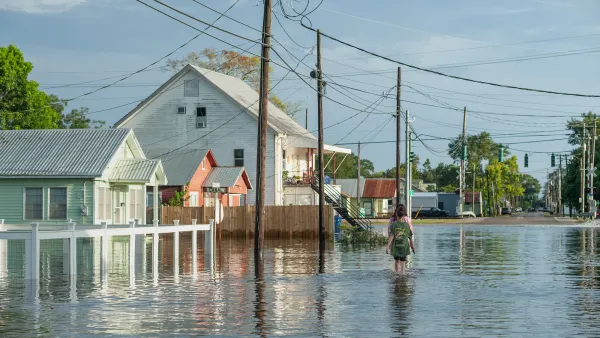
Study: Historically redlined neighborhoods face higher risk of extreme flooding
A new study indicates that structural disinvestment can translate into serious risk for vulnerable communities.
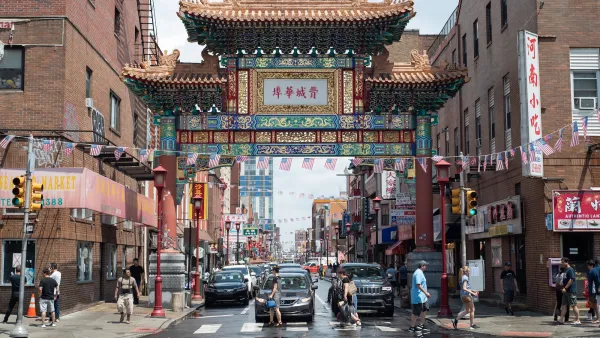
Philadelphia’s ‘Chinatown Stitch’ Freeway Cap in Danger After Feds Retract Funding
A project 15 years in the making would reconnect Philadelphia’s Chinatown neighborhood after decades of being split in half by a roadway.
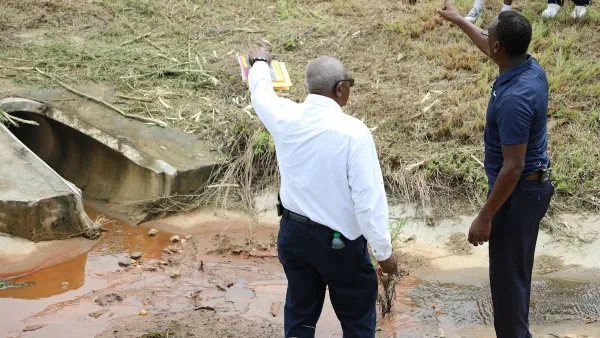
Alabama Community Sues State DOT Over Flooding
Residents of Shiloh, Alabama want to hold the state department of transportation responsible for flooding caused by a highway expansion project.

Planetizen Federal Action Tracker
A weekly monitor of how Trump’s orders and actions are impacting planners and planning in America.

Amtrak, CN end decades-long dispute with eight-year agreement
The new operating agreement establishes an updated framework for the companies to work together, including processes to resolve disputes.

Judges permit Denver to divert 77,000 acre feet from the Colorado River for reservoir expansion
Overuse and climate change have caused the Colorado River’s water levels to plummet.

Idaho may see an 18% drop in federal surface transit funding — the largest estimated cut in the US
Transit systems in rural communities are much more reliant on federal funding to provide their services.

How ‘post-disaster gentrification’ alters neighborhoods after natural calamities
After hurricanes, fires or other calamities, the original residents of a community are often replaced by younger, wealthier residents.

Maryland local governments examine if they should have more power to raise property taxes
Maryland’s housing market is out of reach for the majority of moderate-income residents.

FREE Course: Walkable City 1: Why Walkability?
After describing his path towards focusing on walkability as the essence of good planning, Jeff Speck marches through his five principal reasons for making more walkable places.
Reinventing Malls: Planning Alchemy—Turning Gray Fields Into Gold
The course focuses on the opportunities and imperatives that shape reinvention of mall sites.


Harvard University Graduate School of Design
KFH Group Inc.
Greater Baltimore Committee
The Architects Foundation
University of Cincinnati Online
The Pocatello Development Authority
The Urban Renewal Agency of the City of Pocatello