The city plans to repurpose a segment of the roadway frequently blocked by blowing sand into a pedestrian plaza.


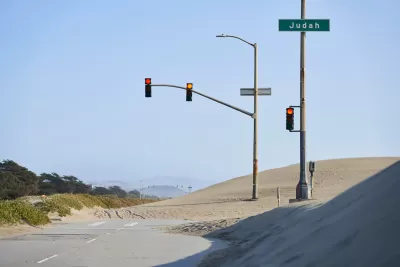
Part of San Francisco’s Great Highway will be permanently closed to cars due to threats from sea level rise, reports Ricardo Cano in the San Francisco Chronicle.
Cano notes that the city has foreseen the closure of the roadway between Sloat and Skyline boulevards since 2012. “The city has used stopgaps, such as a giant sand berm, in recent years to stabilize its rapidly deteriorating shoreline. But the highway, along with underground infrastructure and a major wastewater treatment plant are at risk of being overtaken by the rising sea.”
The segment in question is frequently closed due to sand blocking the road. “The city’s Public Utilities Commission and Recreation and Park departments plan to build a mile-long trail and beachfront plaza in place of the closed roadway.”
The proposed pedestrian plaza would include a public restroom, bollards for protection from vehicles, and a multiuse trail. “The new plaza and trail on the Great Highway Extension could eventually become part of a fully pedestrianized waterfront park that connects to the existing Great Highway between Sloat and Lincoln Way.”
FULL STORY: Portion of SF’s Great Highway will be permanently closed to cars

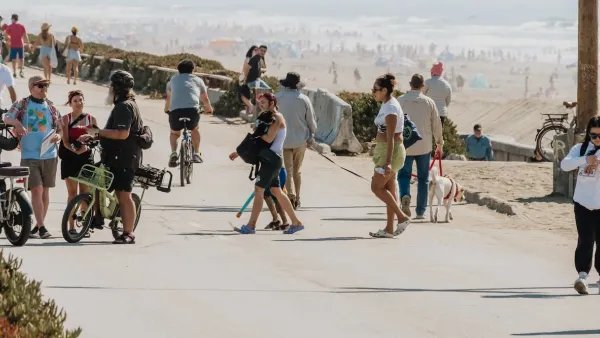
San Francisco Opens Park on Former Great Highway
The Sunset Dunes park’s grand opening attracted both fans and detractors.
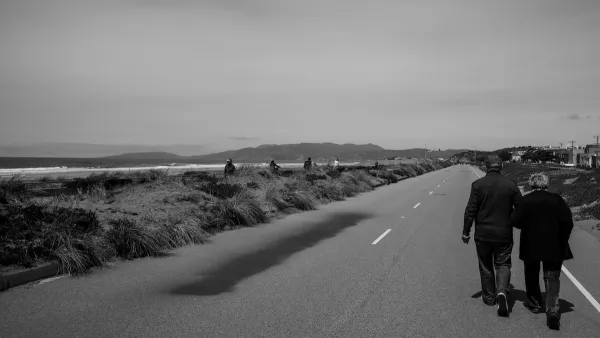
Part of San Francisco Waterfront Highway to Become Pedestrian-Only in April
Two miles of the ‘Great Highway’ will be permanently closed to cars, in part due to erosion that makes the road unsafe for vehicles.

Battle Over San Francisco's Pedestrianized 'Great Highway'
Although the project has been hugely successful with local residents, the mayor and some county supervisors wanted to revert the road to vehicle use.

Planetizen Federal Action Tracker
A weekly monitor of how Trump’s orders and actions are impacting planners and planning in America.

The state-sanctioned urbicide of Austin
People don’t kill cities. Freeways do.

US to reduce Colorado River water deliveries to Mexico
A new Colorado Treaty amendment reduces Mexico’s Colorado River water allocation by 250,000 acre feet.

5 New England states march closer to 800 megawatt wind energy project
Securing federal approval for the project may be complicated under the Trump administration, which has historically been hostile towards domestic wind power.

Baltimore to break ground on $50 million Transit Priority Project
The project will bring faster bus trips, safer streets and better bike connections to Baltimore.

Airbnb launches $250 million 'last-dollar financing' housing accelerator, makes first investment in Austin
The company will put $6.4 million towards affordable housing development in Texas’ capital.

FREE Course: Walkable City 1: Why Walkability?
After describing his path towards focusing on walkability as the essence of good planning, Jeff Speck marches through his five principal reasons for making more walkable places.
Reinventing Malls: Planning Alchemy—Turning Gray Fields Into Gold
The course focuses on the opportunities and imperatives that shape reinvention of mall sites.

Eagle County Government
Harvard University Graduate School of Design
Nashville Planning Department
The Architects Foundation
University of Cincinnati Online
The Pocatello Development Authority
The Urban Renewal Agency of the City of Pocatello
Journal of the American Planning Association