Two miles of the ‘Great Highway’ will be permanently closed to cars, in part due to erosion that makes the road unsafe for vehicles.


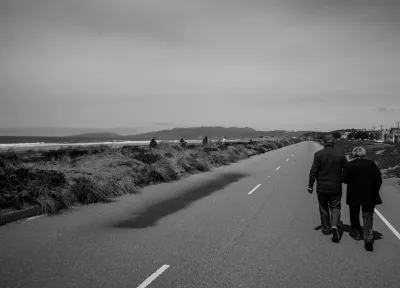
San Francisco’s Upper Great Highway is being transformed into a pedestrian space, with the road closing to cars permanently on April 12. According to Friends of Ocean Beach Park, “On day one, this park will launch with seating, recreation areas, public art, and intuitive wayfinding, with much more to come as we continue to gather input from the community.”
In an article for Streetsblog San Francisco, Roger Rudick describes plans for the new park, which include lounge spaces, murals, bike parking, and an exploration area for children. “The San Francisco Rec & Parks department is also holding a naming contest for the "Ocean Beach Park/Great Highway Park" or whatever it will ultimately be called.” When complete, the park will be 2 miles long and cover 43 oceanfront acres.
The closure was prompted by sea level rise, which threatens the integrity of the roadway segment, often closed due to sand buildup. Prior to that decision, a segment of the Great Highway was converted to pedestrian-only use during the COVID-19 pandemic, but reverted to allowing car access in August 2021.
FULL STORY: Great Funway to Open on Saturday, April 12


Battle Over San Francisco's Pedestrianized 'Great Highway'
Although the project has been hugely successful with local residents, the mayor and some county supervisors wanted to revert the road to vehicle use.
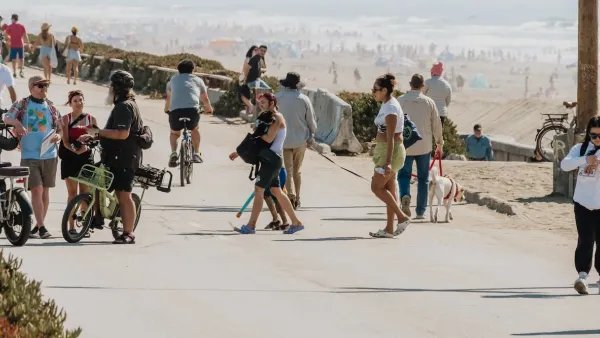
San Francisco Opens Park on Former Great Highway
The Sunset Dunes park’s grand opening attracted both fans and detractors.
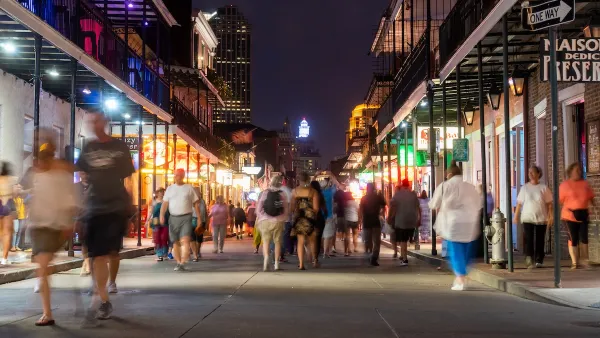
Bourbon Street Could Be a Model for Pedestrian Spaces
The conversation around pedestrianizing public streets isn’t new — think Times Square. Could one of America’s oldest streets lead the way in a revival of the pedestrian mall?

Planetizen Federal Action Tracker
A weekly monitor of how Trump’s orders and actions are impacting planners and planning in America.

The state-sanctioned urbicide of Austin
People don’t kill cities. Freeways do.

US to reduce Colorado River water deliveries to Mexico
A new Colorado Treaty amendment reduces Mexico’s Colorado River water allocation by 250,000 acre feet.

5 New England states march closer to 800 megawatt wind energy project
Securing federal approval for the project may be complicated under the Trump administration, which has historically been hostile towards domestic wind power.

Baltimore to break ground on $50 million Transit Priority Project
The project will bring faster bus trips, safer streets and better bike connections to Baltimore.

Airbnb launches $250 million 'last-dollar financing' housing accelerator, makes first investment in Austin
The company will put $6.4 million towards affordable housing development in Texas’ capital.

FREE Course: Walkable City 1: Why Walkability?
After describing his path towards focusing on walkability as the essence of good planning, Jeff Speck marches through his five principal reasons for making more walkable places.
Reinventing Malls: Planning Alchemy—Turning Gray Fields Into Gold
The course focuses on the opportunities and imperatives that shape reinvention of mall sites.

Eagle County Government
Harvard University Graduate School of Design
Nashville Planning Department
The Architects Foundation
University of Cincinnati Online
The Pocatello Development Authority
The Urban Renewal Agency of the City of Pocatello
Journal of the American Planning Association