The state’s transportation department is reaching completion on its segment of a major north-south corridor that will eventually reach from Michigan to Texas.


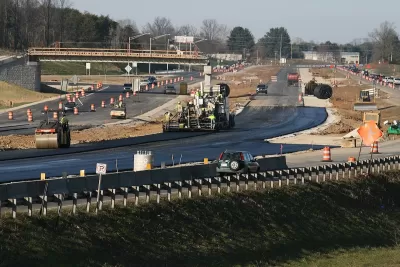
The newest interstate freeway in the United States is reaching completion in Indiana, writes Jared Brey in Governing. “The interstate was built on the path of some existing roads and involved building wider lanes on some state routes and eliminating crossings with other roads.”
The segment of Interstate 69 is part of a planned Canada-to-Mexico corridor that will run from the Canadian border in Michigan to the Mexican border in south Texas. “The Indiana Department of Transportation (INDOT) is now putting the finishing touches on the state’s sections of I-69, expecting to complete the long-planned road by the end of the year.”
The national highway system leaves the construction and maintenance of highways up to states, which often come up against opposition to highway projects from local governments when new roadways threaten to displace and isolate adjacent communities. In the case of Indiana, some local leaders see the project as a boon to economic development and commuters in the region. “Indiana officials argue the completion of the highway in Indiana lifts the fortunes of the cities along its route, and cements the state’s identity as the ‘Crossroads of America.’”
Read the full story: America’s Newest Interstate Nears Completion in Indiana

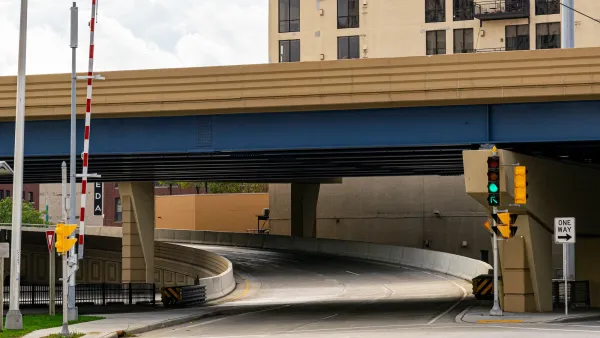
Milwaukee mayor abandons highway removal plan
Mayor Johnson spoke in opposition to a proposed plan to turn part of I-794 into an at-grade boulevard, expressing concerns about traffic.
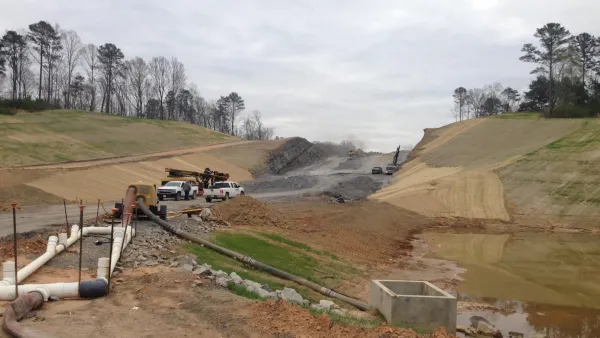
Alabama DOT wants to fill wetlands for interstate project
The Birmingham Northern Beltline would run roughly 52 miles through forests and wetlands that are home to multiple endangered species.
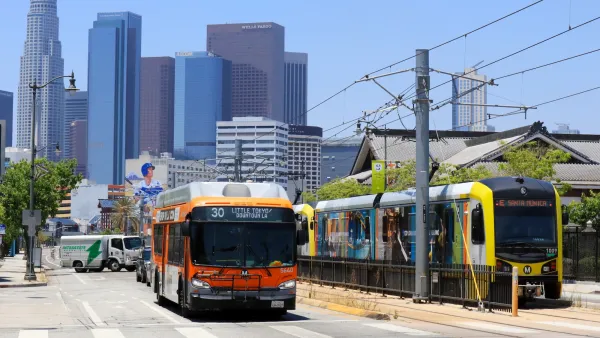
LA Metro Increases Highway Expansion Budget by 40%
Metro has plans to expand freeways including the 5, 105, and 405, among others.

Planetizen Federal Action Tracker
A weekly monitor of how Trump’s orders and actions are impacting planners and planning in America.

Amtrak, CN end decades-long dispute with eight-year agreement
The new operating agreement establishes an updated framework for the companies to work together, including processes to resolve disputes.

Judges permit Denver to divert 77,000 acre feet from the Colorado River for reservoir expansion
Overuse and climate change have caused the Colorado River’s water levels to plummet.

Idaho may see an 18% drop in federal surface transit funding — the largest estimated cut in the US
Transit systems in rural communities are much more reliant on federal funding to provide their services.

How ‘post-disaster gentrification’ alters neighborhoods after natural calamities
After hurricanes, fires or other calamities, the original residents of a community are often replaced by younger, wealthier residents.

Maryland local governments examine if they should have more power to raise property taxes
Maryland’s housing market is out of reach for the majority of moderate-income residents.

FREE Course: Walkable City 1: Why Walkability?
After describing his path towards focusing on walkability as the essence of good planning, Jeff Speck marches through his five principal reasons for making more walkable places.
Reinventing Malls: Planning Alchemy—Turning Gray Fields Into Gold
The course focuses on the opportunities and imperatives that shape reinvention of mall sites.


Harvard University Graduate School of Design
KFH Group Inc.
Greater Baltimore Committee
The Architects Foundation
University of Cincinnati Online
The Pocatello Development Authority
The Urban Renewal Agency of the City of Pocatello