A growing number of traffic deaths occur in driveways, parking lots, and other non-roadway spaces.


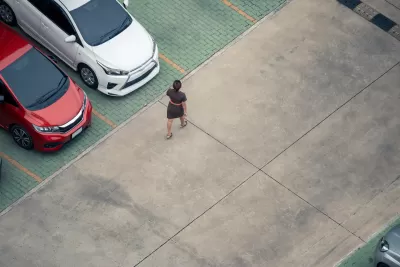
In a piece for Streetsblog USA, Kea Wilson calls attention to the roadway-adjacent spaces “outside of the traditional transportation space” where a “shocking” number — 3,990 in 2021 — of traffic deaths occur. According to Wilson, these cases often involve people “struck by drivers on private property, like parking lots, driveways, drive-thrus, and private roads.”
Vision Zero advocates say governments and transportation departments should keep this in mind when planning road safety policies to include things that go beyond public roadways. Amber Rollins, director of advocacy group Kids and Car Safety also wants transportation officials to pay closer attention to pedestrian safety in tracking crashes and the design of parking lots and driveways. “Rollins says the value of human lives can easily be erased by a crash reporting system not designed with non-roadway contexts in mind, even as thousands of people die in those spaces every year.”
“In addition to fighting for better vehicle safety technology, Rollins wishes other advocates would acknowledge the role of vehicle bloat — and its attendant phenomenon, blind-spot bloat — specifically in non-traffic crashes, and how the swelling size of the average SUV is affecting crash severity even when drivers are moving at a crawl.”
FULL STORY: Why Does the Vision Zero Movement Stop At the Edge of the Road?

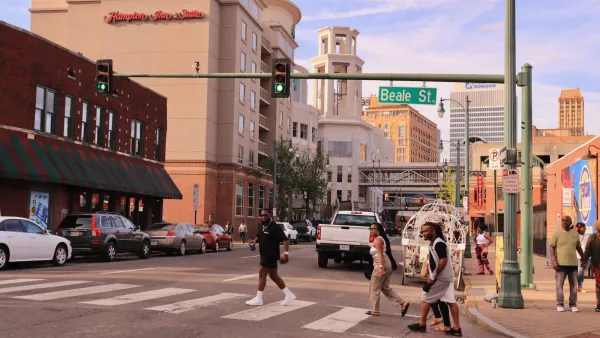
Memphis is the nation's most dangerous city for pedestrians
Memphis had the highest rate of traffic deaths for people walking in the US for two years in a row.
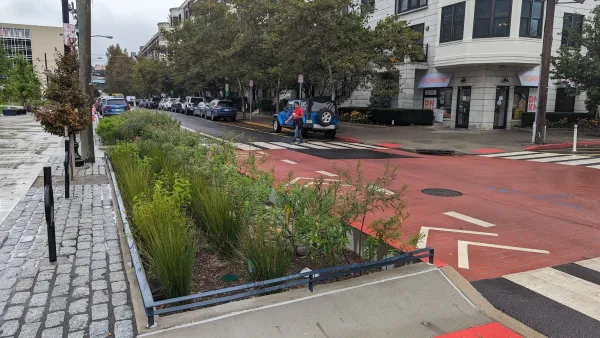
Hoboken's $20 Vision Zero fix
The New Jersey city eliminated traffic deaths for the last nine years in a row.
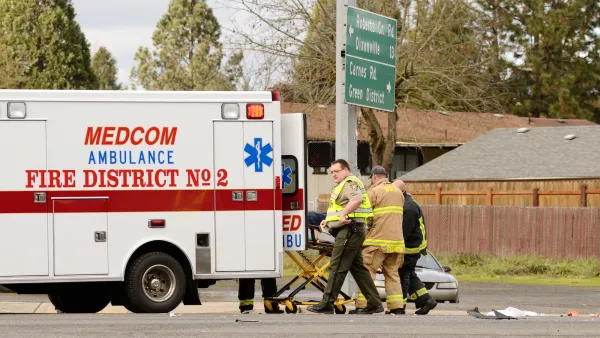
'Dangerous by Design' 2026 report highlights 72% increase in pedestrian deaths since 2009
Although US traffic deaths dropped in the last two years, the number of people killed on US roads remains much higher than two decades ago.

Planetizen Federal Action Tracker
A weekly monitor of how Trump’s orders and actions are impacting planners and planning in America.

The state-sanctioned urbicide of Austin
People don’t kill cities. Freeways do.

US to reduce Colorado River water deliveries to Mexico
A new Colorado Treaty amendment reduces Mexico’s Colorado River water allocation by 250,000 acre feet.

5 New England states march closer to 800 megawatt wind energy project
Securing federal approval for the project may be complicated under the Trump administration, which has historically been hostile towards domestic wind power.

Baltimore to break ground on $50 million Transit Priority Project
The project will bring faster bus trips, safer streets and better bike connections to Baltimore.

Airbnb launches $250 million 'last-dollar financing' housing accelerator, makes first investment in Austin
The company will put $6.4 million towards affordable housing development in Texas’ capital.

FREE Course: Walkable City 1: Why Walkability?
After describing his path towards focusing on walkability as the essence of good planning, Jeff Speck marches through his five principal reasons for making more walkable places.
Reinventing Malls: Planning Alchemy—Turning Gray Fields Into Gold
The course focuses on the opportunities and imperatives that shape reinvention of mall sites.

Eagle County Government
Harvard University Graduate School of Design
Nashville Planning Department
The Architects Foundation
University of Cincinnati Online
The Pocatello Development Authority
The Urban Renewal Agency of the City of Pocatello
Journal of the American Planning Association